Why Madhubani Paintings Refuse Empty Space
Explore the history, symbolism and cultural significance of Madhubani paintings, the vibrant folk art tradition of Mithila rooted in Indian mythology.

A woman bends over a courtyard wall in the heat of a Mithila afternoon. In her hand is a twig dipped in soot and rice paste. Around her, goats wander, children shout, and monsoon clouds gather over the plains of Bihar. Yet the wall before her begins to transform into something larger than domestic decoration. Fish bloom into symbols of fertility. Peacocks stretch into rain prayers. The sun acquires a human face. In Madhubani painting, ordinary life does not merely continue; it becomes sacred theatre.
Born in the Mithila region of eastern India and parts of Nepal, Madhubani painting emerged not from royal courts or elite academies but from household rituals. Traditionally painted by women on mud walls and floors during weddings, festivals and harvest ceremonies, the art functioned less as aesthetic indulgence than as a living language of belief. Long before museums framed it behind glass, Madhubani belonged to kitchens, courtyards and prayer rooms. That origin matters. Many artistic traditions survive because kings preserved them. Madhubani survived because mothers did.
The paintings themselves reject the Western obsession with perspective and realism. There are no empty backgrounds, no isolated subjects standing apart from the world. Every inch vibrates with geometry, vines, flowers, birds or repeating lines. The style seems to fear emptiness. A blank space is quickly occupied by pattern, as though silence itself might invite disorder. This density creates a peculiar psychological effect. Looking at Madhubani feels less like observing an image and more like entering a mental ecosystem where nature, divinity and domestic life flow into one another.
Its symbolic vocabulary is equally rich. Fish signify abundance and fertility. Lotus flowers evoke purity emerging from chaos. Snakes represent both danger and cosmic continuity. Gods from Hindu mythology appear frequently, especially Krishna, Rama and Durga. Yet Madhubani is not merely religious illustration. It compresses an entire worldview into visual shorthand. A tree is never just a tree. It becomes ancestry, shelter, ecology and time itself.
Some critics dismiss folk art as decorative rather than intellectual. That argument collapses under closer inspection. Madhubani paintings preserve ecological memory, encode social customs and reflect philosophical ideas about harmony between humans and nature. In many ways, they resemble oral epics translated into color and line. The art’s apparent simplicity hides enormous conceptual sophistication.
The modern history of Madhubani also carries irony. During a severe drought in the 1960s, government officials encouraged local women to transfer their wall paintings onto paper so they could sell them commercially. A ritual tradition entered the marketplace through economic desperation. Predictably, commercialization altered the form. Tourist markets demanded portable beauty rather than ceremonial depth. Yet Madhubani resisted complete flattening. Even commercial works often retain their symbolic intensity, their refusal to separate aesthetics from cosmology.
Today, contemporary Madhubani artists use the tradition to address climate change, caste oppression, migration and women’s rights. Ancient forms now carry modern anxieties. A centuries-old visual grammar speaks about polluted rivers and fractured societies. This adaptability explains the tradition’s survival. Dead art merely repeats itself; living art absorbs history without surrendering its soul.
Perhaps that is the enduring power of Madhubani painting. It reminds us that civilization survives not only through monuments and empires, but through repeated gestures performed across generations. A hand grinding pigment. A grandmother teaching patterns. A village wall refusing to remain blank. In an age saturated with digital images designed for instant forgetting, Madhubani still feels startlingly human... crowded, symbolic, imperfect and alive with memory.
Discussion
Sign in to join the discussion.
More in Visual Arts

The Thief Who Made the Mona Lisa Famous
When a former worker walked out of the Louvre in 1911 with a modest portrait under his smock, he removed a painting and, by most accounts, helped create an icon.
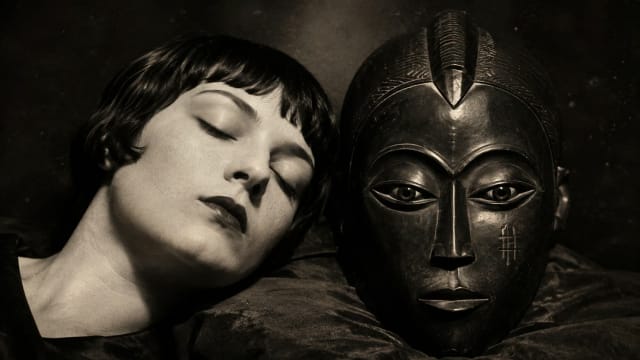
Kiki with African Mask
Why does a carved mask seem alive? Man Ray's iconic photograph reveals why humans instinctively project consciousness onto faces, real or imagined.

The Birth of Venus and the Problem of Beauty
An introspective take on Botticelli’s Birth of Venus, where beauty unsettles, lingers, and reshapes perception rather than offering simple meaning.
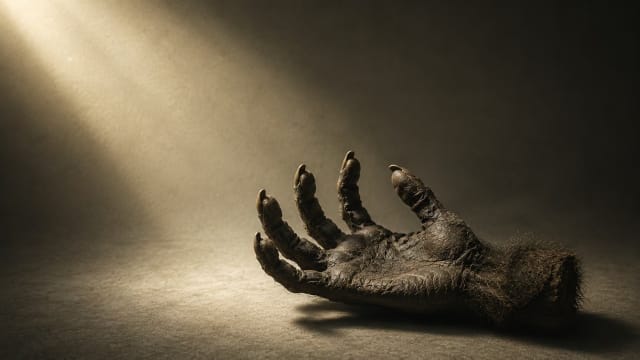
The Monkey's Paw
The Monkey's Paw is more than a horror story. It foreshadowed AI alignment by exposing the danger of systems that obey words but ignore intent.