Why Temples Outlive Kingdoms
Why do religions outlive empires? From Göbekli Tepe to Rome, myths endured while kingdoms collapsed into ruins and memory.
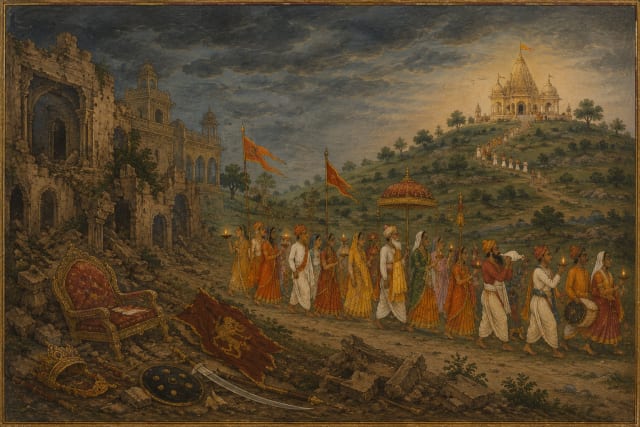
Rain falls hardest on ruins. Walk through the remains of any dead empire and the pattern becomes impossible to ignore. Palaces collapse into anonymous stone while temples continue attracting pilgrims centuries after the kings who funded them vanished from memory. The sacred outlives the sovereign with almost embarrassing consistency. Time erases dynasties like chalk from a wall, yet gods linger stubbornly in architecture, ritual and imagination.
Archaeology keeps pushing this realization further backward through history. At Göbekli Tepe, enormous carved pillars rise from the earth like the vertebrae of a forgotten species. The site predates cities, large scale agriculture and formal states. Hunter gatherers gathered there not to trade grain or draft laws but to perform rituals whose meanings are now buried beneath millennia of dust. Before humans organized themselves around administration, they organized themselves around myth. Civilization may not have invented religion. Religion may have invented civilization.
Humans hauled stones for gods before they built sewage systems for themselves.
The claim sounds backward because modern societies treat belief as decorative rather than foundational. We imagine infrastructure, economics and political order as the engines of history while religion appears like smoke drifting above the machine. Yet ancient societies repeatedly behaved in the opposite manner. Humans aligned monuments with stars before they mapped property lines. They built pyramids before public sanitation. Even now nations tolerate collapsing bridges while pouring extraordinary wealth into pilgrimages, rituals and sacred architecture. Material necessity alone cannot explain creatures willing to suffer for invisible worlds.
Materialist historians argue that religion emerged as a tool of social control once agricultural surpluses created hierarchy. Certainly power used belief. Kings wrapped themselves in divine legitimacy because obedience travels farther when heaven appears to endorse it. Ancient rulers understood what modern politicians still understand instinctively. Humans rarely sacrifice themselves for spreadsheets or tax policy. They sacrifice themselves for stories.
Yet the materialist explanation quietly assumes religion arrived after the social system already existed. Göbekli Tepe complicates that narrative. So do burial rituals older than civilization itself. Graves filled with flowers, pigments and ceremonial objects suggest humans were wrestling with transcendence long before they mastered administration. Before governments learned how to count populations, humans were already kneeling before mysteries. The first cathedrals may have existed not in cities but in the imagination itself.
Perhaps religion survives because it answers questions politics cannot survive without avoiding. Governments explain how society functions. Religions explain why existence hurts. States regulate behaviour but myths regulate meaning. During catastrophe, economic systems often appear fragile while sacred stories remain emotionally intact. A kingdom promises order. A religion promises significance. One organizes labour. The other organizes despair.
This difference explains why dead empires continue breathing through their gods. Nobody now declares loyalty to the Akkadian Empire, yet spiritual imaginations born in vanished deserts still shape billions of lives. Rome collapsed politically long ago, but its sacred symbols still command emotional gravity across continents. Empires disappear geographically. Myths migrate psychologically. A nation can lose territory overnight, but belief travels invisibly through generations like inherited memory.
Modern secular culture often assumes religion was merely civilization’s childhood phase and that reason will eventually replace it completely. The ruins suggest something stranger. Humans may not be rational animals who occasionally become spiritual. We may be storytelling animals who temporarily construct governments around shared myths. Every nation already behaves this way. Flags become sacred cloth. Fallen soldiers become martyrs. National anthems function almost like hymns. Even societies claiming to escape religion frequently rebuild its emotional architecture under different names.
Perhaps that is why temples outlive palaces. Stone survives stone. But meaning survives even stone itself.
Discussion · 2
Empires are eradicated with time, but the same empires that funded sacred pilgrimages endure through religion even today. Modern society thinks opposite to how ancient civilizations behaved. Religion explains the truth of existence and psychologically unites human societies across generations, while administrative systems merely regulate behaviour.
Even now nations tolerate collapsing bridges while pouring extraordinary wealth into pilgrimages, rituals and sacred architecture. That's a damn good sentence! #iykyk
Sign in to join the discussion.
More in Archaeology

Anatomy vs. Choreography: The Frozen Cry of Deir el-Bahari
The mysterious “Screaming Woman” mummy of ancient Egypt reveals how archaeology transforms death, history, and human vulnerability into timeless fascination.
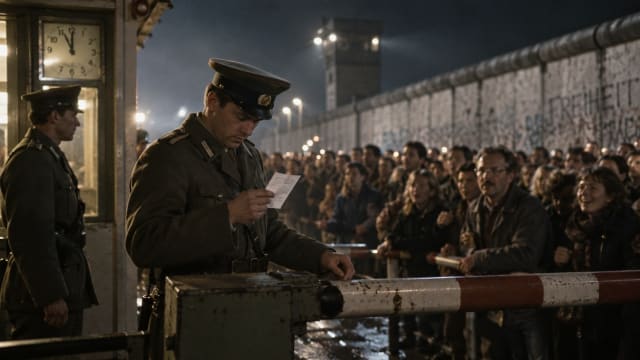
Why the Berlin Wall Fell Because of a Miscommunication: An RC Inspired by IIM Indore
Gunter Schabowski had not been briefed. The decision he announced had not been implemented. The gates he declared open were still closed. Within hours, the Berlin Wall had ceased to exist.

The Search Before the Search
The Greenbrier Ghost helped reopen a murder case. What followed reveals a deeper truth about evidence, belief, and knowledge.

The Soldier Who Didn't Know the War Was Over: An RC Inspired by IIM Indore
Hiroo Onoda fought in the Philippine jungle until 1974, twenty-nine years after Japan surrendered. He was not deluded. He was doing exactly what a loyal soldier should do.