What Kevin Carter Really Captured
A haunting reflection on Kevin Carter’s photograph, moral distance and the unsettling transformation of human suffering into spectacle.
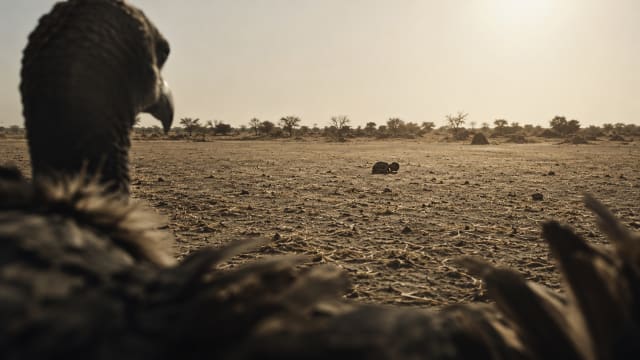
In March 1993, beneath the white violence of the Sudanese sun, a starving child collapsed on the dirt while a vulture waited several feet behind her. The bird’s neck curved forward with the patience of death itself. Nearby stood the South African photojournalist Kevin Carter holding a camera. He clicked the shutter. The photograph travelled across continents within days. Its moral shockwave has lasted for more than three decades.
The image became one of the defining artifacts of the late 20th century because it condensed an entire civilization into a single frame. Humanitarian agencies saw famine. Newspapers saw history. Audiences saw cruelty stripped of ornament. Yet the photograph’s deepest subject was never hunger alone. It was distance. It revealed the growing psychological distance between those who suffer and those who consume suffering as information.
People stared at the vulture and silently asked themselves a more dangerous question. What separates the bird from us?
Modern catastrophe rarely enters our homes physically anymore. It arrives through screens, headlines and scrolling feeds. The camera was once celebrated as a machine for preserving truth. It now often functions as a buffer between conscience and action. We witness wars while drinking coffee. We absorb massacres beside advertisements for shoes. The modern citizen has become a spectator of planetary anguish.
Carter’s photograph unsettled the world because it exposed this arrangement with unbearable clarity. The starving child occupied the center of the image, but the invisible subject was the viewer. The vulture waits for death biologically. We often wait culturally while consuming tragedy through the safe rituals of outrage, commentary and symbolic concern.
Critics later condemned Carter for not carrying the child to safety. The accusation sounded morally obvious. Yet moral clarity often collapses at the scene of real catastrophe. Journalists in famine zones operated under disease restrictions, military supervision and extreme psychological exhaustion. Carter himself had spent years documenting executions, lynchings and the slow psychic decay of apartheid era South Africa.
A civilization saturated with images quietly fears that observation itself can become a substitute for responsibility.
Still, the criticism mattered because human beings distrust spectatorship. Across cultures, we admire the rescuer more than the observer and the firefighter more than the historian. Social media has only intensified this anxiety. Today, moral performance often disguises itself as moral action. Sharing suffering can feel dangerously close to solving it.
Some defenders of the photograph argue that Carter’s duty was simply to document reality rather than interfere with it. There is truth in this claim. Without witnesses, atrocities vanish into silence. The camera can force distant societies to confront realities they would otherwise ignore. Yet this defense becomes hollow when documentation transforms suffering into aesthetic consumption and when starvation becomes a prize winning composition framed in galleries and timelines.
Perhaps this explains why the photograph still haunts people who were not even alive when it was taken. The vulture is too easy a symbol. The more unsettling creature may be the camera itself. It is cold, watchful and incapable of intervention. Carter won the Pulitzer Prize the following year. Months later, he died by suicide.
Since then, debates around the image have hardened into ritual. Was Carter exploitative or truthful? Compassionate or opportunistic? The photograph survives because it refuses resolution. It captures the central paradox of modern morality. Humanity possesses unprecedented visibility into suffering and unprecedented ability to remain emotionally distant from it.
The little girl and the vulture remain frozen in history not merely as subjects of a photograph, but as coordinates of the contemporary soul. One figure starves. One waits. Somewhere outside the frame, millions of us continue looking.
Discussion · 3
The Questions were very challenging
Question number 3 is very challenging in the excel in the first attempt I thought second one is the right answer but I got wrong so if you can just explain it that will be great otherwise the passages is so good so amazing I totally understood the floor discuss about the photograph then we discuss about this more concept of that of the moralities
Kevin Carter took a photo of a hungry child and a vulture. The photo shocked the world. The passage says the real question is not only about the photographer, but also about us. We often watch people's pain through photos and videos, but do very little to help them,.....
Sign in to join the discussion.
More in Ethics

The Runaway Tram That Was Never Meant to Be Polled
The trolley problem began as a footnote in an argument about abortion. Its journey into the engineering of driverless cars may have changed what it was built to ask.
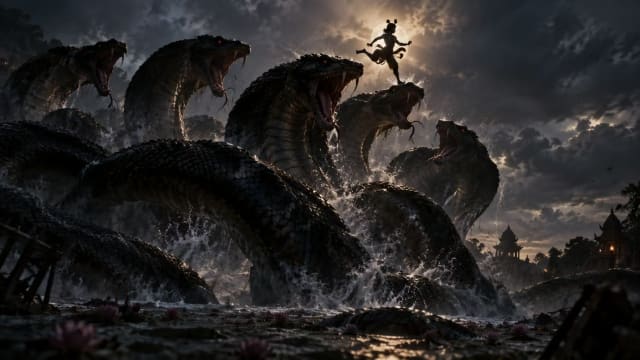
Why Krishna Is the Most Philosophically Dangerous Character in Indian Literature
Krishna lies, cheats and engineers deaths. The Mahabharata calls him the fullest embodiment of dharma. This is not a contradiction. It is the most demanding position in Indian moral philosophy.
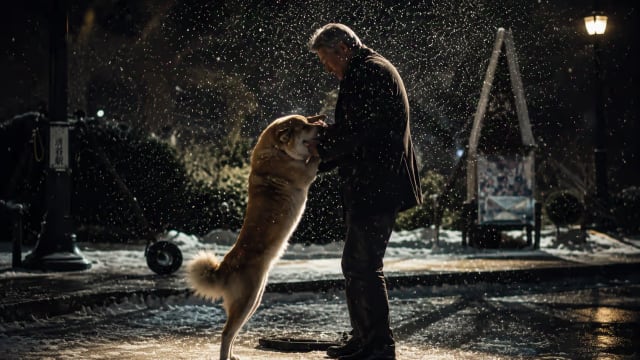
Hachikō and the Weight of Waiting
Why does Hachikō's story still move millions? A philosophical reflection on loyalty, memory, grief, and the kind of love that outlives death itself.
Moral Luck
Two men drive home equally drunk. Only one kills a child. Philosophy calls the gap between them moral luck.