The Backup Planet Paradox
Is Mars colonization humanity's ultimate insurance policy, or a costly distraction from Earth's problems? Explore the backup planet paradox.
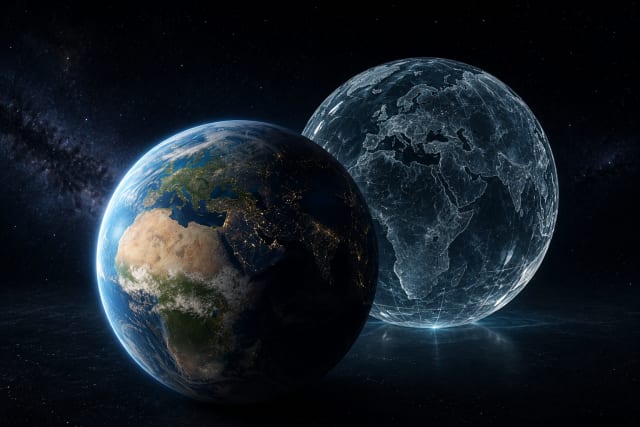
A family living beside a river buys flood insurance despite never having witnessed a flood. Companies store copies of their data in distant locations despite years of uninterrupted operation. Nations maintain emergency reserves despite decades of peace. These decisions rarely appear controversial because people understand a simple principle. Preparation is valuable even when the danger remains uncertain.
The same logic becomes far more contentious when applied to human civilization.
Supporters of space settlement argue that humanity should establish permanent communities beyond Earth. Mars often occupies the center of these discussions because it is the most accessible planet that could someday support a sustained human presence. Their argument begins with a simple observation. Earth is the only known home of life, yet it is not immune to catastrophe. Throughout its history, the planet has experienced asteroid impacts, pandemics, volcanic eruptions, and dramatic climatic shifts. Future dangers could emerge from nature, but they could also emerge from humanity itself. Nuclear conflict, engineered pathogens, or unforeseen technological failures could threaten civilization on a scale never before experienced. If all human beings remain on a single planet, every existential threat becomes a threat to the entire species.
If all human beings remain on a single planet, every existential threat becomes a threat to the entire species.
A self-sustaining settlement on Mars would reduce that vulnerability. It would not guarantee survival, nor would it eliminate risk. It would simply ensure that a single disaster could not erase the whole of humanity. In this sense, Mars is often described not as an escape from Earth but as a form of insurance for civilization.
Critics remain unconvinced. They argue that the analogy between insurance and colonization is misleading. Traditional insurance protects something valuable that already exists. Mars colonization requires vast investments in a project whose benefits may not appear for generations. Many believe those resources should instead address problems that are already visible. Poverty, environmental degradation, public health crises, and political instability affect billions of people today. Spending enormous sums on extraterrestrial settlements can therefore appear less like prudent planning and more like a refusal to confront immediate responsibilities.
Others raise a different concern. Human expansion has often transformed the environments it encounters. If microbial life exists beneath the Martian surface, even in a primitive form, settlement could alter an ecosystem that has evolved independently for billions of years. From this perspective, caution reflects scientific responsibility rather than hostility toward exploration.
The disagreement is not merely about rockets or planets. It is about how far into the future human responsibility should extend.
The disagreement reveals a deeper tension. It is not merely a dispute about rockets, engineering, or planetary science. It is a conflict between different understandings of responsibility. One perspective focuses on improving the present world. The other emphasizes preserving the possibility of a future world. Both concerns are legitimate, yet they operate on different timescales. One asks how humanity should live today. The other asks how humanity might survive tomorrow.
History offers an interesting lesson. Precautions often seem unnecessary when they succeed. A city protected by strong flood barriers may go generations without experiencing a devastating flood. Future residents may then wonder why such expensive infrastructure was ever built. The same pattern appears in public health, national defense, and disaster preparedness. Successful preparation often disguises its own importance.
Perhaps this is why debates about Mars generate such strong reactions. The issue is not really about another planet. It is about the length of humanity's horizon. Most organisms plan for the next day. Societies plan for the next decade. A spacefaring civilization would attempt something far rarer. It would plan for centuries that none of its planners will ever see. The question is not whether Mars can become a second Earth. The question is whether the future is valuable enough to protect before it is threatened.
Discussion
Sign in to join the discussion.
More in Space & Astronomy
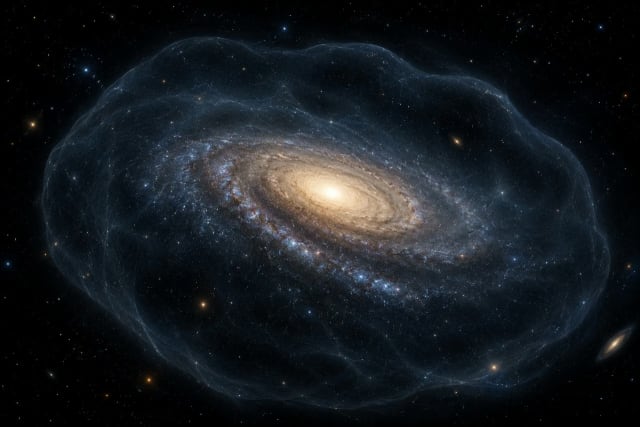
What Dark Matter Tells Us About Scientific Knowledge: An RC Inspired by IIM Indore
Dark matter has never been directly observed. We are nonetheless highly confident it exists. The gap between these two facts reveals something important about how science actually works.
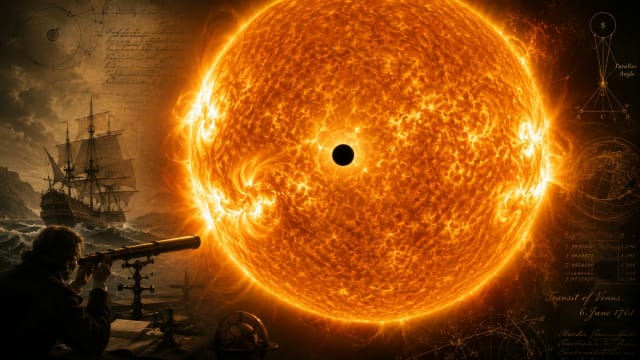
Chasing Shadows
A tiny shadow sent astronomers across oceans, empires into competition and science into a new age. The transit of Venus reveals the power of curiosity.
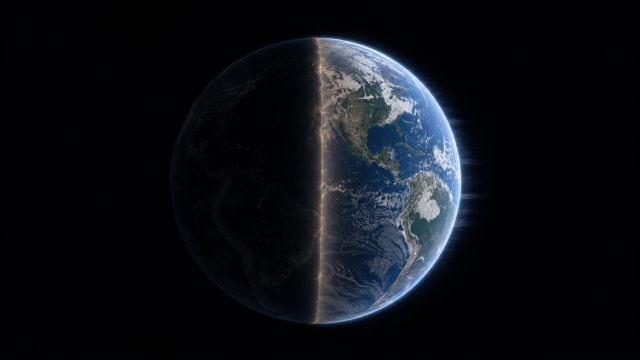
What If the Earth Stops Spinning?
What would happen if the Earth stopped spinning? Explore the science, climate chaos, and hidden forces that make life on our planet possible.
Gravity Is the Story of Love
As physicists explore the Big Rip, a deeper question emerges. Is gravity merely a force, or the universe's oldest form of connection?