Technology Is a Useful Servant but a Dangerous Master
A Norwegian peace campaigner said it in 1921 and examiners still set it. The question it raises is who holds the keys to the household, and the law, the market and conscience each give a different answer.

On 13 December 1921, in Kristiania, as the Norwegian capital was then called, Christian Lange rose to deliver his Nobel lecture on peace. Three years had passed since the guns of the First World War fell silent, and the war had shown that factories, railways and chemistry could be harnessed to kill on a scale no earlier age had known. Lange told his audience that technology is a useful servant but a dangerous master. The sentence has outlived the lecture and has been repeated ever since.
Literally, the saying describes a relationship of command. A servant carries water, lights lamps and keeps accounts without demanding to be obeyed, while a master gives orders and the household bends to them. The deeper meaning is that the same tool can occupy either place, depending on who sets its purposes and who bears its costs. The thesis of this essay is that technology is neither benevolent nor malign in itself, and that its position in a society is settled by law, by economic arrangement and by the ethical habits of those who use it. Each of these lenses complicates the one before.
Begin with law, the oldest instrument for keeping a servant in its place. In Justice K S Puttaswamy v Union of India, decided on 24 August 2017, a nine judge bench of the Supreme Court held unanimously that privacy is a fundamental right under Article 21. A year later, in September 2018, a Constitution bench upheld the Aadhaar scheme for welfare and subsidies while striking down Section 57 of the Aadhaar Act, which had allowed private companies to demand it, and limiting mandatory linking. The Digital Personal Data Protection Act of 2023, whose rules were notified in November 2025 for phased implementation, carries the principle into statute. Law has here done what Lange hoped, naming limits before the machine could assume them.
UPSC Mains essay practice
This essay is written in the UPSC Mains style. See how the real essay papers have been set, and practise more topics.
Discussion
Sign in to join the discussion.
More in Ethics of Technology
The Interlock Nobody Missed: An RC Inspired by IIM Indore
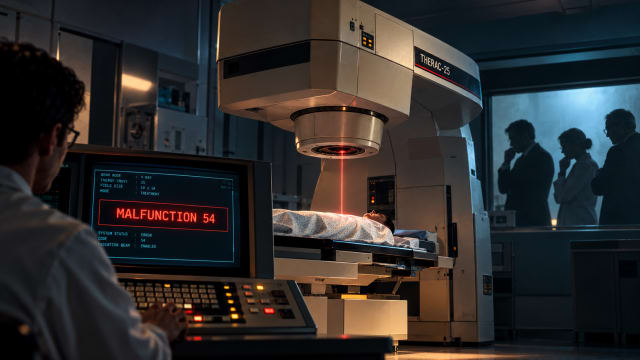
A cancer machine killed patients in the 1980s although every part did what it was built to do. The case shows how responsibility can vanish when a safeguard moves from metal into code.

The Monk's Error, The Model's Echo
AI systems increasingly learn from text that earlier AI systems wrote. History has seen this error before, in monasteries.

The Loneliest Relationship Is Not With a Robot
Artificial companions do more than imitate intimacy. They expose the hidden assumptions that have always shaped how humans recognise love.

What the Algorithm Cannot Taste
Every major technology company is racing to quantify human experience. The one thing they cannot quantify is the reason the race matters.