Bioethics2 min
Cells taken without consent in 1951 still divide in laboratories around the world. The law has been slower than the cells to say what their source is owed.
Progress & Modernity6 min
A hunted man wrote the most confident book about human improvement in March 1794. Malthus, two world wars and the Indian Constitution have each answered it since, and none has closed the argument.
Travel2 min
A shilling train ride to a temperance meeting in 1841 turned into the template for the package holiday. The business idea inside it was older than the holiday.
Cosmopolitanism2 min
A philosopher said to have lived in a jar once called himself a citizen of the world. More than twenty three centuries later the phrase still cannot be pinned to a single meaning.
Complexity1 min
Four short rules and a grid of cells produced patterns that move, multiply and compute. Whether that is order or only the appearance of it is harder to say.
Wellbeing3 min
In 1974 an economist reported that nations grew richer without growing happier. Fifty years of argument have shown that the answer depends less on the money than on the question asked of the people who have it.
Race & Ethnicity2 min
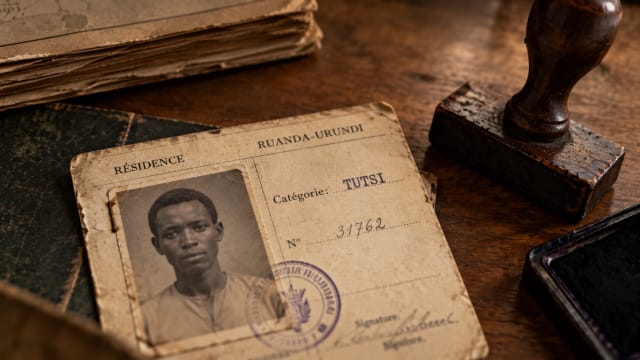
A colonial census in the 1930s took labels that had once been flexible and wrote them onto a card that outlived the empire that issued it.
Demography & Migration6 min
A famous prediction of mass famine failed, yet the fear behind it shaped policy in India and still shapes arguments about numbers, fairness and the future.