Availability Bias: One Shark Story and the Beach Is Cancelled
One shark headline made her quit swimming, but not driving to the beach. That is availability bias, and RC passages love it.




Availability bias
Availability bias is the tendency to judge how likely something is by how easily examples come to mind, so vivid or recent stories feel more common than they are.
Spot it in RC passages: In reading passages, an author arguing that people misjudge risk because vivid stories dominate memory is drawing on this bias, and questions may test whether evidence is typical or merely memorable.
What do you fear mainly because you keep seeing it in the news?
Read this comic as text
- Cover: a worried woman driving a car looks at a shark fin in the sea while a man gestures from the roadside, with the title Scared of sharks, fine with driving. Scared of sharks. Fine with driving. A story about availability bias.
- A woman with curly hair rests her chin on her hand on a sofa beside a phone showing a shark attack headline. Woman (thinking): I'm never swimming in the ocean again.
- The woman watches a TV news report about shark sightings with her hand to her mouth. Woman (thinking): It's happening everywhere!
- On a beach the woman asks a lifeguard how he can let people swim and he answers calmly with folded arms. Woman: How can you let people swim here? Lifeguard: Shark attacks are rare.
- The woman walks away from the lifeguard tower looking annoyed while he watches. Woman: *#%@!
- In the beach car park a bald man in sunglasses asks why the woman is not swimming and she cites the news. Man: Not swimming? Woman: Shark attacks in the oceans... all over the news.
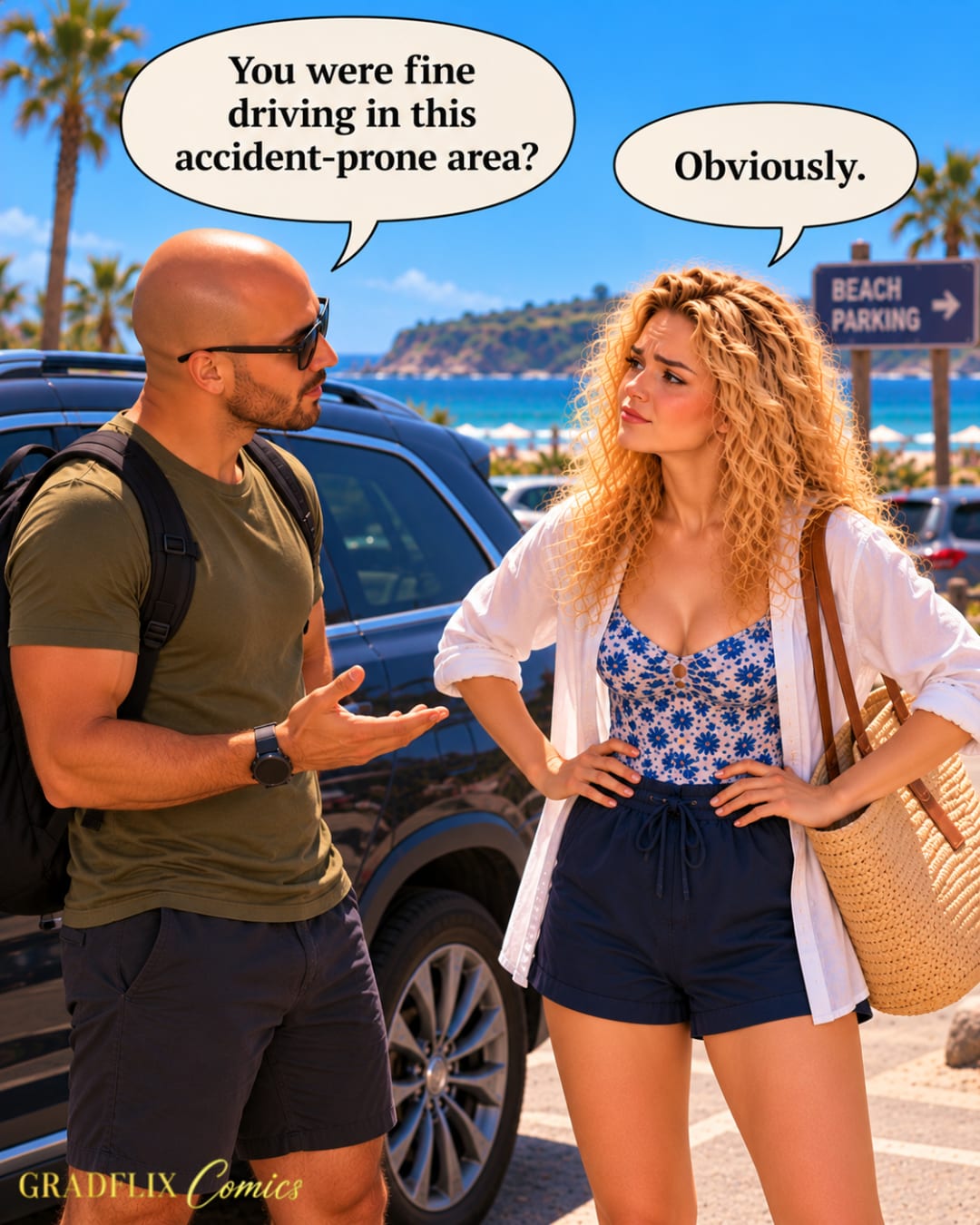
- The man asks if she was fine driving in an accident-prone area and she answers confidently with hands on hips. Man: You were fine driving in this accident-prone area? Woman: Obviously.
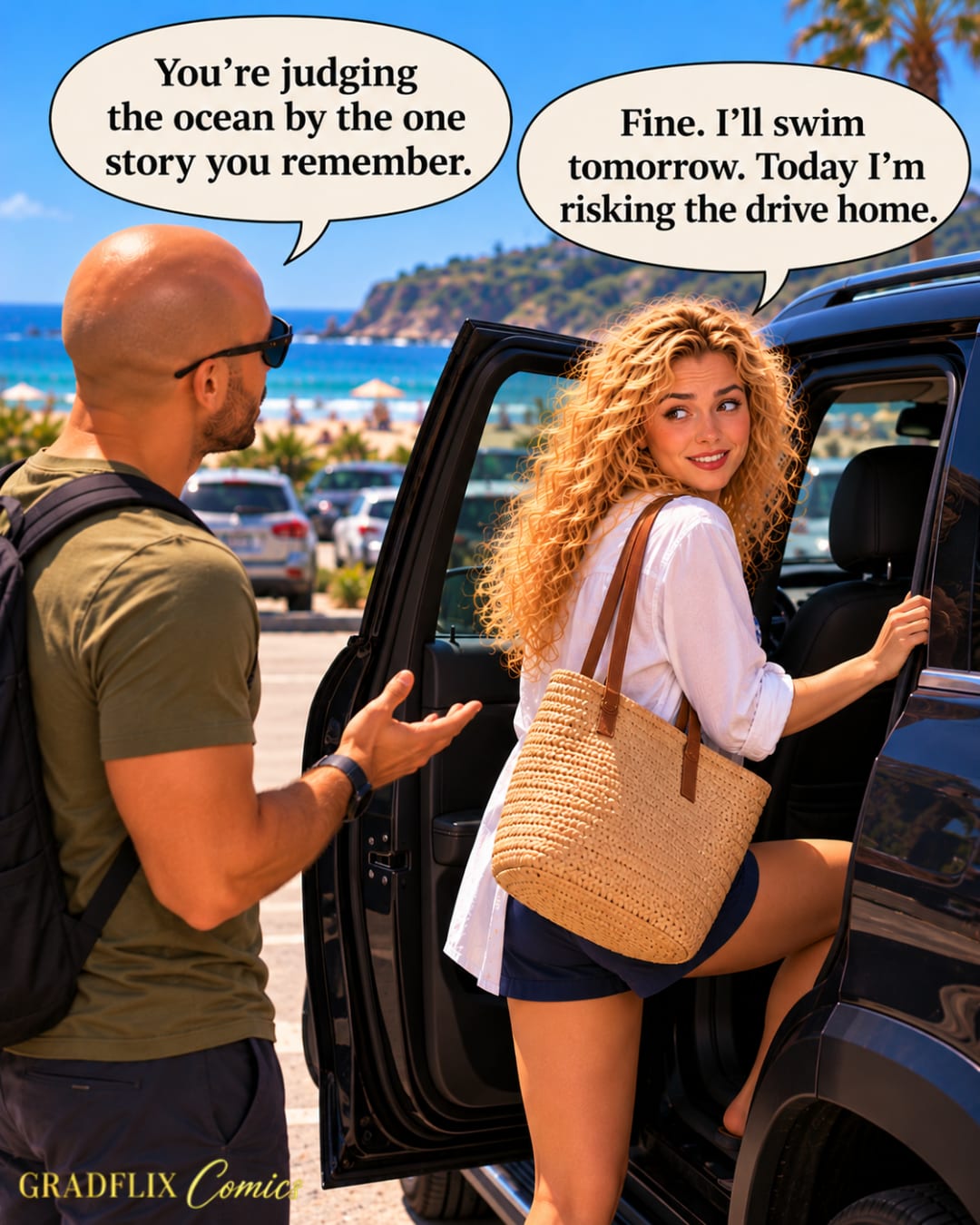
- The woman climbs into her car while the man tells her she is judging the ocean by one story. Man: You're judging the ocean by the one story you remember. Woman: Fine. I'll swim tomorrow. Today I'm risking the drive home.
- The woman drives away smiling while the man shouts after her in the car park. Man: Uneventful swims don't trend!
- At home the woman eats popcorn under a blanket and watches a shark film, looking scared. Woman (thinking): Even the movies know how hideous these sharks can be...
- Lesson card: Availability bias, we judge the likelihood of an event by how easily examples come to mind, with a reality check on shark, lightning and road deaths. This is called availability bias. We judge the likelihood of an event based on how easily examples come to mind, rather than on actual data. Just because it's easy to imagine, doesn't mean it's likely. Spot it in RC passages: An author arguing that people misjudge risk because vivid stories dominate memory is drawing on this bias.
What is the availability bias?
Availability bias is the tendency to judge how likely something is by how easily examples come to mind, so vivid or recent stories feel more common than they are.
How does the availability bias show up in RC passages?
In reading passages, an author arguing that people misjudge risk because vivid stories dominate memory is drawing on this bias, and questions may test whether evidence is typical or merely memorable.
What should I take away from this comic?
One shark headline made her quit swimming, but not driving to the beach. That is availability bias, and RC passages love it. Ask yourself: What do you fear mainly because you keep seeing it in the news?