CLAT English practice: a new passage every day
CLAT is a reading test from start to finish, and English Language is where reading speed is built. Practise a CLAT-style passage daily, then test yourself on every real CLAT English passage from 2020 to 2025, solved for free.
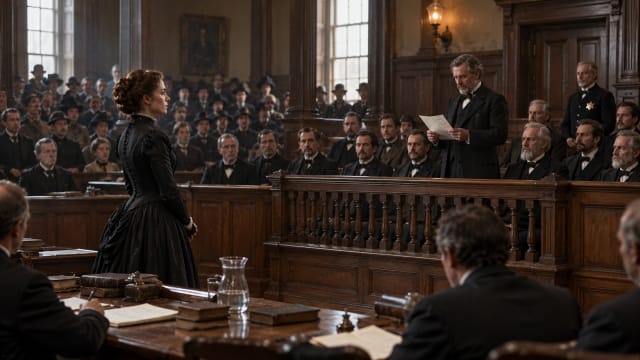
The Acquittal That Did Not Mean Innocence
Lizzie Borden walked free in 1893, and the verdict shows what a court can and cannot declare.
2 min read · CLAT-style questions
This week’s passages
Politics & GovernanceThe Charter That Failed in Ten Weeks and Won the CenturiesScienceThe Pump Handle and the Epidemic Already FadingFree solved CLAT English past papers
All CLAT PYQs →Real CLAT passages, every question answered and explained. Free, no plan needed.
CLAT 2025The Astrologer's Day A Study in Theatrical DeceptionCLAT 2025Why Real Education Demands Love Over IdealsCLAT 2025Orwell on the Four Deep Motives Behind WritingCLAT 2025Vivekananda's Vision of Man Making Education Through ConcentrationCLAT 2024Solitude and Stillness at Carignano in Desai ProseCLAT 2024How Setting Becomes a Character in LiteratureHow to practise a CLAT passage
- Time it. Give each 450-word passage about 6 to 7 minutes with its questions. CLAT allows roughly a minute per question across the paper.
- Read for the argument. After each paragraph, ask what the author claims and how it connects to the last one. Note the author’s attitude.
- Answer, then check. Commit before you look. For each wrong option, find the exact word that makes it wrong: too extreme, out of scope, or partly true.
- Read every explanation. Including the ones you got right. If you were right for the wrong reason, you will be wrong next time.
- Log your traps. One line per mistake. After a week, one or two patterns explain most of your lost marks.
More CLAT practice
Questions about CLAT practice
How many English questions are in CLAT?
CLAT English Language has about 22 to 26 questions out of 120, all set on passages of around 450 words.
What is the marking scheme in CLAT?
+1 for a correct answer and −0.25 for a wrong answer, with no penalty for questions left unanswered.
What kinds of passages come in CLAT English?
Mostly non-fiction on society, history, science and culture, and some fiction extracts, with questions on main idea, inference, tone and vocabulary in context.
How should I practise for CLAT English?
Read one passage a day under time, answer before checking, and solve every past CLAT English passage. Speed comes from daily reading, not last-minute drills.