The Colour Rule That Was Never Quite a Rule
A 1918 trade journal told shops to dress boys in pink. The popular tale of a clean reversal since then hides a messier history of shops that disagreed.
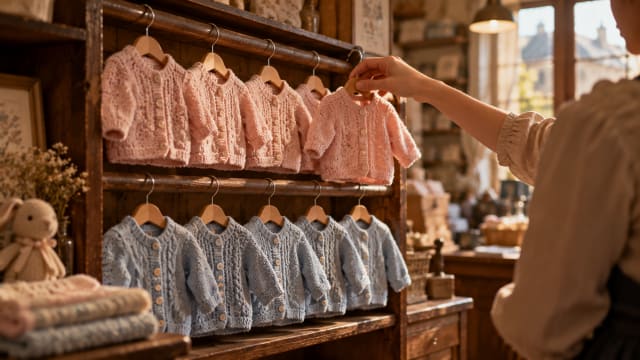
In June 1918 a trade journal for children's clothing in the United States told retailers that the generally accepted rule was pink for the boy and blue for the girl. Pink, it explained, was a more decided and stronger colour, better suited to a boy, while blue was more delicate and dainty. A modern reader finds the advice backwards, and the contrast is often used to show that gender colours are arbitrary.
The evidence for a clean reversal is thinner than the story suggests. In 1927 Time magazine printed a chart based on leading department stores. Filene's of Boston, Best and Company of New York, Halle Brothers of Cleveland and Marshall Field of Chicago advised dressing boys in pink. Four other stores advised the opposite. Some sources recommended colours by complexion or by eye colour instead of by sex.
The historian Jo Paoletti, who studied catalogues, advertisements and baby books, concluded that the convention grew stronger over the twentieth century and that retailers and manufacturers helped shape it. The outcome, she said, could have gone the other way. Her claim was about inconsistency and not about a tidy reversal, although it is often repeated as one.
The outcome, she said, could have gone the other way.
The researcher Marco Del Giudice studied newspapers and magazines from 1881 to 1930 and found thirty four cases of the standard coding and twenty eight reversed ones. He read this as inconsistency and not as a reversal. His analysis of books from 1880 to 1980 found remarkable consistency in gender coding over time.
After the Second World War, children were dressed like their parents and the divide hardened. Unisex clothing spread in the mid 1960s and lasted until about 1985. Prenatal sex testing and gender targeted marketing then pushed pink and blue deep into baby products.
So the colours did not simply flip. They wandered, hardened and loosened under commercial pressure, and nobody has found the moment at which a shop assistant's advice became a rule. It remains an open question whether the convention would have settled as it did without sellers who found it profitable to sell two of everything.
Discussion
Sign in to join the discussion.
More in Design & Fashion

The Monkey's Paw
The Monkey's Paw is more than a horror story. It foreshadowed AI alignment by exposing the danger of systems that obey words but ignore intent.

How Fight Club Became the Brand It Tried to Destroy
A film that condemned consumer culture became one of its most successful products, revealing how capitalism can package even rebellion.

Why Victorian England Feared Female Desire More Than Dracula
Beyond Gothic horror, Dracula exposes Victorian anxieties about female desire, agency, sexuality and the uneasy relationship between instinct and culture.
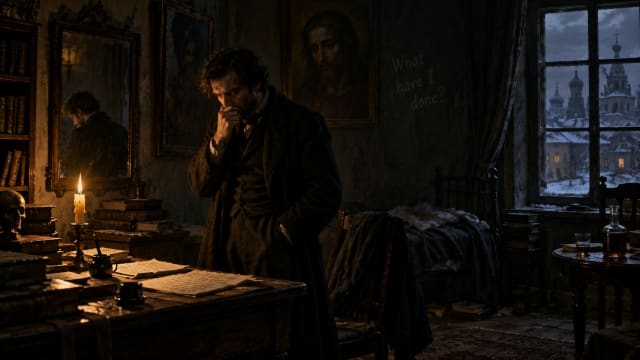
What Dostoevsky Understood About Guilt That Psychology Did Not: An RC Inspired by IIM Indore
Raskolnikov's guilt in Crime and Punishment is not about fear of punishment. Dostoevsky described the phenomenology of guilt more accurately than clinical psychology did for another century.