Education Is What Survives When What Has Been Learned Has Been Forgotten
A saying credited to B F Skinner holds that schooling is measured by what remains after the facts are gone. India's classrooms test that claim every day, and the evidence is mixed.

Consider a retired engineer who, at seventy, cannot recall a single integral he solved at college. Asked what the years of study left him, he does not mention formulae. He speaks of how he approaches a broken pump, how he distrusts a number that has no source, and how he learned in a crowded hostel to argue without losing a friend. The syllabus has gone. Something has stayed.
The saying that education is what survives when what has been learned has been forgotten is credited to the psychologist B F Skinner, who wrote a version of it in 1964, though older variants circulate in several languages and it is often wrongly given to Einstein. Its literal meaning is plain. Facts fade, dates blur and formulae slip away, and what remains is a residue. Its deeper meaning is that this residue is the real purpose of schooling, that the habits of mind, the tastes and the conduct that outlast the facts are what the facts were carrying all along. This essay argues that the saying is a useful corrective to an examination culture, but that a corrective is not a creed, because the residue cannot form without the learning that it outlives.
At the level of the individual the saying finds support in the study of memory. Hermann Ebbinghaus, whose experiments of 1885 gave psychology the forgetting curve, showed that much of what is memorised without understanding fades quickly. Later work by Robert Bjork on what he called desirable difficulties suggests that learning which feels effortful, such as testing oneself and spacing study over time, leaves deeper traces than simple rereading. Forgetting is therefore not a failure of education but its ordinary condition, and the question is what is left behind.
UPSC Mains essay practice
This essay is written in the UPSC Mains style. See how the real essay papers have been set, and practise more topics.
Discussion
Sign in to join the discussion.
More in Learning & Pedagogy

The Test Scores That Kept Rising and Then Stopped
Intelligence test scores climbed for most of a century. Then, in at least one country, they began to fall within the same families.
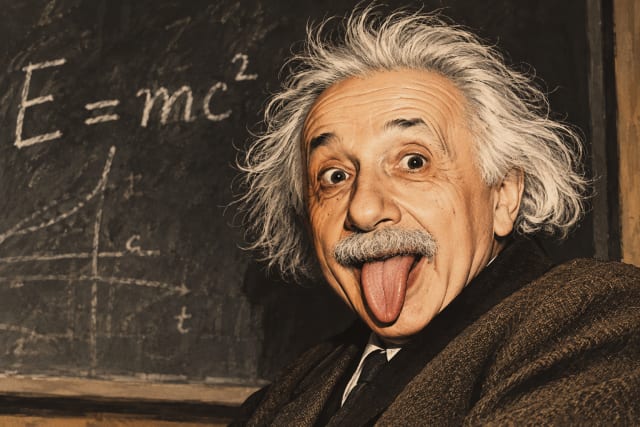
The Entrance Exam Einstein Failed and the Subject He Did Not
The famous story that Einstein failed mathematics is false, yet it survives because it offers students a comfort that the true story somehow does not.

The Things We Teach Each Other
I learnt to teach through a fairy without wings. Years later, I understood that learning and teaching may be among our oldest human impulses.

How EdTech Forgot Teaching | The 111th Essay
How online education, CAT coaching, AI summaries, and viral learning frameworks transformed teaching into performance, attention, and endless preparation.