The Entrance Exam Einstein Failed and the Subject He Did Not
The famous story that Einstein failed mathematics is false, yet it survives because it offers students a comfort that the true story somehow does not.
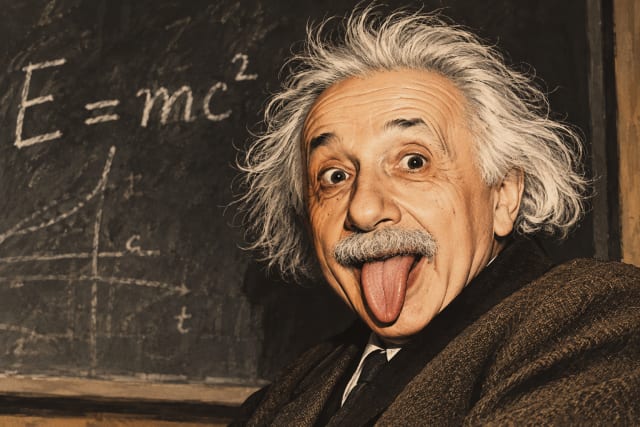
In 1895, a sixteen year old boy from Munich travelled to Zurich to sit an entrance examination for the Swiss Federal Polytechnic. He was two years younger than most applicants and had left his German school without a diploma. His name was Albert Einstein. The result of that examination is now one of the most repeated stories in education, and much of what is repeated is wrong.
The popular version says that Einstein failed mathematics as a child, and that the failure proves how little school marks reveal about genius. The record points elsewhere. He reportedly scored very highly in mathematics and physics in the Zurich examination. What he failed was the general section, which tested subjects such as French, and the Polytechnic advised him to complete his secondary schooling first. He did so at a school in Aarau and entered the Polytechnic the following year.
The mathematics myth appears to have spread in the 1930s, when a popular newspaper feature of oddities suggested that the famous physicist had failed the subject. Einstein is reported to have answered that he had never failed in mathematics and had mastered calculus before the age of fifteen.
Why does a false story last so long when the true one is easy to find? Part of the answer is comfort. A student who has failed a test can borrow courage from a genius who supposedly failed one too. The myth turns a bad mark into a sign of hidden promise, and few readers want to give up such a useful sign.
The myth turns a bad mark into a sign of hidden promise, and few readers want to give up such a useful sign.
But the comfort carries a cost. If the greatest scientist of the century was also a poor student, then effort and preparation seem to matter less than a mysterious spark. The true story is less flattering to that idea. Einstein was ahead of his age group in mathematics, and his one failure came in the broad part of the test. His response was to return to school, study, and try again.
None of this makes the myth harmless or its believers foolish. People need stories in which failure is survivable. Yet it is strange that the accurate story, in which a gifted boy fails one part of an examination, corrects the gap and moves on, offers precisely that reassurance and still loses. Why a false account of failure consoles more than a true one is a question that no school record has settled.
Discussion
Sign in to join the discussion.
More in Learning & Pedagogy

The Things We Teach Each Other
I learnt to teach through a fairy without wings. Years later, I understood that learning and teaching may be among our oldest human impulses.

The Comma That Saves Grandma: An RC Inspired by IIM Indore
A tiny mark of punctuation opens into a larger question about how conventions create meaning, coordinate behaviour and quietly hold civilisation together.

How EdTech Forgot Teaching | The 111th Essay
How online education, CAT coaching, AI summaries, and viral learning frameworks transformed teaching into performance, attention, and endless preparation.

Brahmaganita v1.0: A Philosophy of Patterned Existence
A philosophical exploration of Brahmaganita, where mathematics becomes a lens to uncover patterns, balance, and the hidden structure of reality.