The Man with No Name and the Art of Characterization
Clint Eastwood and Sergio Leone transformed the western forever through the mysterious Man with No Name, redefining cinematic character and the modern antihero.
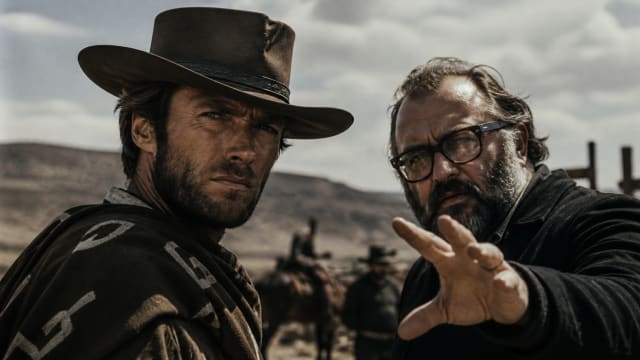
A poncho flaps in the desert wind. Spurs scrape against stone. A cigarillo hangs from cracked lips while the camera waits, patient as a vulture. Before the man speaks, the audience already understands him. This is the first triumph of characterization in The Good, the Bad and the Ugly. The Man with No Name is not built through exposition or confession. He is built through texture. Dust, silence, hesitation, costume, posture. Modern films often explain characters until nothing remains mysterious. Sergio Leone understood the older cinematic rule that people become unforgettable when the audience must study them like landscapes.
Clint Eastwood plays Blondie with an economy that borders on mathematical precision. He does not waste gestures. Even his stillness feels active. The art of characterization lies in making every movement imply an inner life larger than the screenplay reveals. Blondie rarely states what he believes, yet viewers sense a moral code beneath the cynicism. He scams towns for bounty money, abandons men in deserts, and kills without ceremony. Yet he never feels rotten. Leone achieves this paradox through contrast. Beside grotesque opportunists and theatrical sadists, Blondie becomes almost noble. Characterization, at its highest level, is comparative. A character is often defined less by what he says than by the moral temperature of the people surrounding him.
The film also understands that memorable characters require visual identity. The poncho, the squint, the weathered beard, the revolver hanging low at the hip. These details turn Blondie into cinematic shorthand. One silhouette and the audience recognizes him instantly. Ancient epics worked the same way. Achilles had his shield. Samurai had their swords. Cowboys had hats and dust. Good characterization transforms costume into psychology. Blondie dresses like a drifter because he belongs nowhere. Even his nickname sounds temporary, as if no stable identity can survive the violence of the frontier.
The Man with No Name endures because he proves that mystery is not the absence of character. Mystery is character concentrated.
Some critics dismissed spaghetti westerns as cynical spectacles that replaced morality with style. Yet that criticism misses the deeper craft at work. Leone stripped away sentimental heroism because audiences in the 1960s no longer trusted clean myths. Against the chaos of the American Civil War, Blondie survives through skepticism rather than idealism. But the film quietly preserves fragments of decency. He comforts dying soldiers. He shares small mercies without announcing them. This restraint matters. Real characterization avoids speeches about virtue. Truly moral characters rarely advertise morality. They reveal it accidentally.
The final genius of Blondie lies in what the film refuses to tell us. We never learn his real name, his childhood, or his grand philosophy. Modern storytelling often mistakes information for depth. Leone understood the opposite. Human beings remain partly unknowable even to themselves. That uncertainty creates fascination. Through silence, gesture, costume, rhythm, and contrast, the Man with No Name became more than a cowboy. He became a template for the modern antihero, echoed later in crime films, noir detectives, wandering ronin, and reluctant vigilantes. Great characterization does not merely create a person. It creates a presence that walks out of the screen and into cultural memory forever.
Discussion
Sign in to join the discussion.
More in Cinema

Can the Ramayana Survive Its Own Spectacle? - An RC Inspired by IIM Indore
A film reportedly costing Rs 4,000 crore is about to retell the Ramayana, while a modest 1987 serial once emptied India's streets. The question is whether a story can grow larger on screen while its meaning grows smaller.

Odysseus and the Arc of the Hero
Odysseus embodies the hero’s journey not through victory alone, but through the losses, disguises and transformations that make returning home possible.
Why Walter Mitty Needed His Fantasies
Walter Mitty reveals that imagination is not an escape from reality but a rehearsal for courage, preparing us to become who we dare to imagine.

How Fight Club Became the Brand It Tried to Destroy
A film that condemned consumer culture became one of its most successful products, revealing how capitalism can package even rebellion.