Batman: The Picture of a Psychopath
A psychological reinterpretation of Batman that explores whether Gotham's legendary hero is actually a disciplined psychopath shaped by trauma.
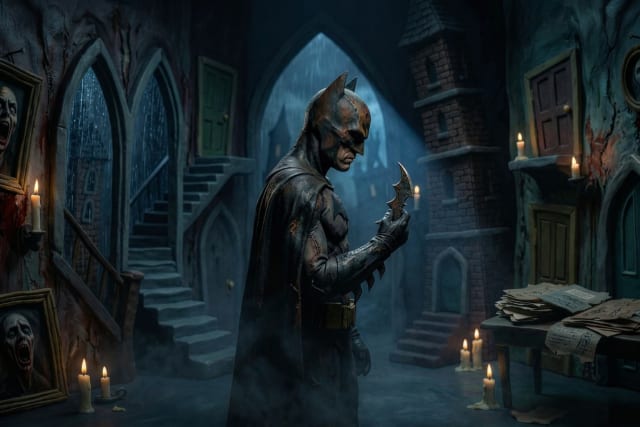
Gotham does not sleep. It trembles. Sirens ricochet through wet streets while a dark silhouette drops from a cathedral tower. A man dressed as a bat hunts criminals with military precision. Popular culture calls him a hero. Yet if one steps outside the mythology for a moment, another picture begins to form. Strip away the cape, the soundtrack, the comic panels. What remains is not a saviour descending from the night but a deeply wounded man staging a war against his own memories.
Bruce Wayne is born in trauma. A child watches his parents die in a dark alley. Psychology calls such moments psychic fractures. Most people attempt to heal them through time, therapy, or community. Wayne chooses another path. He constructs an alter ego that thrives on fear. The costume matters. A bat symbolizes dread. His gadgets amplify intimidation. His methods rely on surveillance, violence, and control. From a clinical lens this resembles obsessive compensation. The child who felt powerless builds a world where he is never powerless again. Gotham becomes less a city and more a stage where Bruce Wayne performs dominance over the chaos that once defeated him.
This behaviour aligns with traits psychologists often associate with psychopathy. Not necessarily the cinematic serial killer but a colder cluster of traits. Emotional detachment. Grandiosity. Vigilante justice without institutional restraint. Batman does not merely stop crime. He polices the entire moral architecture of Gotham. Judges, juries, and executioners normally answer to law. Batman answers to his own judgment. The mask becomes a license to operate outside ordinary empathy. Criminals become abstractions rather than people. They are targets in a system he alone designs.
Fans resist this reading. They argue that Batman refuses to kill. That single rule supposedly preserves his humanity. But the rule reveals something stranger. His code forces criminals to survive repeated cycles of capture and release. Gotham's prisons fail. Villains escape. The violence continues. A rational guardian might question the system itself. Batman instead repeats the ritual endlessly. The city remains trapped in the same nightmare because the nightmare sustains his identity. If Gotham healed, Batman would become unnecessary. The hero unconsciously depends on the sickness he claims to fight.
Seen this way, Batman resembles a controlled psychopath rather than a traditional hero. His intelligence is extraordinary. His discipline is legendary. Yet his mission emerges from obsession rather than civic responsibility. He cannot relinquish the crusade because the crusade defines him. Gotham fears criminals, but criminals also fear the bat in the sky. Fear becomes the currency through which he governs the city.
The deeper irony lies here. Batman is often celebrated as the triumph of justice over chaos. Perhaps the opposite is true. Gotham is a chaotic city that produced a chaotic guardian. Bruce Wayne did not transcend trauma. He organized it. The cape, the gadgets, the myth of the dark knight all function as architecture around a single psychological wound. The vigilante we admire might therefore be less a hero who saved Gotham and more a man who never escaped the alley where his parents fell.
And that is the unsettling insight. Sometimes the line between protector and predator is not drawn by the mask. It is drawn by the wound beneath it.
Discussion
Sign in to join the discussion.
More in Fiction & Novels
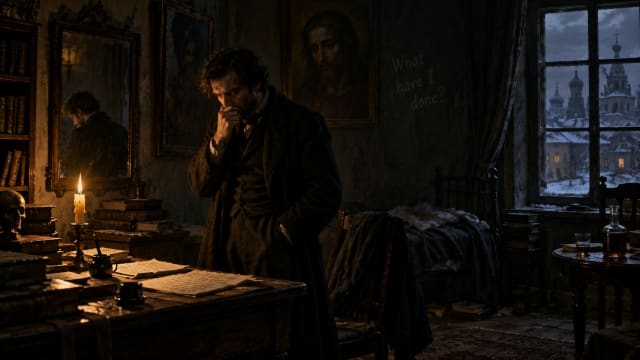
What Dostoevsky Understood About Guilt That Psychology Did Not: An RC Inspired by IIM Indore
Raskolnikov's guilt in Crime and Punishment is not about fear of punishment. Dostoevsky described the phenomenology of guilt more accurately than clinical psychology did for another century.

Why Kafka Makes You Feel Understood: An RC Inspired by IIM Indore
Kafka is not an allegorist. He is a describer. His fiction works because it shows the shape of experiences you already knew and had not previously been able to see.
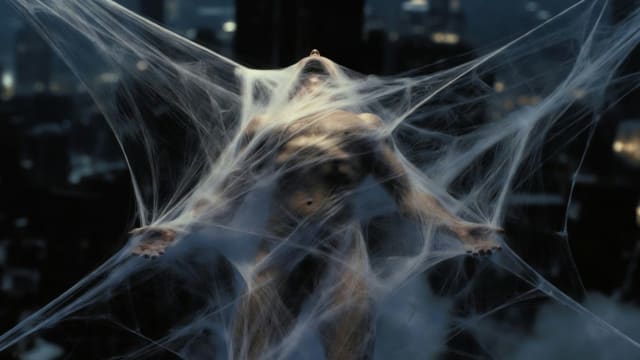
The Myth Around Spider-Man
Why has an ordinary teenager become one of modern culture's enduring heroes? Spider-Man's real superpower may be the burden of power itself.

Why Victorian England Feared Female Desire More Than Dracula
Beyond Gothic horror, Dracula exposes Victorian anxieties about female desire, agency, sexuality and the uneasy relationship between instinct and culture.