The Myth Around Spider-Man
Why has an ordinary teenager become one of modern culture's enduring heroes? Spider-Man's real superpower may be the burden of power itself.
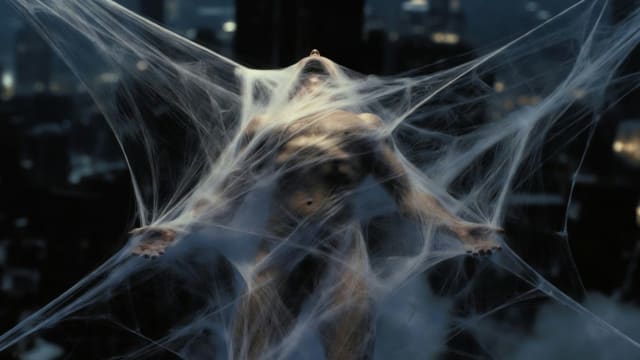
A boy falls from a skyscraper and catches himself on a thread of silk. Below him is a city of millions, each life moving through its private dramas. Above him is the void. Between the two hangs Spider-Man, a figure who seems to belong to neither world completely. He is superhuman enough to save a stranger, yet human enough to worry about rent. Perhaps that contradiction explains why he has become more than a comic-book character. He has become a modern myth.
Myths have always given form to problems that ordinary language struggles to contain. Prometheus makes a story of forbidden knowledge. Icarus makes one of ambition and its limits. Hercules makes one of strength and its burdens. Spider-Man makes a story of something more modern and strangely intimate. What happens when an ordinary person acquires extraordinary power?
The obvious answer is freedom. Power should enlarge the field of what we can do and therefore enlarge the field of what we can choose. Yet Spider-Man's story repeatedly reverses this intuition. His powers do not make Peter Parker freer. They make him more accountable. The ability to intervene creates an obligation to intervene. Once Peter knows that he could have prevented a death, choosing not to act is no longer morally equivalent to being unable to act.
"The more one can do, the more one can be held responsible for doing."
This is why the familiar maxim that great power brings great responsibility is more philosophically unsettling than it first appears. It suggests that freedom and responsibility do not move in opposite directions. They may actually grow together. The more one can do, the more one can be held responsible for doing. Power expands possibility, but it also expands the moral shadow cast by inaction.
Peter's tragedy is that he cannot neatly separate his two selves. The mask appears to create another identity, yet Spider-Man does not free Peter from Peter. The hero carries his private life into the public world and brings the consequences of his public life back home. Every rescue consumes time. Every battle risks someone he loves. Every victory leaves behind another obligation. The superhero life is therefore not an escape from ordinary existence. It is ordinary existence multiplied by consequence.
One might object that Spider-Man's predicament is hardly unique. Every society asks capable people to use their abilities for others. Doctors, teachers, parents and citizens all encounter versions of the same moral demand. But this objection strengthens rather than weakens the myth. Spider-Man exaggerates a principle already present in ordinary life so that we can finally see its shape.
The web is therefore more than a weapon or a mode of transportation. It is a metaphor for moral entanglement. Human beings do not live as isolated agents whose choices end at the boundary of the self. Our capacities connect us to people we may never meet. The person who can help becomes, in some measure, responsible for the person who needs help.
That may be why Spider-Man has endured while generations of superheroes have risen and faded. He does not embody the fantasy of becoming something greater than human. He embodies the more difficult possibility that becoming more capable makes remaining merely human more demanding.
We recognise ourselves in Peter Parker not because we can climb walls, but because we too discover, gradually and often unwillingly, that our abilities create obligations.
The web catches Spider-Man when he falls.
It also binds him to everyone else.
More in Fiction & Novels
What Dostoevsky Understood About Guilt That Psychology Did Not: An RC Inspired by IIM Indore
Raskolnikov's guilt in Crime and Punishment is not about fear of punishment. Dostoevsky described the phenomenology of guilt more accurately than clinical psychology did for another century.

Why Kafka Makes You Feel Understood: An RC Inspired by IIM Indore
Kafka is not an allegorist. He is a describer. His fiction works because it shows the shape of experiences you already knew and had not previously been able to see.

Why Victorian England Feared Female Desire More Than Dracula
Beyond Gothic horror, Dracula exposes Victorian anxieties about female desire, agency, sexuality and the uneasy relationship between instinct and culture.

Why Every Family Edits a Child
Inspired by "Lost and Found" from the ALP Horror Universe by Abhishek Leela Pandey, this essay explores identity, memory, childhood and the hidden ways families shape who we become.