The Friend Who Disobeyed Kafka - An RC Inspired by IIM Indore
Franz Kafka asked his closest friend to burn everything he had left unpublished. The friend refused, and the world gained a canon whose existence rests on disobedience.

When Franz Kafka died of tuberculosis near Vienna on 3 June 1924, he was known to a small public as the author of a few short works, among them The Metamorphosis, which had appeared in 1915. Among his papers was a note addressed to his closest friend, Max Brod, asking that his diaries, manuscripts and letters be burned, completely and unread. Brod did not obey. The decision gave the world nearly everything that now makes Kafka's name an adjective.
Brod later said that he had told Kafka plainly in advance that he would refuse. He published The Trial in 1925, The Castle in 1926 and Amerika in 1927, and a writer who had left behind a handful of stories became one of the central figures of the twentieth century. Most readers have therefore learned to treat Brod's disobedience as the highest kind of loyalty, a betrayal of the man in order to serve the work. The books were praised for a vision of guilt, bureaucracy and powerless individuals that readers have since found uncomfortably familiar.
The comfortable verdict hides a harder fact. The wish itself was not vague. Kafka was a trained lawyer who knew exactly what an instruction means, and he is reported to have burned many drafts himself with his companion Dora Diamant in Berlin. The notes survive, and their wording leaves little room for doubt. A man able to destroy his own pages could have destroyed the rest. Instead he left them with the one person who admired them most.
Some critics have argued that this is the point. A writer who truly wished his pages gone would hardly have entrusted them to his most devoted reader, and Kafka's humour was often ironic. On this view the request was a gesture meant to be refused. The choice of Brod may itself have been the message.
The choice of Brod may itself have been the message.
That reading is attractive because it relieves everyone of guilt, which should make it suspect. A reader who loves the books has every reason to want the wish to have been a joke. It takes silence for consent and reads permission into a command, and it is convenient above all for those who benefit from the answer. Nor was Brod a neutral guardian. He arranged and edited the unfinished novels, and later scholars have argued that his choices shaped how they are read. The Kafka that millions know may be partly the work of the friend who ignored him.
The question reaches well beyond one writer. Heirs, publishers and states have long claimed the right to speak for the dead, and the papers themselves travelled to Palestine in Brod's luggage and, after decades of dispute, were claimed in the courts of Israel, where a ruling that the National Library should hold them was upheld in 2016. Each side invoked the intentions of Brod, who had himself been left to interpret the intentions of Kafka.
What remains is an odd position for every reader. Kafka wrote about courts that never explain their charges and laws that no one can read, and his own last instruction has become such a law. Whether it was a command, a test or a confession, nobody who could say is left to say, and each reader of The Trial holds a book that exists because an order was ignored.
Discussion
Sign in to join the discussion.
More in Literary Criticism
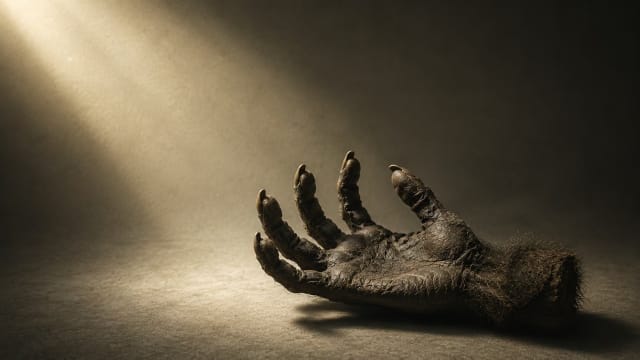
The Monkey's Paw
The Monkey's Paw is more than a horror story. It foreshadowed AI alignment by exposing the danger of systems that obey words but ignore intent.

How Fight Club Became the Brand It Tried to Destroy
A film that condemned consumer culture became one of its most successful products, revealing how capitalism can package even rebellion.

Why Victorian England Feared Female Desire More Than Dracula
Beyond Gothic horror, Dracula exposes Victorian anxieties about female desire, agency, sexuality and the uneasy relationship between instinct and culture.

Why Every Family Edits a Child
Inspired by "Lost and Found" from the ALP Horror Universe by Abhishek Leela Pandey, this essay explores identity, memory, childhood and the hidden ways families shape who we become.