Alliteration as the Hidden Architecture of Human Thought and Memory.
An intellectual essay on alliteration exploring how rhythm shapes memory language politics and human thought long before meaning reaches the mind.
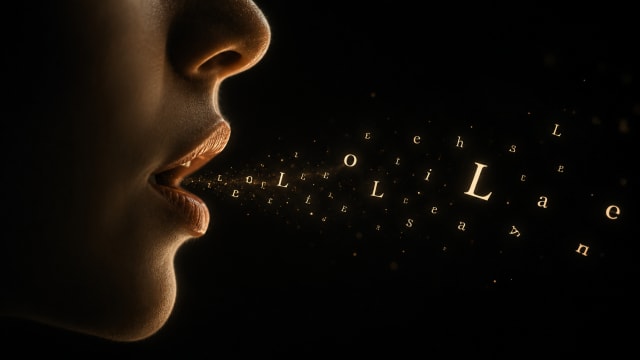
Luminous lamps lined long libraries while learned linguists and lyrical logicians lingered lazily leafing leatherbound lexicons. Lonely lecturers listened lightly to lilting language. Lemon-lit lattices leaked lilac luminosity across little lines and large lessons. Late locomotives lamented beyond London-like lanes while lingering lulls lulled listening learners. Limitless language lived lovingly. Little letters leaped like living lightning through literature leaving listeners lost in lovely loops of layered logic.
Alliteration is often mistaken for ornament. Teachers place it beside rhyme and metaphor as though it were merely a decorative flourish added after meaning has already arrived. Yet alliteration is older than decoration and closer to the roots of thought itself. Before language lived on paper it lived in breath. Ancient poets carried epics not in libraries but in memory. Repetition of sound acted as a bridge across forgetting. The Anglo-Saxon bard relied on recurring consonants the way sailors relied on stars. Sound guided thought through darkness.
Rhythm is not a decorative layer placed upon thought. Rhythm is part of thought itself.
A phrase like “wild winds whipped the water” does more than please the ear. It recruits the body into meaning. The lips repeat a motion. Breath falls into rhythm. Language becomes physical. Modern neuroscience now confirms what oral cultures understood instinctively. The human brain remembers patterned sound more easily than abstract information. Rhythm is not a decorative layer placed upon thought. Rhythm is part of thought itself.
The modern world often distrusts this truth. Bureaucratic prose strips language of texture in pursuit of sterile efficiency. Corporate memos read like exhausted machines speaking to other exhausted machines. Even academic writing frequently fears musicality because elegance appears dangerously emotional. Critics therefore dismiss alliteration as manipulative. They associate repetition with advertising slogans political chants and propaganda. History gives them reason. Demagogues have always understood that crowds remember rhythm long after they forget evidence. Sound can slip beneath skepticism with frightening ease.
Yet this criticism mistakes corruption for essence. Fire destroys cities and still warms homes. Alliteration becomes dangerous only when sound detaches itself from truth. In serious prose repetition functions less like propaganda and more like architecture. It quietly binds ideas together. Journalists describe economic collapse through phrases like “markets melted” or “banks buckled” because repeated consonants compress enormous complexity into emotional immediacy. Language stops describing experience and briefly performs it.
Human beings do not merely think through logic. We think through echo.
Children understand this before philosophers do. A child delights in tongue twisters long before understanding metaphor or irony. Nursery rhymes survive centuries because the mouth itself enjoys repetition. Civilization for all its algorithms analytics and artificial intelligence still carries this ancient instinct. Beneath every anthem prayer poem and protest lies the drumbeat of recurring sound. Human beings do not merely think through logic. We think through echo.
Perhaps this explains why the greatest writers rarely abandon alliteration even when they appear restrained. Shakespeare used it with theatrical force. Churchill used it like artillery. Toni Morrison used it with devastating subtlety. They understood that language is not simply a vehicle for information. It is an instrument designed to move consciousness itself. Meaning enters through the mind but rhythm enters through the nerves.
Alliteration therefore reveals something unsettling about intelligence. Human beings like to imagine themselves as rational creatures guided by evidence analysis and reason. Yet memory remains deeply physical. We remember what pulses. We trust what repeats. Sometimes a single recurring letter lingers longer than an entire argument.
Discussion
Sign in to join the discussion.
More in Reading & Writing

The Comma That Saves Grandma: An RC Inspired by IIM Indore
A tiny mark of punctuation opens into a larger question about how conventions create meaning, coordinate behaviour and quietly hold civilisation together.

How EdTech Forgot Teaching | The 111th Essay
How online education, CAT coaching, AI summaries, and viral learning frameworks transformed teaching into performance, attention, and endless preparation.
The Things We Teach Each Other
I learnt to teach through a fairy without wings. Years later, I understood that learning and teaching may be among our oldest human impulses.

An Indian Answer to Aeon | The 100th GRADFLIX Essay
For the 100th essay, Abhishek Leela Pandey explores how GRADFLIX readers kept deep reading alive in an age of algorithms and scrolling.