The Moth That Textbooks Gave Up and Experiment Brought Back
A celebrated example of natural selection was widely written off as flawed. A six year experiment finished by colleagues after its author's death suggested the core idea had been right.
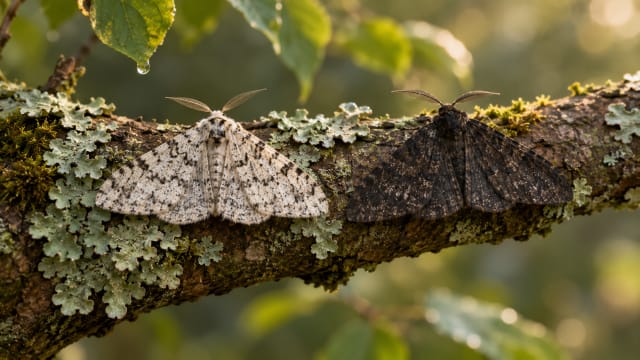
For decades the peppered moth was taught as evolution caught in the act. As soot darkened the trees of industrial Britain, dark moths were said to survive better than pale ones because birds found the pale ones more easily. In the 1950s Bernard Kettlewell reported experiments that appeared to confirm this. Later critics objected that moths do not rest on exposed trunks as often as the experiments assumed and that some methods were flawed, and the story was widely described as discredited.
Michael Majerus, who set out to answer those objections, spent six years releasing moths in a Cambridgeshire garden. After his death in 2009 colleagues published the data in 2012. They reported that birds took significantly more dark moths than pale ones, which supported the claim that predation by sight shapes the balance between the two forms.
GRE reading practice
This passage is written in the GRE style. Its 2 questions are just below, and you can take them on a GRE-style exam screen.
Discussion
Sign in to join the discussion.
More in Evolution

Nature Does Not Speak. We Do.
How does language shape our understanding of nature? Discover why animal behaviour, evolutionary biology and human perception are deeply intertwined.

When Whales Learn to Sing: An RC Inspired by IIM Indore
Whale songs reveal how isolation, imitation and migration can create, preserve and erase cultural differences within animal populations.
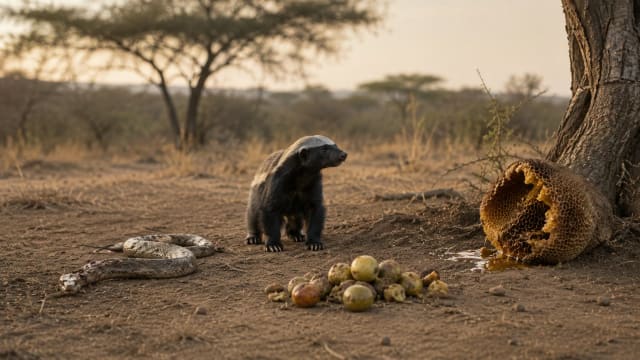
The Animal With a Thousand Plans
The honey badger is often portrayed as the animal kingdom's fearless rebel. Yet its greatest strength is neither aggression nor toughness.
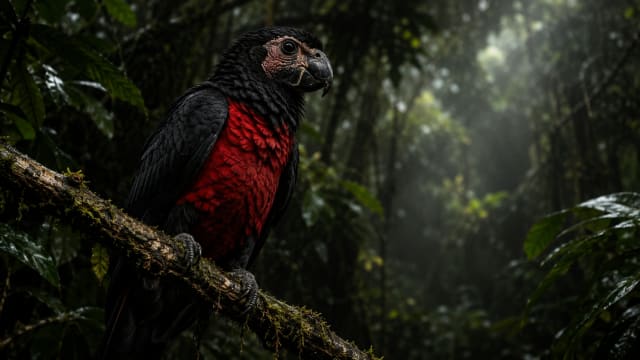
The Parrot That Bets Everything on One Fig: An RC Inspired by IIM Indore
The Dracula Parrot eats almost nothing but figs from a single genus of tree. Its beauty is the product of extreme specialisation. So is its vulnerability.