Nature Does Not Speak. We Do.
How does language shape our understanding of nature? Discover why animal behaviour, evolutionary biology and human perception are deeply intertwined.
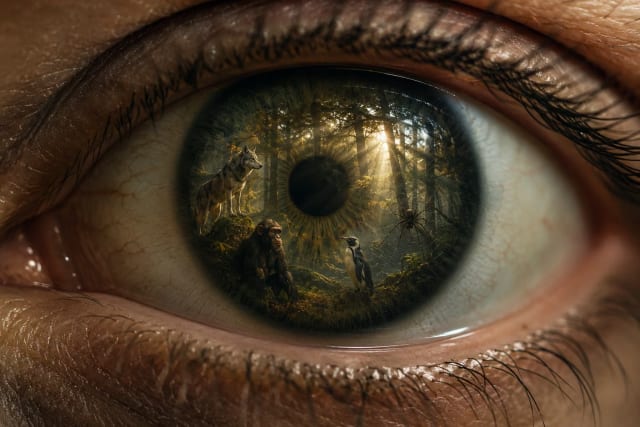
A lion kills a rival's cubs. A penguin remains with a lifelong mate. A spider devours her partner after mating. Open almost any popular science book and these scenes quickly become familiar morality plays. The lion embodies masculine violence, the penguin faithful love, and the spider female vengeance. We rarely notice the sleight of hand. The animals merely behave. It is humans who narrate.
For centuries, biology has doubled as a mirror in which societies search for themselves. Victorian naturalists found rigid hierarchies in the animal kingdom because they lived within rigid hierarchies. Twentieth-century writers discovered competitive males and nurturing females because those categories organised their own world. Today, new observers uncover cooperation, fluidity and social complexity that earlier generations scarcely noticed. Nature did not change nearly as much as the questions directed at it.
Nature does not speak. It is we who keep changing the translation.
This does not mean biology is fiction. Evolution, genetics and anatomy impose genuine constraints. A wolf cannot photosynthesise, nor can a whale climb trees. Yet facts alone never determine meaning. Scientific observation begins with description but inevitably proceeds through language, and language carries history. Words such as "promiscuous", "faithful", "jealous" or "rape" arrive freighted with centuries of human ethics, law and emotion. Once attached to animals, they seem to travel back into humanity as biological proof that our own behaviour is ancient and therefore inevitable.
Many defend this vocabulary because it makes science accessible. A baboon "king" or a "cheating" bird certainly captures attention more readily than sterile technical terminology. Accessibility matters. Without metaphor, much of science would remain imprisoned within laboratories. Metaphor has always been one of science's oldest tools. We speak of genetic "codes", evolutionary "arms races", cellular "machinery" and ecological "balance". None of these expressions is literally true, yet each allows unfamiliar ideas to become mentally visible. The danger, therefore, is not metaphor itself but forgetting that it is one.
The convenience, however, comes at a cost. Metaphors illuminate only by hiding something else. Calling ants "workers" invites us to imagine factories instead of colonies. Describing genes as possessing "selfishness" encourages intentionality where none exists. Referring to an ape as an "alpha male" imports assumptions about leadership and dominance that remain contested even among primatologists. The metaphor eventually ceases to be recognised as a metaphor. It hardens into common sense. By then, what began as a linguistic shortcut has quietly become an explanatory theory.
Metaphors begin as explanations but often end as assumptions.
Some argue that this is merely semantic nit-picking. Whether we describe ducks as engaging in "forced copulation" or use another phrase, the biological reality remains unchanged. There is truth in this objection. Vocabulary alone cannot rewrite evolution. Yet scientific language does more than label observations. It determines which questions appear worth asking, which hypotheses seem plausible and which behaviours are treated as normal or exceptional. Every discipline inherits its conceptual furniture through words before it inherits data.
The deeper lesson is not that we should abandon comparisons between humans and other animals. Comparison is indispensable to science. Rather, we should treat every comparison as provisional. When nature appears to endorse our political convictions too perfectly, scepticism is wiser than celebration. Nature rarely validates ideology. It more often exposes the assumptions we carried into the forest in the first place.
After all, forests contain neither conservatives nor progressives. Dolphins hold no opinions about marriage. Chimpanzees have never written laws on equality. The natural world supplies evidence, not verdicts. If we wish to understand ourselves honestly, we must first admit an uncomfortable possibility. The loudest voice we hear in nature is often an echo of our own.
Discussion
Sign in to join the discussion.
More in Evolution
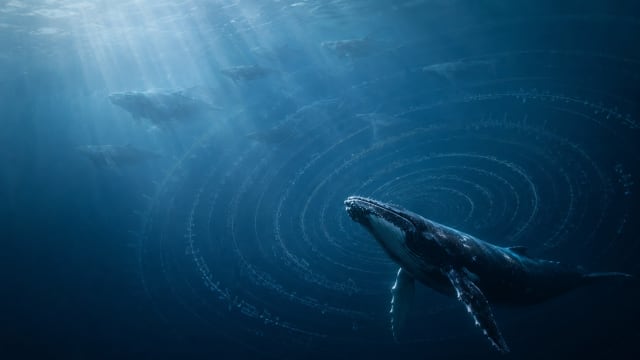
When Whales Learn to Sing: An RC Inspired by IIM Indore
Whale songs reveal how isolation, imitation and migration can create, preserve and erase cultural differences within animal populations.
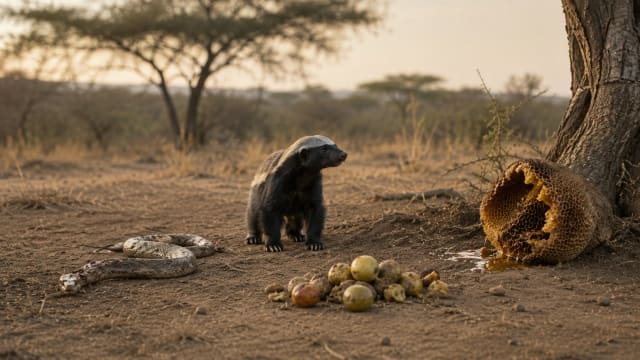
The Animal With a Thousand Plans
The honey badger is often portrayed as the animal kingdom's fearless rebel. Yet its greatest strength is neither aggression nor toughness.
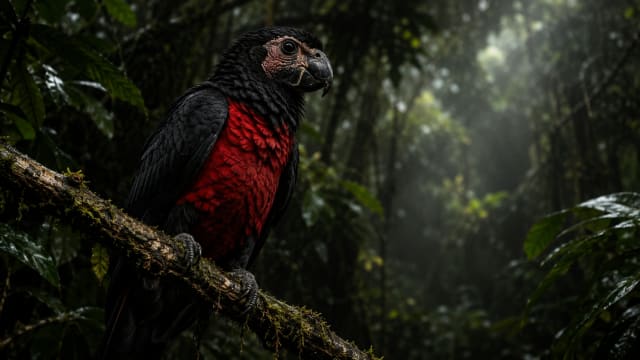
The Parrot That Bets Everything on One Fig: An RC Inspired by IIM Indore
The Dracula Parrot eats almost nothing but figs from a single genus of tree. Its beauty is the product of extreme specialisation. So is its vulnerability.
The Last Ash Tree: An RC Inspired by IIM Indore
A fungal disease is erasing Europe's most familiar tree. What ash dieback reveals about the limits of knowing and caring about the natural world.