The Parrot That Bets Everything on One Fig: An RC Inspired by IIM Indore
The Dracula Parrot eats almost nothing but figs from a single genus of tree. Its beauty is the product of extreme specialisation. So is its vulnerability.
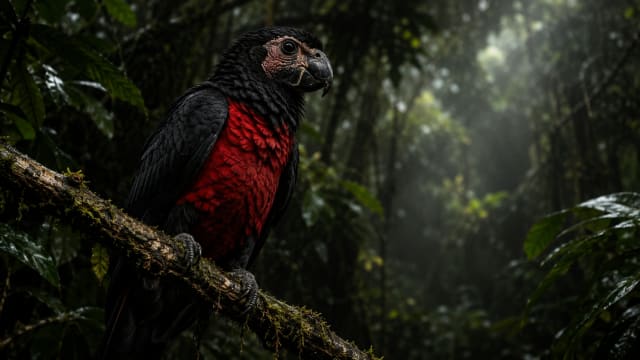
In the montane rainforests of New Guinea lives a bird that looks as though it was designed by someone who had just finished reading Gothic fiction. The Pesquet's parrot, known informally as the Dracula parrot, is largely black with a sudden eruption of blood-red feathers across its chest and belly. Its face is bare and vulturine, stripped of the usual feathering that softens a parrot's expression. It does not look like a creature that should exist in the same category as the cheerful, adaptable birds most people associate with the parrot family. It does not behave like one either.
The Dracula parrot eats almost exclusively figs. Not any figs, but the figs of specific genera found in its forest habitat. It has evolved this specialisation over a very long period, and the specialisation has shaped its body. The bare face, so unusual among parrots, is an adaptation to the fig. A feathered face would trap the sticky fig pulp and become matted and unhygienic. The parrot's unusual appearance is therefore not an accident. It is the visible record of a long and very specific commitment.
That commitment has costs. A generalist parrot can move between food sources as availability changes across seasons and across years. If one tree fails to fruit, another species compensates. The generalist carries a kind of portfolio, and diversification reduces risk. The Dracula parrot has abandoned this portfolio entirely. It has bet its survival on the continued availability of one kind of food in one kind of forest. When the figs are abundant, the parrot thrives. When they are not, or when the forest that produces them is degraded, the parrot has no alternative to fall back on.
Ecologists call this the cost of specialisation. An organism that evolves to do one thing with great efficiency becomes, over time, less capable of doing other things. The physical changes that make it better at its chosen strategy make it worse at alternatives. The Dracula parrot's bare face is an advantage when figs are available and a liability when they are not, because it cannot easily switch to the foods that other parrots manage.
This pattern appears well beyond ecology. Economies that concentrate on a single export become prosperous when that commodity is valued and precarious when it is not. Professionals who develop one very specific skill command high rewards in conditions that value it and find themselves exposed when those conditions shift. The logic is the same in each case. Specialisation increases performance within a narrow range and decreases resilience across a wide one.
Every commitment to a particular way of doing things is also a reduced capacity to do things differently. The beauty of the Dracula parrot is inseparable from its vulnerability. The two are not in tension. They are the same thing.
The Dracula parrot did not choose its strategy. Natural selection shaped it across thousands of generations, rewarding efficiency and penalising waste. The result is a creature of striking beauty and considerable fragility, perfectly adapted to conditions that may not persist. Its survival depends entirely on the survival of the forest around it.
There is something clarifying about this. The parrot's situation makes visible a trade-off that is easy to overlook in more complex systems. Every commitment to a particular way of doing things is also a reduced capacity to do things differently. The beauty of the Dracula parrot is inseparable from its vulnerability. The two are not in tension. They are the same thing.
Discussion · 4
This article is based on one of the unusual species of Parrots, named as 'Dracula parrots'. The Dracula parrot is one of its kind, as it has its unusual body color, behavior and food choices, that completely differs from the usual parrot family. Having exclusive choices, it consumes only a specific genre of figs and this consumption is the reason why this parrot differs from its community. But every exclusive choice or specialization has its own challenges as depending on one single thing can make us unfamiliar with the alternate choices available outside.
Passage Type: Dominant Hypothesis/ Author's Point Of View Passage Structure: Descriptive Tone: Neutral The central theme of the passage is that specialisation creates a trade off between peak efficiency and resillience. The author uses the Dracula Parrot as an allegory to highlight the broader concept of specialization vs diversification. Becoming an expert in one trait is highlight advantageous and demanding till the conditions are favourable. Once the demand of the skill or trait falls apart, the survival of the individual is at stake. The Dracula Parrot's "bare face" symbolizes the cost of efficiency as well as vulnerability. While it gives the creature a dietary advantage, it also creates a weakness for it during insufficient supply of the same food. The same explains about economic countries who are known for dealing in a single commodity. Thus, beauty and vulnerability arent two opposite attributes; they are two sides of the same coin
The passage starts by the discussing the dracula parrot's physical appearance, behaviour and food choices and how they differ from general parrots. Then it moves on to the broader aspect of what this specialisation costs to the dracula parrot and how similar patterns are visible in different communities as well and eventually focuses on the central theme of how specialisation creates a trade off between efficiency and resilience and the role Natural selection plays in it.
according to passage, specialisation over a particular trade enhances the efficiency and increases performance but valid only when conditions are in favour when not it reduces the capacity to perform on other trades making the organism vulnerable which represents duality applied to various profession, trades etc
Sign in to join the discussion.
More in Animals
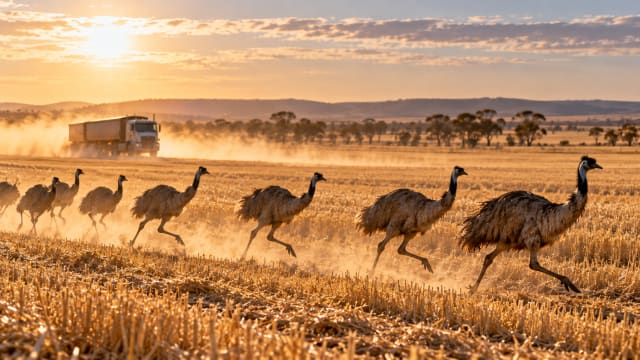
The Emu War and the Problem Soldiers Could Not Shoot
In 1932 machine guns were sent against emus in Western Australia, and the birds won the first round. The story is usually told as comedy, yet it hides a real question about what kind of problem an army can solve.
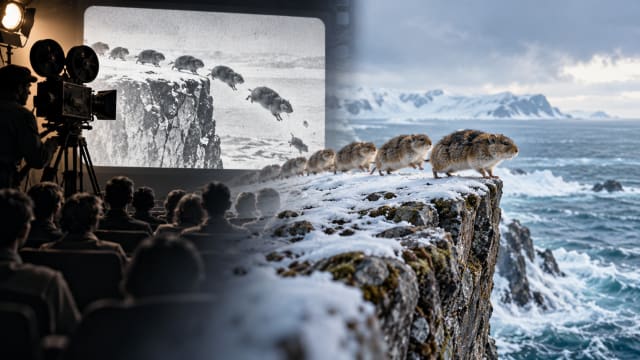
The Cliff That Was Built - An RC Inspired by IIM Indore
A famous film showed lemmings marching to their deaths in 1958. The scene was staged, and the myth it fed says more about the audience than about the animal.
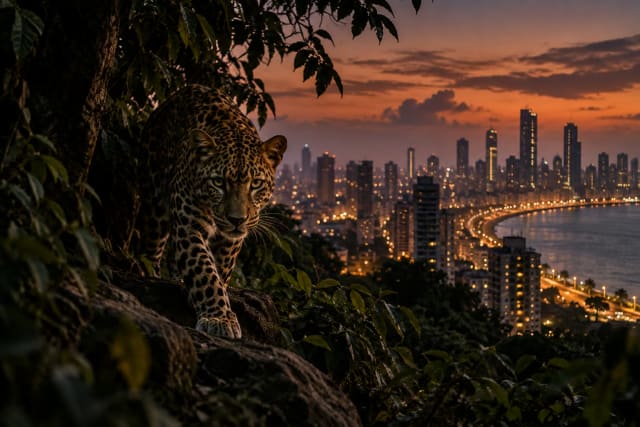
The Leopard That Moved Back to Mumbai: An RC Inspired by IIM Indore
47 leopards live inside Sanjay Gandhi National Park, entirely surrounded by Mumbai. They have killed more than thirty people since 2002. Neither the city nor the leopards are going anywhere.
When Whales Learn to Sing: An RC Inspired by IIM Indore
Whale songs reveal how isolation, imitation and migration can create, preserve and erase cultural differences within animal populations.