The Treaty That Outlawed War
Fifteen states signed a treaty in Paris renouncing war. It prevented nothing in the short run, and yet it did not disappear.
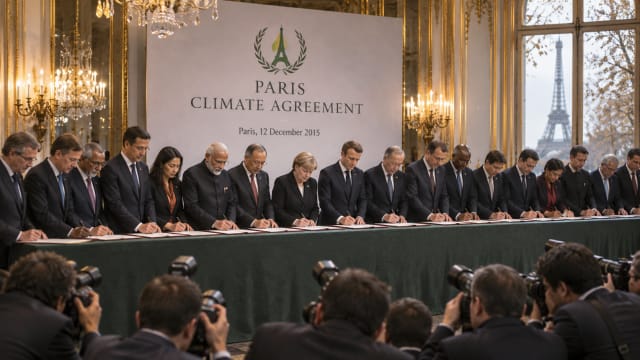
On 27 August 1928 in Paris, representatives of fifteen states, including France, the United States, the United Kingdom, Germany, Italy and Japan, signed a treaty by which they renounced war as an instrument of national policy. The idea began in April 1927, when the French foreign minister, Aristide Briand, proposed in an open letter a pact between France and the United States. American officials, led by Secretary of State Frank Kellogg, preferred an agreement open to all nations, and the proposal grew into a general treaty.
The Senate of the United States approved the pact by 85 votes to 1, with reservations that preserved the right of self defence and did not oblige the nation to act against violators. Forty seven more states eventually joined, so that most established states of the time were parties. Yet the treaty contained no mechanism to enforce it and never defined self defence.
Yet the treaty contained no mechanism to enforce it and never defined self defence.
The test came within a few years. In 1931 Japanese forces seized Manchuria, and the pact did not prevent it. Another world war followed within eleven years of the signing. The treaty, however, acquired a second life after 1945. It is often cited as an early source of the idea that waging aggressive war is a crime, and the Charter of the United Nations later prohibited the threat or use of force between states.
Historians still disagree about whether the pact was a naive failure or a quiet foundation. Both readings agree on one point. A rule can fail to stop a war and still change what later generations are willing to call lawful.
CLAT English practice
This passage is written in the CLAT style. Its 5 questions are just below in exam mode.
Discussion
Sign in to join the discussion.
More in International Relations

Hormuz and the Illusion of a Borderless World
The Strait of Hormuz carries the lifeblood of the global economy, revealing how geography still shapes trade, energy, and power.

Why Spies Must Become Nobody
A haunting essay on spies, secrecy, and identity exploring how espionage turns ordinary people into living masks.
The MELODI Phenomenon
How memes, symbolism and digital spectacle transformed modern geopolitics into a new form of folklore in the algorithmic age.

The World Is Becoming Medieval Again
Is the nation state losing its monopoly on power? Discover why the twenty first century increasingly resembles the political architecture of the Middle Ages.