Why Spies Must Become Nobody
A haunting essay on spies, secrecy, and identity exploring how espionage turns ordinary people into living masks.
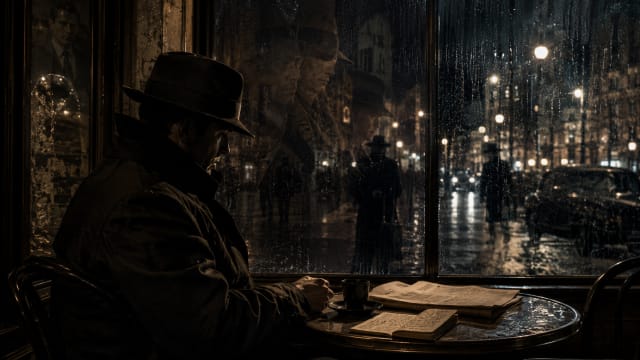
The life of a spy is mostly waiting. Not the cinematic sprint across rooftops in Prague. Not the tuxedo, the hidden pistol, or the final confrontation in a rain soaked alley. Most espionage unfolds in silence. It unfolds in rented apartments with weak heating and curtains that never fully close. It unfolds in cafés where conversations drift like cigarette smoke and in airports where nobody remembers the face sitting beside them. The modern spy survives not through violence but through invisibility. He becomes a professional absence. The highest achievement in espionage is not recognition but disappearance.
During the Cold War, intelligence agencies learned that the ideal operative was not charming in the conventional sense. The ideal operative was forgettable. Soviet illegals lived for decades as ordinary citizens in countries they were trained to infiltrate. They became engineers, teachers, accountants, and suburban parents. They memorised grocery prices more carefully than military codes. They learned how to sound bored during casual conversation because boredom itself became camouflage. A successful spy could spend years constructing a personality detailed enough to survive suspicion. The role stopped feeling artificial after a while. The invented life slowly hardened into reality.
The greatest spies change history while remaining almost entirely absent from public memory.
Espionage therefore contains a strange contradiction. States recruit individuals for their intelligence, adaptability, and imagination, then demand the systematic destruction of those same qualities. A spy must divide himself into separate compartments. One self pays taxes, attends weddings, and smiles in family photographs. Another self photographs documents, recruits informants, and memorises escape routes through unfamiliar cities. Over time the border between these identities begins to collapse. The disguise no longer feels like clothing that can simply be removed. The performance colonises the performer.
Popular culture misunderstands this because cinema worships revelation. Spy films depend on dramatic unmasking. There is always a final confession, a hidden weapon, or a sudden betrayal beneath flickering lights. Real intelligence work values the opposite condition. Success means nothing visible occurs. No headlines appear. No witnesses remember your face. No photographs survive. The perfect operation leaves history apparently untouched on the surface while quietly altering its direction underneath. Espionage resembles erosion more than explosion. It changes the landscape slowly enough that most people never notice the transformation taking place.
John le Carré understood this better than many governments. His spies rarely appeared glamorous. They looked exhausted, lonely, and morally uncertain. In his novels, espionage was not adventurous statecraft but emotional corrosion. Friendship became access. Romance became leverage. Trust itself became unstable. A spy learned to imitate sincerity so effectively that sincerity eventually felt staged. Even private memory became unreliable. Which stories genuinely belonged to him and which were invented for operational convenience?
Some argue that digital surveillance has made the human spy obsolete. Satellites monitor borders. Algorithms predict behaviour. Smartphones leak more information than interrogations once extracted. Yet information alone rarely explains motive. Machines reveal what people do but struggle to explain why they do it. Human beings still hide ambition, resentment, fear, and ideological hunger behind ritual and performance. The spy remains valuable because he interprets ambiguity rather than merely collecting signals.
Perhaps that is why spy stories continue to endure. They exaggerate a condition modern people already recognise within themselves. Contemporary life demands constant self management. We shift identities between workplaces, friendships, families, and digital spaces. We learn to perform versions of ourselves depending on the audience watching. The spy simply lives this ordinary fragmentation at an unbearable intensity. In the end, espionage is not really about secrets. It is about the psychological cost of becoming one.
Discussion
Sign in to join the discussion.
More in International Relations

Hormuz and the Illusion of a Borderless World
The Strait of Hormuz carries the lifeblood of the global economy, revealing how geography still shapes trade, energy, and power.
The MELODI Phenomenon
How memes, symbolism and digital spectacle transformed modern geopolitics into a new form of folklore in the algorithmic age.

The World Is Becoming Medieval Again
Is the nation state losing its monopoly on power? Discover why the twenty first century increasingly resembles the political architecture of the Middle Ages.

The Art of Corporate War
An exclusive extract from Abhishek Leela Pandey's The Art of Corporate Power, exploring how capitalism transformed warfare into strategic competition.