The Nurse Who Lay in a Hospital for Four Decades
One patient's long silence led the Supreme Court to ask whether the right to live with dignity includes the right to die with it.
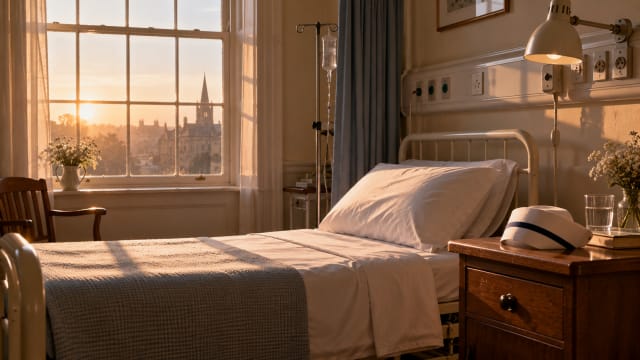
In November 1973, Aruna Shanbaug, a young nurse at the KEM Hospital in Mumbai, was attacked by a ward attendant who strangled her with a dog chain. The attack deprived her brain of oxygen, and she never recovered. She spent more than four decades in a bed on the hospital's premises, cared for by the nurses who had once been her colleagues, and she died of pneumonia in May 2015.
In 2009 the journalist Pinki Virani petitioned the Supreme Court to allow Shanbaug to die, arguing that she was in a persistent vegetative state. In March 2011 the Court rejected the petition, holding that the hospital staff who had cared for her for decades, and not a writer who had come to her case later, were best placed to speak for her. The staff wished to continue her care. But the Court did something larger. It held that passive euthanasia, meaning the withdrawal of life support from a patient who cannot recover, could be lawful in India under safeguards supervised by a High Court, though it did not permit active measures to end life.
In 2018 a Constitution Bench in Common Cause v Union of India went further. It held that the right to live with dignity under Article 21 includes the right to die with dignity, and it recognised advance directives, often called living wills, by which a person can state in advance that treatment should be withheld if there is no hope of recovery. The Court laid down procedures for such directives and modified them in 2023 to make them simpler to follow.
Critics have raised two concerns. The first is that, in a country where medical care is unequal and families can be under heavy financial strain, a right to refuse treatment may be exercised under pressure rather than choice. The second is that a person's wishes in advance may differ from what the same person would want when the moment arrives. Supporters respond that safeguards, medical boards and written records exist to guard against exactly these dangers, and that to deny any choice is also to decide.
Discussion
Sign in to join the discussion.
More in Ageing & Death

The Forgotten Third of Our Lives
Why can't we remember our dreams? Discover how REM sleep, memory, and evolution shape the forgotten third of our lives.

What Happens When You Actually Change Your Mind: An RC Inspired by IIM Indore
Most arguments do not change minds. They change voiced positions. Genuine belief revision is neurologically different, phenomenologically distinct and far rarer than it appears.

I Thought Everyone Saw the World This Way
A reflective essay on teenage love, mathematical thinking, and why I instinctively translated people, emotions, and the world into algebra.

The Zipper You Don't Understand
Most people are certain they understand how a zipper works, until asked to explain it. The same gap shows up in political conviction.