The Psychologist Who Asked What Mystics Were For
William James judged mystical states by what they did for a life and not by where they came from. The method is generous, and it leaves the oldest question unanswered.
GRADFLIX Editors3 Qs · Hard
Psychology is one of the most frequent RC genres: studies, biases, emotion, memory and the self. These essays give you the long, hedged, evidence-heavy prose of real passages, where the author's tone matters as much as the findings.
46 long-form psychology essays, written at the density of real CAT passages, each with CAT, XAT and GMAT-style questions and explanations. For real exam passages, practise the solved CAT RC PYQs; for a daily routine, see CAT RC practice.
William James judged mystical states by what they did for a life and not by where they came from. The method is generous, and it leaves the oldest question unanswered.
Beauty can be catalogued but desire keeps slipping out of the list, which suggests that attraction lives in a relationship and not in a body.
In 1974 an economist reported that nations grew richer without growing happier. Fifty years of argument have shown that the answer depends less on the money than on the question asked of the people who have it.
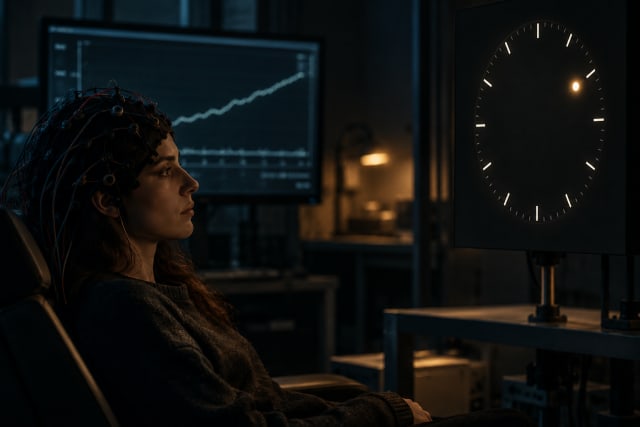
A famous experiment appeared to show that the brain commits to an action before a person knows they have chosen it, but a later reading suggests the evidence may be an artefact of how it was averaged.
A treat on a plate became the most famous test of character in modern psychology. A larger study and a cleverer experiment suggest that the children may have been answering a different question.
The Psychology of Being Confidently Wrong
A Victorian scientist set out to prove that ordinary people judge badly and found a crowd that was almost exactly right. The trouble is what happens once the crowd starts to talk.
A horse in Berlin tapped out sums to the delight of the crowds, and a psychologist later showed that the arithmetic belonged to the audience.
In the summer of 1518 a street in Strasbourg filled with people who could not stop dancing, and the official remedy may have made things worse.
A newspaper once told New York that dozens of neighbours watched a murder and did nothing. The story built a famous theory, and then the story itself began to fall apart.
Phineas Gage is the best known brain injury patient in history, and most of what is said about him is shakier than the textbooks admit. The more his case is studied, the less certain it becomes where a person actually lives.
A 1993 study of 36 students led a US governor to send classical music to every newborn in his state. The effect was small, short and probably not about Mozart at all.
In 1971 a Stanford basement became a prison, and the world learned that ordinary people turn cruel when given power. The archive suggests that somebody told the guards what the experiment wanted to see.
In 2014 a Berlin brain scan study linked heavy pornography use to a smaller reward region, and the headlines said the brain was shrinking. The study could not say that, and the argument it started is about meaning more than anatomy.
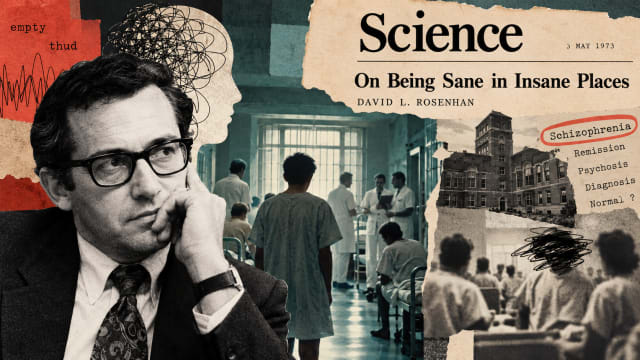
In 1973 a Stanford psychologist reported that psychiatrists could not tell healthy people from the mentally ill. Half a century later, the study itself is proving hard to tell from fiction.
Every civilisation in history has built monuments. Jeffrey Greenberg spent decades asking why. His answer changed how psychology thinks about culture, death, and what it means to be human.
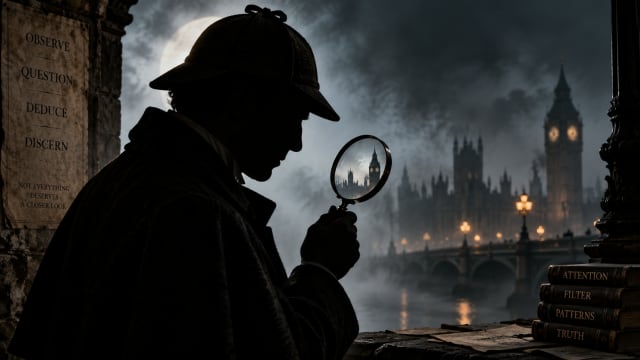
Holmes notices everything Watson misses. The passage argues this is not because he observes more. It is because he has a better theory of what is worth observing.
Most arguments do not change minds. They change voiced positions. Genuine belief revision is neurologically different, phenomenologically distinct and far rarer than it appears.
Is monogamy a biological destiny or a cultural invention? A philosophical exploration of polyamory, love, evolution, and the arithmetic of romance.
Manifestation promises cosmic rewards, but psychology suggests belief changes us more than the universe. Where does science draw the line?
Toxic femininity isn't the opposite of masculinity but the corruption of feminine virtues into emotional coercion, guilt and invisible control.
Most people are certain they understand how a zipper works, until asked to explain it. The same gap shows up in political conviction.
Inspired by "Lost and Found" from the ALP Horror Universe by Abhishek Leela Pandey, this essay explores identity, memory, childhood and the hidden ways families shape who we become.
Why can't we remember our dreams? Discover how REM sleep, memory, and evolution shape the forgotten third of our lives.
A reflective essay on teenage love, mathematical thinking, and why I instinctively translated people, emotions, and the world into algebra.
Why do we see faces in walls and clouds? Explore pareidolia, pattern recognition, and the surprising psychology behind human perception.
Can a pill make us kinder? The science of MDMA challenges everything we believe about empathy, morality, trauma and the chemistry of human connection.
The Kama Sutra was never just about sex. Discover how this ancient Indian text explored desire, relationships, happiness, and the art of living.
A penguin's pebble looks like a gift of love. It may actually be a signal of competence—a clue to how human courtship really works.
Why boredom may be the most valuable mental state we have lost in the smartphone age, and what its disappearance means for creativity and selfhood.
A childhood struggle with Just-Right OCD reveals a deeper truth about why humans crave symmetry, closure, patterns, and meaning itself.
Psychology discarded the Electra Complex, yet literature never did. Why do daughters still struggle to inherit a father's legacy without losing themselves?
Can AI replace human intimacy? This essay explores love, loneliness, artificial partners, and why friction may be essential to real relationships.
How technology, algorithms and social media are reshaping self-discovery, identity, attention and human consciousness in the digital age.
Neuroscience reveals dopamine is not the brain’s pleasure chemical but the engine of anticipation, addiction, motivation, and endless pursuit.
An exploration of déjà vu as an illusion, revealing how the brain constructs false familiarity and exposing the fragile, reconstructed nature of memory.
A concise philosophical reflection on the seven stages of love, tracing its journey from fleeting attraction to lasting transformation.
A concise reflection on Machiavellianism that shows how power reshapes morality, revealing a quiet tension between survival and integrity.
An exploration of LSD as a lens into the mind, arguing that psychedelics do not distort reality so much as reveal how perception itself is constructed.
An exploration of the “Good Girl Tax,” showing how the ancient Madonna–Whore archetype still shapes workplace expectations and quietly restricts women's professional advancement.
A concise exploration of whether destructive patterns can emerge from traditionally feminine traits.
Porn addiction is less a crisis of libido than a crisis of limitless novelty. In an age of algorithmic abundance, desire is no longer courted.
Why are we drawn to numbers? This essay explores numerophilia—the psychological comfort and philosophical depth behind our love for mathematical order.
When the scripts we inherit fail, we confront the unsettling fact that meaning is not discovered but made. In that fracture lies a quiet, difficult freedom.
Ghosts may not haunt houses, but minds. This essay explores how perception, grief, and memory turn absence into presence.
An existential essay on meaning, modern life, identity, freedom, and the quiet psychological crisis hidden beneath achievement and productivity.