The Technologization of Self-Discovery
How technology, algorithms and social media are reshaping self-discovery, identity, attention and human consciousness in the digital age.
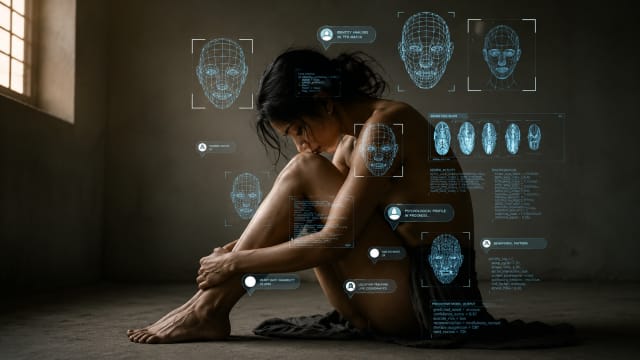
Christopher Columbus crossed the Atlantic by reading stars, currents and silence. Months at sea forced sailors into confrontation with uncertainty, isolation and the limits of human control. Five centuries later, humanity still navigates by glowing lights, except the constellations now fit inside pockets. Smartphone screens illuminate bedrooms, buses and lonely midnights, guiding not ships but identities. The modern individual increasingly learns who they are through dashboards, algorithms, playlists, personality tests and engagement metrics. A teenager may know their weekly screen-time report more intimately than their own fears. The ancient pilgrimage inward has quietly become a technologically mediated performance.
For most of history, self-discovery demanded friction. Socrates wandered Athens asking inconvenient questions. The Buddha abandoned luxury to confront suffering directly. Mahatma Gandhi called his autobiography The Story of My Experiments with Truth, framing identity as ethical discipline rather than personal branding. Silence, prayer, reading, heartbreak and conversation once functioned as technologies of the soul. The self was not something displayed. It was something wrestled with.
The digital age alters this arrangement fundamentally. Today, algorithms anticipate desires before individuals consciously articulate them. Fitness trackers convert health into data streams. Dating apps quantify compatibility. Recommendation systems curate taste with eerie precision. The self is increasingly interpreted not philosophically but computationally. Human identity becomes measurable, archivable and monetizable.
The modern individual does not merely live anymore. They continuously broadcast themselves living.
This transformation creates a peculiar paradox. Social media promises self-expression while quietly manufacturing conformity. Platforms reward visibility, speed and emotional certainty, not ambiguity or introspection. Algorithms feed users increasingly familiar versions of themselves, constructing what might be called “echo chambers of identity.” The result is a culture of external hypervisibility combined with internal fragmentation. One can cultivate an immaculate online persona while remaining profoundly uncertain about who one actually is.
Critics sometimes argue that technology merely amplifies timeless human narcissism. There is truth in this. Human beings have always sought validation from tribes, crowds and mirrors. Yet the scale matters. Earlier societies imposed limits through geography, memory and physical presence. Digital systems eliminate those limits. A Roman citizen could embarrass himself before a city. A modern citizen can embarrass himself before eternity. The internet remembers what older civilizations wisely allowed people to outgrow.
The deeper issue lies in the economics beneath the screen. Industrial capitalism extracted physical labour. Digital capitalism extracts attention, emotion and behavioural prediction. Technology companies no longer study only what people buy; they study who people are. Search histories, sleep patterns, political anxieties and emotional vulnerabilities become commercially valuable raw material. The individual is simultaneously consumer and commodity.
And yet the story is not entirely bleak. Technology has democratized access to philosophy, therapy, literature and intellectual traditions once confined to elite institutions. A student in rural India can now encounter Dostoevsky, Buddhist philosophy or quantum physics within seconds. Online communities often provide belonging to those isolated by geography, class or prejudice. The machine can illuminate as much as it manipulates.
The danger emerges when information masquerades as wisdom. Knowing one’s heart-rate variability is not the same as understanding grief. Having followers does not cure loneliness. Endless connectivity can coexist with spiritual exhaustion. Civilizations rarely collapse from technological weakness alone. More often, they forget what human beings are for.
Perhaps that is why the old disciplines still endure stubbornly beneath the noise. People continue retreating into forests, monasteries, books, therapy rooms and late-night conversations searching for something algorithms cannot fully map. The deepest forms of selfhood remain resistant to quantification. They emerge slowly through silence, suffering, memory and moral choice.
The question facing modern civilization is therefore not whether technology will shape the self. It already does. The real question is whether human beings will remain authors of their inner lives or surrender that authorship to systems designed primarily for prediction and profit. Humanity once looked toward stars to navigate oceans. Now it looks toward screens to navigate identity itself, and risks confusing guidance with wisdom.
Discussion
Sign in to join the discussion.
More in Technology & the Self

The Last Generation to Remember Boredom
Why boredom may be the most valuable mental state we have lost in the smartphone age, and what its disappearance means for creativity and selfhood.

The Forgotten Third of Our Lives
Why can't we remember our dreams? Discover how REM sleep, memory, and evolution shape the forgotten third of our lives.
What Happens When You Actually Change Your Mind: An RC Inspired by IIM Indore
Most arguments do not change minds. They change voiced positions. Genuine belief revision is neurologically different, phenomenologically distinct and far rarer than it appears.

I Thought Everyone Saw the World This Way
A reflective essay on teenage love, mathematical thinking, and why I instinctively translated people, emotions, and the world into algebra.