The Machine IBM Built and the Standard It Could Not Keep
IBM created the personal computer industry in a year. A decision made to save time left the profits of that industry with two of its suppliers.
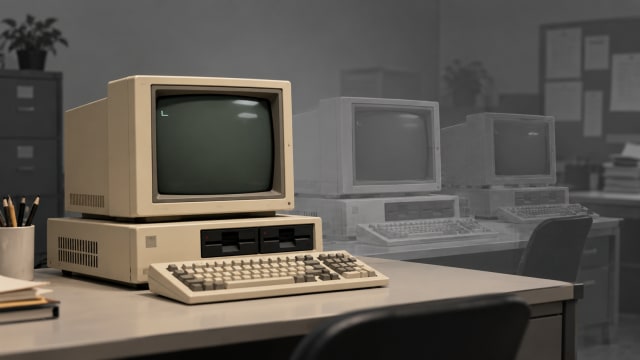
When IBM decided in 1980 to build a personal computer, it did something unusual for a company that made nearly all of its own parts. To reach the market in about a year, it bought the processor from Intel and licensed the operating system from a small company called Microsoft. The arrangement, by most accounts, allowed Microsoft to sell the same system to other manufacturers under its own name.
The decision looked sensible. The IBM PC, launched in 1981, sold strongly, and its design was assembled from standard parts. But standard parts can be bought by anyone. In 1982 Compaq announced a portable machine built with a clean room procedure, in which engineers who had never seen IBM's code wrote a compatible replacement from a specification, and it ran the same software. Other makers followed. Buyers cared less about who built the box than about whether it ran the programs they already owned, and soon those programs ran on the machines of many firms.
IBM tried to regain control with a new line in 1987 that used a proprietary internal bus design, but the standard had by then escaped. The company had created a market and then discovered that the value in it sat with the two suppliers whose products every maker needed. Some analysts argue that IBM had little choice, since a closed machine built in a year might not have attracted software writers at all. That defence is plausible, but it does not explain why IBM did not seek exclusive rights to the operating system, which it might have asked for at small cost.
The company had created a market and then discovered that the value in it sat with the two suppliers whose products every maker needed.
Discussion
Sign in to join the discussion.
More in History of Technology

The Monk's Error, The Model's Echo
AI systems increasingly learn from text that earlier AI systems wrote. History has seen this error before, in monasteries.

The Loneliest Relationship Is Not With a Robot
Artificial companions do more than imitate intimacy. They expose the hidden assumptions that have always shaped how humans recognise love.

What the Algorithm Cannot Taste
Every major technology company is racing to quantify human experience. The one thing they cannot quantify is the reason the race matters.

The Cave Beneath the Map
A haunting essay on video games, memory, and digital guilt where a hidden cave of corpses reveals the terrifying morality of virtual worlds.