The Birth of Venus and the Problem of Beauty
An introspective take on Botticelli’s Birth of Venus, where beauty unsettles, lingers, and reshapes perception rather than offering simple meaning.

A woman arrives, but not in the way things usually arrive. No urgency, no sound, no consequence. Just a body placed on a shell, as if the world, for once, decided not to interfere. Even time seems to hesitate, like it is unsure whether to continue or simply watch. At first, it looks like beauty, simple, contained, almost decorative. But the longer you stay, the less stable that idea becomes. Beauty, when it appears this composed, stops being something you admire and starts becoming something that unsettles you, quietly, persistently, without asking permission.
You look at her and something shifts, not desire exactly, not reverence either, something quieter, more invasive. As if you have seen this before, or as if you were always meant to see this and forgot. The mind does not analyse immediately. It hesitates. And in that hesitation, the painting begins. She stands there, impossibly balanced. Her body is slightly wrong, the neck too long, the posture almost unstable, the proportions resisting anatomy. But the error never breaks the image, it protects it. She does not feel like a woman. She feels like an idea that has taken shape and is pretending to belong here.
Once you notice that, everything else rearranges itself. The wind behind her becomes delivery, the figure waiting with the cloak becomes expectation, the shore becomes a threshold rather than a place. Nothing exists independently, everything is arranged to bring her into view. So the question changes, not who she is, but why she is here. The convenient answer is mythology, a return to older stories, a rediscovery of the body after restraint. It sounds complete, almost too complete. Because she does not behave like a myth. She does not command, does not seduce, does not even acknowledge. Her gaze slips past you, as if you are not the point.
And that is where the discomfort settles. We are used to beauty that wants something, attention, desire, possession. But this beauty refuses all of that. It does not invite you. It does not reject you. It simply exists, and leaves you to deal with what that existence does to you. There is an explanation available, that beauty reflects something higher, that it is a step from body to idea, from idea to truth. It sounds convincing, even elegant. But the painting does not feel like it is lifting you upward. It feels like it is holding you still, suspending you between understanding and feeling.
You do not ascend, you linger. And in that lingering, something changes. The urge to explain weakens, the need to possess fades. You stop asking what she means and start noticing what she is doing to you. She slows you down, interrupts the instinct to categorise and conclude. For a moment, you are not looking at the painting, the painting is rearranging you. The sea remains calm, the shore waits, but she has not fully arrived. Everything is suspended, arrival without resolution, presence without consequence. And somewhere in that suspension, almost quietly, you realise something you were not trying to realise.
She is not entering the world, she is entering you, not to be understood, but to remain.
Discussion
Sign in to join the discussion.
More in Visual Arts

The Thief Who Made the Mona Lisa Famous
When a former worker walked out of the Louvre in 1911 with a modest portrait under his smock, he removed a painting and, by most accounts, helped create an icon.
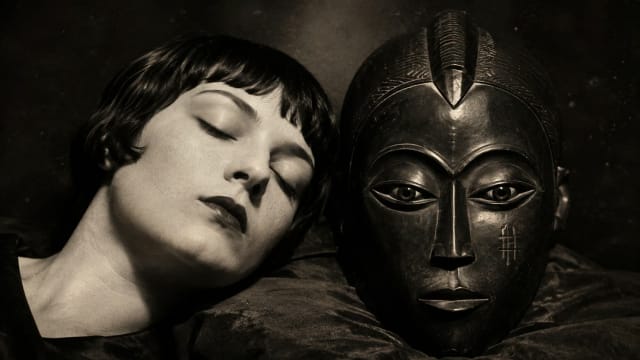
Kiki with African Mask
Why does a carved mask seem alive? Man Ray's iconic photograph reveals why humans instinctively project consciousness onto faces, real or imagined.

Why Madhubani Paintings Refuse Empty Space
Explore the history, symbolism and cultural significance of Madhubani paintings, the vibrant folk art tradition of Mithila rooted in Indian mythology.
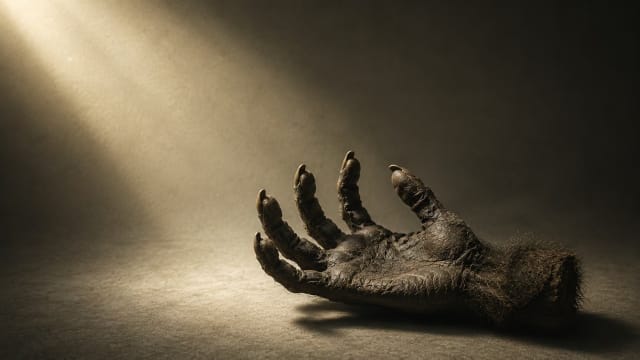
The Monkey's Paw
The Monkey's Paw is more than a horror story. It foreshadowed AI alignment by exposing the danger of systems that obey words but ignore intent.