The Soda Company That Did Not Dress Santa in Red
Many people believe that a soft drink company gave Santa Claus his red suit. The older record shows a more interesting story about how a tradition gets its single shape.

Every December a familiar story circulates, which says that the soft drink company Coca Cola invented the modern Santa Claus and dressed him in its own red and white. The company's advertising did help to fix the picture in millions of minds, and its commissioned artist Haddon Sundblom began painting a large, jolly Santa for its Christmas advertisements in 1931. The claim of invention, however, fails when it is set against the older record.
Santa had worn red well before 1931. Thomas Nast, who began drawing him for Harper's Weekly during the American Civil War, is credited with fixing his round shape and his home at the North Pole. Illustrators and card makers showed him in red coats in the decades that followed, although green, blue and brown robes also appeared. The company itself says that it did not invent Santa Claus.
What Sundblom changed was the character. Earlier Santas ranged from a gaunt, elfin figure to a stern bishop. Sundblom painted a warm, human sized grandfather with laughing eyes, and he went on repainting him until 1964, reportedly using first a retired salesman and later his own reflection as models.
The myth persists because it holds a partial truth. The company did not create the figure, but it did create the habit of seeing him the same way every year. Sundblom's paintings ran for more than thirty years, and they appeared in magazines and on billboards that reached far more homes than any Christmas card. Repetition on that scale can make one version feel like the original, even to people who have seen older ones.
The company did not create the figure, but it did create the habit of seeing him the same way every year.
Traditions are seldom invented by a single hand. They are more often standardised by whoever reaches the most people with the most consistent picture. If an image can come to look timeless within a single lifetime, the customs that seem to have always existed may be younger than anyone alive is willing to guess, and no record is certain to show which ones.
Discussion
Sign in to join the discussion.
More in Rituals & Celebrations
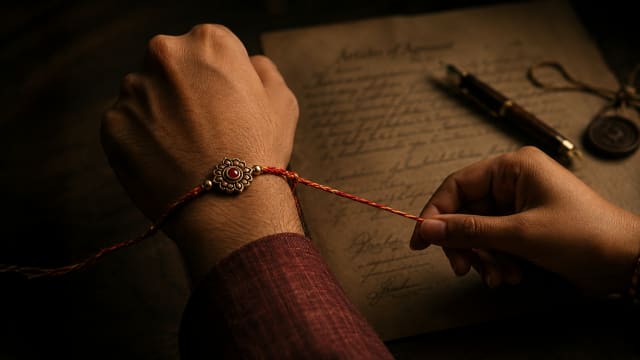
Why Festivals Survive Modernity: An RC on Rakshabandhan
Every generation predicts that urbanisation and busy schedules will kill traditional festivals. Every generation is wrong. The reason has less to do with sentiment than with function.
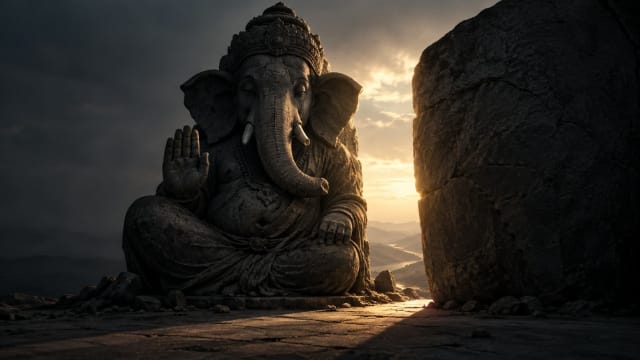
The God of Obstacles: An RC Inspired by IIM Indore
Ganesha removes obstacles. Ganesha places them. The same deity, the same tradition, the same prayer. This is not a contradiction. It may be the most honest theology ever written about the nature of difficulty.
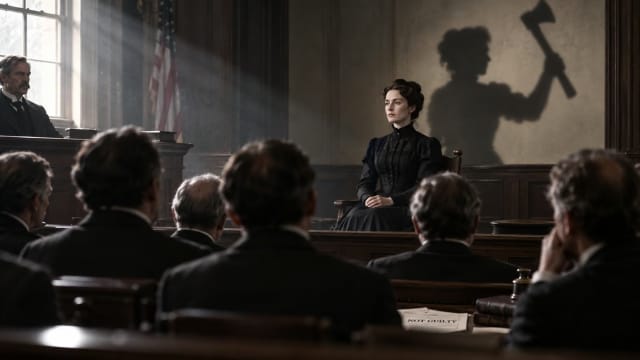
Why Lizzie Borden Was Acquitted: An RC Inspired by IIM Indore
The evidence against Lizzie Borden was strong. The jury acquitted her in ninety minutes. What happened in that room had very little to do with the evidence.

The Ghost Ancestors
Ancient humans can vanish without leaving a single bone. Yet fragments of their DNA continue telling a story that archaeology never could.