38 long-form culture & society essays, written at the density of real CAT passages, each with CAT, XAT and GMAT-style questions and explanations. For real exam passages, practise the solved CAT RC PYQs; for a daily routine, see CAT RC practice.
Cities & Urban Life3 min
On Earth Day in 1990, New York shut a major street and waited for chaos. The chaos never came, and a 1968 mathematical result may explain why, or may not.
Media & Communication3 min
A radio play about Martians is remembered as the night America panicked. The evidence for the panic is thinner than the legend, and the first people to spread it may have been the ones who gained from it.
Language & Linguistics3 min
A careful remark in 1911 about four Arctic roots for snow grew into the belief that whole peoples live in different worlds. The belief is easier to repeat than to test.
Anthropology3 min
Islanders in Vanuatu built airstrips and waited for planes that never came, and the world learned to laugh at them. The joke may reveal more about the laughers than about the waiting.
Language & Linguistics3 min
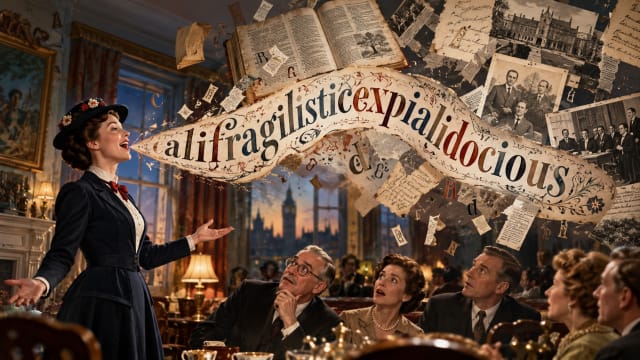
A Disney nanny sang a thirty four letter word in 1964 and the Sherman brothers claimed to have made it up. A court disagreed, and the dispute exposes how little anyone knows about where words come from.
Religion & Mythology3 min
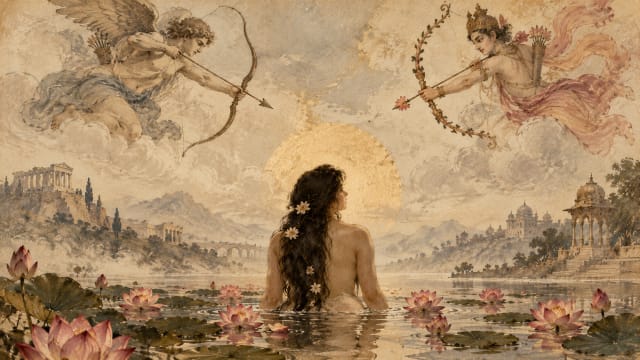
Eros began as a force older than the gods, Kamadeva as the first seed of mind. Somewhere along the way both became boys with bows, and nobody has explained why the wound still feels like it comes from outside.
Religion & Mythology5 min
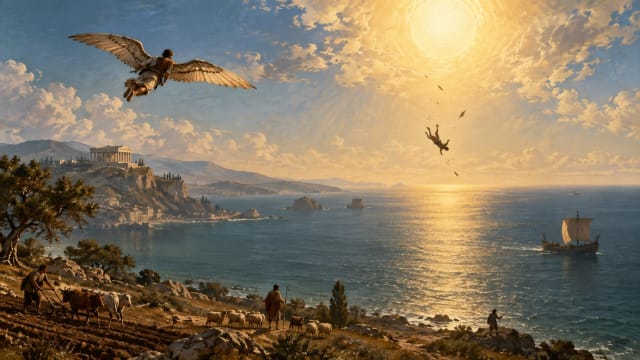
Daedalus built the wings, warned his son, watched him fall, and flew safely to Sicily. He succeeded at everything Icarus failed at. The myth does not remember him.
Sociology5 min
The evidence against Lizzie Borden was strong. The jury acquitted her in ninety minutes. What happened in that room had very little to do with the evidence.
Religion & Mythology5 min
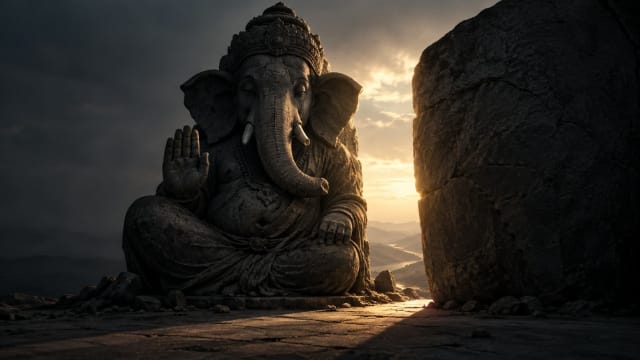
Ganesha removes obstacles. Ganesha places them. The same deity, the same tradition, the same prayer. This is not a contradiction. It may be the most honest theology ever written about the nature of difficulty.
Language & Linguistics5 min
There is no Hindi word for independence. My mother told me this once, without ceremony. It took years to understand what she meant.
Religion & Mythology5 min
Putana came to kill Krishna with poisoned milk. He killed her instead. Then he gave her the status of a mother. The Mahabharata is not confused about this. It is making its hardest argument.
Language & Linguistics5 min
The Inuit do not have fifty words for snow. But the story refuses to die because it points toward something real. Does the language we speak shape how we think?
Sociology5 min
Every generation predicts that urbanisation and busy schedules will kill traditional festivals. Every generation is wrong. The reason has less to do with sentiment than with function.
Religion & Mythology9 min
A memoir of love, religious identity and Islamophobia, exploring how a Muslim name can become a category and a person can disappear behind it.
Anthropology7 min
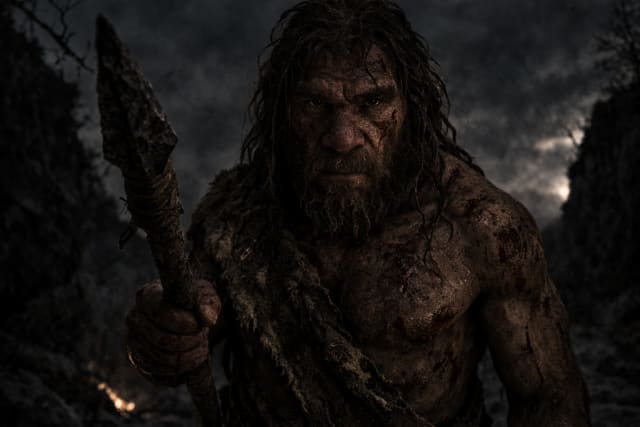
Ancient humans can vanish without leaving a single bone. Yet fragments of their DNA continue telling a story that archaeology never could.
Gender & Identity6 min
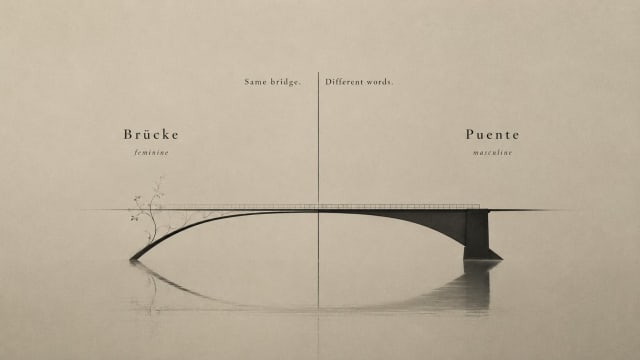
German poets call bridges fragile, Spanish poets call them strong. The same object, the same world, only the grammar changes.
Language & Linguistics6 min
A chance encounter with Gen Z slang in Kasol becomes a reflection on language, philosophy, memes, history, and what it means to be human.
Gender & Identity6 min
Madonna's greatest creation was not a song or an album but herself. Her career reveals how identity is crafted, revised and performed over time.
Religion & Mythology6 min
Why did ancient Greece fear Artemis? The goddess of the hunt symbolized female autonomy beyond marriage, power, and social control.
Sociology6 min
How smartphones, dating apps, and blue ticks changed the grammar of consent in modern intimacy and digital relationships.
Sociology5 min
Gothic fashion returns whenever civilizations grow emotionally exhausted, transforming darkness, grief, and elegance into cultural resistance.
Sociology6 min
Stieg Larsson’s The Girl with the Dragon Tattoo explores surveillance, institutional violence, and Lisbeth Salander’s war on power.
Gender & Identity5 min
An essay on modern masculinity, social expectations, emotional self-monitoring, and the conflict between strength and harmlessness.
Sociology5 min
Chudail folklore decoded, a dense philosophical exploration of gender, fear, and cultural memory beyond superstition.
Religion & Mythology5 min
A sharp reflection on how science gives power and religion gives purpose, and why separating them leaves humanity either directionless or blind.
Gender & Identity5 min
Gender acts as a compressive system that simplifies human interaction, enabling coordination while quietly erasing nuance and individuality.
Language & Linguistics5 min
Why languages disappear? From violence and dominance to quiet neglect, and why losing a language means losing an entire way of seeing the world.
Anthropology5 min
Witchcraft is less about magic and more about the human need to impose meaning on uncertainty, revealing how ritual persists even in modern rational life.
Sociology3 min
A reflection on nudism and how removing clothing reshapes identity, softens judgment, and reveals a more basic human connection beneath social symbols.
Religion & Mythology5 min
A reflective exploration of why mermaids endure in human imagination, revealing them not as sea creatures but as symbols of our own divided nature.
Religion & Mythology3 min
A reflection on immortality through Ashwatthama, showing how endless life becomes a burden of memory, consequence, and unfinished identity rather than a gift.
Anthropology5 min
A kiss seems simple, but beneath it lies an interplay of biology, culture, and memory. How a human reflex evolved into one of our deepest emotional language?
Religion & Mythology3 min
A philosophical reflection on whether Hanuman lives not as a body, but as a timeless force shaping human courage, discipline, and devotion.
Anthropology5 min
A reflective exploration of matriarchy that challenges the idea of power as dominance, revealing instead a system rooted in continuity, care, and the quiet endurance of human relationships.
Religion & Mythology3 min
A reflection on the Mahabharata as neither strict history nor mere mythology, but a living memory system that preserves enduring human dilemmas through narrative rather than factual record.
Anthropology4 min
Civilisation often tells a flattering story about itself. It claims that reason lifted humans above instinct and that culture replaced the wild impulses of our evolutionary past. Yet beneath the language of ambition, morality, and progress, the ancient animal within us continues to shape our desires, fears, and social behaviour. This essay explores how human civilisation is not an escape from our animal nature but an ongoing negotiation with it, where instinct supplies the energy of life and reflection attempts to guide it.
Religion & Mythology5 min
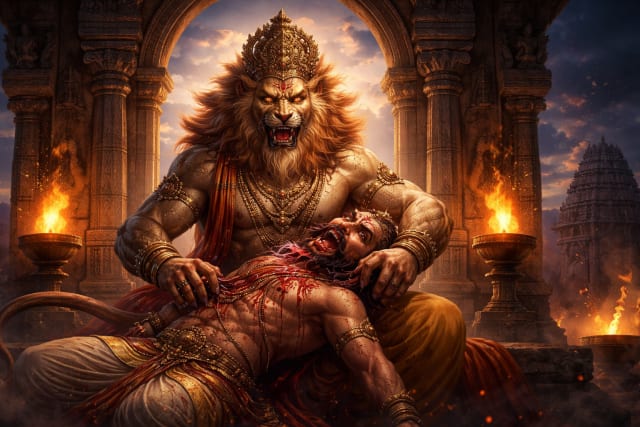
An analytical reading of the Narasimha myth as a critique of rigid binaries. The systems built on exhaustive conditions and neat categories are fragile.
Gender & Identity5 min
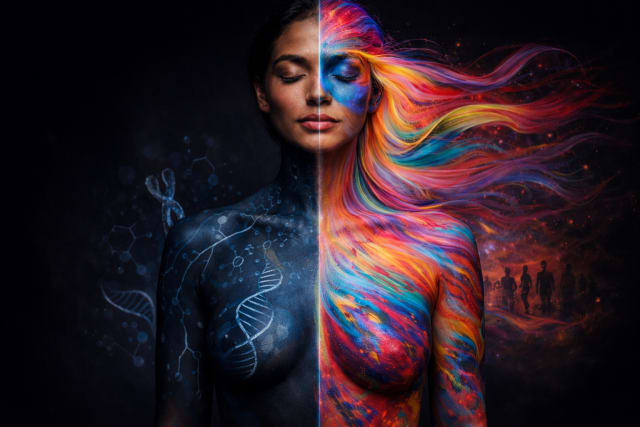
A sharp, philosophical distinction between biological sex and social gender, clarifying how body and identity intersect—and why the difference matters.