The God of Obstacles: An RC Inspired by IIM Indore
Ganesha removes obstacles. Ganesha places them. The same deity, the same tradition, the same prayer. This is not a contradiction. It may be the most honest theology ever written about the nature of difficulty.
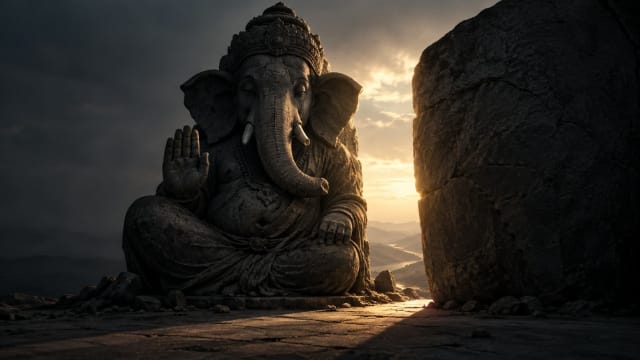
Before any journey begins, before any business opens, before any examination is sat, the Hindu tradition asks its adherents to invoke Ganesha. He is Vighnaharta, the remover of obstacles. He clears the path. He dissolves what stands in the way. This much is well known. What is less often noted is that the same deity, in the same tradition, carries the title Vighnakarta. The placer of obstacles. The one who puts them there in the first place. Ganesha is both. He always has been.
The standard explanation treats this as a simple consequence of divine power. A god capable of removing obstacles must by definition be capable of placing them. The same hand that opens a door can close it. This explanation is logically consistent and almost entirely uninteresting. It treats the dual role as an inevitable feature of omnipotence rather than as a deliberate theological statement. The more productive question is why a tradition would choose to make this duality explicit, to name both functions, to worship the same deity for both. The naming was a choice. Choices in theological traditions are never accidental.
The Mudgala Purana offers the clearest account. Ganesha places obstacles before those who are not yet prepared to receive what they seek. A merchant who prays for wealth and encounters sudden reversal is not being punished. He is being assessed. The obstacle is diagnostic. It does not stand against the devotee. It stands in front of the devotee like a question, asking whether the qualities required to use what is being sought are actually present. Vighnakarta is not the enemy of the seeker. He is the gatekeeper of consequences, ensuring that what is granted can be borne by the one who receives it.
The obstacle is diagnostic. It does not stand against the devotee. It stands in front of the devotee like a question.
The difficulty with this reading is genuine and should not be softened. If obstacles are placed by a benevolent deity to assess readiness, what account can be given of obstacles that destroy rather than prepare? The farmer who loses his crop to drought, the student who fails through illness rather than unpreparedness, these are not tests of anything. They are simply catastrophes. The Puranic tradition does not resolve this cleanly, and the more honest position is that it does not attempt to. The Vighnakarta framework is not a theodicy. It is not an explanation for why suffering exists. It is a claim about a specific relationship between difficulty and readiness, offered without any promise that the relationship holds in every case.
What the dual title achieves philosophically is something more precise than comfort. Most theological traditions locate obstacles outside the devotee entirely. They are the work of fate, of adversarial forces, of a world that fell from an original perfection. The devotee is essentially innocent and the obstacle is essentially unjust. Ganesha as both Vighnaharta and Vighnakarta dismantles this structure from within. The deity who removes the obstacle is the same deity who placed it. This collapses the distance between the seeker and the difficulty. The obstacle was not dropped onto the path from outside. It grew from the path itself, which means it grew from the nature of the one walking it.
This is a demanding theology and it should be read as one. It offers none of the consolation of innocence. It refuses the position in which the devotee is simply wronged by circumstance. Every obstacle, within this framework, carries an implicit address. It arrived for you specifically. Not for the person beside you, not for an abstraction called humanity. For you. And when Vighnaharta finally removes it, the removal is not a favour extended from above. It is a verdict delivered from within. The path opens because the answer, finally, is yes.
The broken tusk is the tradition's own commentary on this. Ganesha broke his own tusk to use as a writing instrument when transcribing the Mahabharata as Vyasa dictated it. He placed an obstacle in his own path and overcame it in the same gesture, without interrupting the work. The tradition did not give this detail to Vishnu or Shiva. It reserved it for the deity whose entire function is to hold both sides of difficulty at once. The god of obstacles understands obstacles from a position that no other deity occupies. He has been on the inside of one.
Discussion · 1
According to the passage, Ganesha is both the Vignaharta (the remover of obstacles) and Vignakarta (the placer of obstacles) and this this definition is logically consistent but uninteresting. the question is why a tradition chooses to make this duality explicit. Mudgal purana offers the clearest account; obstacles are placed by deity to assess readiness; Ganesha is a gatekeeper of consequences ensuring that what is granted can be borne by the one who receives it. However, author asks what account can be given of obstacles that destroy rather than prepare? and author itself says that Vighnakarta is not an explanation of why suffering exist, it is a claim about relation between difficulty and readiness offer without any promise that relationships hold in every case. the duality of Ganesha is something more precise than comfort. it refuses the position in which devotee is wronged by circumstances, every obstacle carries an implicit address. it arrived for you specifically and removal of obstacle is not a favour extended from above. it is a verdict delivered from within.
Sign in to join the discussion.
More in Religion & Mythology

The Archer Nobody Can See
Eros began as a force older than the gods, Kamadeva as the first seed of mind. Somewhere along the way both became boys with bows, and nobody has explained why the wound still feels like it comes from outside.
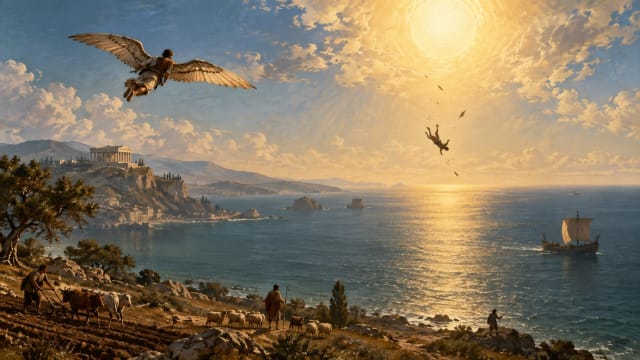
Why We Only Tell Icarus's Story: An RC Inspired by IIM Indore
Daedalus built the wings, warned his son, watched him fall, and flew safely to Sicily. He succeeded at everything Icarus failed at. The myth does not remember him.
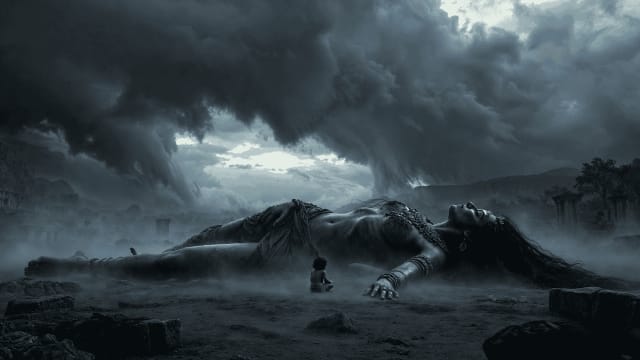
The Strangest Mother in Indian Mythology
Putana came to kill Krishna with poisoned milk. He killed her instead. Then he gave her the status of a mother. The Mahabharata is not confused about this. It is making its hardest argument.

Her Name is Khan
A memoir of love, religious identity and Islamophobia, exploring how a Muslim name can become a category and a person can disappear behind it.