Not All Those Who Wander Are Lost
A line from a fantasy novel carries an old Indian argument. A monk who left without permission and a barrister who travelled third class show when wandering is a path and when it is only drift.

According to the traditional account, a Buddhist monk named Xuanzang left the Tang capital of Chang'an around the year 629 without the permission of his emperor and set out for a land he knew only from incomplete texts. He crossed deserts and mountain passes, reached India, studied at the great monastery of Nalanda, and returned in 645 with hundreds of Buddhist manuscripts. To an official watching him vanish westward he may have looked like a deserter, or a man with no destination. The record he left is among the best sources for what the subcontinent looked like in his time.
The saying that not all those who wander are lost comes from a poem in J R R Tolkien's novel The Fellowship of the Ring, published in 1954, where it describes a rough looking traveller whose appearance hides his worth. Its literal meaning is modest. Movement without a straight road is not the same as having no direction. Its deeper meaning is that a life, a society or an education should be judged by what guides the journey and not by how tidy the route looks from outside. This essay argues that wandering is a path and not a loss when it is chosen freely, steadied by a purpose, and supported by conditions that let the traveller return and give something back.
More than twelve centuries after Xuanzang, Mohandas Karamchand Gandhi returned to India from South Africa in January 1915 with a reputation and no map of the country he meant to serve. Gopal Krishna Gokhale, by Gandhi's own account, advised him to spend a year travelling through India with his ears open and his mouth shut. Gandhi travelled in third class railway compartments, and the crowded stations, the dirt and the patient endurance of ordinary passengers stayed with him. The year of apparent drifting gave him the agenda for the decades that followed, from sanitation and village industry to the dignity of the poorest traveller.
Discussion
Sign in to join the discussion.
More in Travel

The Outing That Became a Business Model
A shilling train ride to a temperance meeting in 1841 turned into the template for the package holiday. The business idea inside it was older than the holiday.
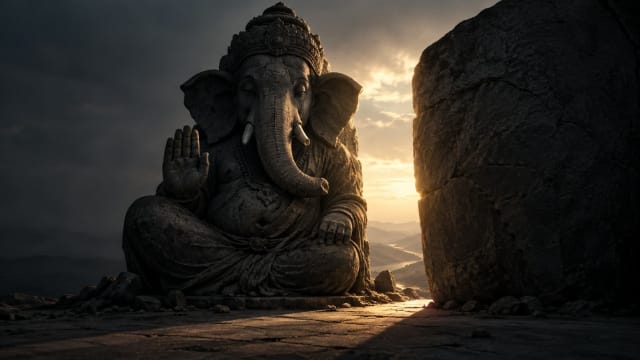
The God of Obstacles: An RC Inspired by IIM Indore
Ganesha removes obstacles. Ganesha places them. The same deity, the same tradition, the same prayer. This is not a contradiction. It may be the most honest theology ever written about the nature of difficulty.

Why Lizzie Borden Was Acquitted: An RC Inspired by IIM Indore
The evidence against Lizzie Borden was strong. The jury acquitted her in ninety minutes. What happened in that room had very little to do with the evidence.

The Ghost Ancestors
Ancient humans can vanish without leaving a single bone. Yet fragments of their DNA continue telling a story that archaeology never could.