The Comma That Saves Grandma: An RC Inspired by IIM Indore
A tiny mark of punctuation opens into a larger question about how conventions create meaning, coordinate behaviour and quietly hold civilisation together.
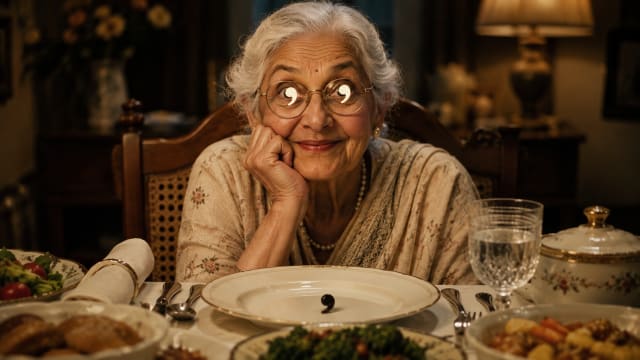
“Let’s eat, Grandma.” “Let’s eat Grandma.” There are few punctuation marks with a better sense of timing than the comma. In the first sentence, Grandma is invited to dinner. In the second, Grandma is dinner. One tiny curve of ink separates a family gathering from a police investigation.
The comma does not merely decorate language. It negotiates relationships.
This is a lot of responsibility for something that looks like a sperm that changed its mind. We generally underestimate punctuation. A full stop sits at the end of a sentence like an employee waiting for the office to close. A question mark looks permanently confused. The exclamation mark is the attention-seeker of the family. But the comma is different. It tells us who is talking to whom, what belongs to what, and occasionally whether Grandma should be setting the table or hiding under it.
Consider the sentence, “My brother, Rahul, is a doctor.” The commas tell us that Rahul is my brother and that I have helpfully supplied his name. Remove them and things become more complicated. “My brother Rahul is a doctor” sounds as though I may have several brothers and this particular medical practitioner happens to be Rahul. The comma has suddenly become a family genealogist.
This is what punctuation does. It does not necessarily give us new information. It tells us how to interpret the information we already have. It is less a word than a set of instructions about words. And that makes the comma surprisingly philosophical.
A red traffic light works in much the same way. It is merely a red light. It has never driven a car, crossed a road or received a driving licence. Yet millions of people see it and stop. A queue is equally mysterious. It is simply several people standing in approximately the same direction. But step in front of them and you may discover that civilisation has rules about elbows.
Money is another example. A banknote is essentially a professionally printed rectangle that society has agreed not to laugh at. A thousand rupees can buy something because we collectively pretend that the paper is worth something.
Human civilisation is full of these invisible agreements. We agree that certain sounds mean certain things. We agree that a line on a map can become a border. We agree that a signature can bind a person to a contract. We agree that a red light means stop and that the man standing in front of you in a queue was there before you.
Usually, these agreements are so successful that we forget they are agreements at all. Of course, conventions are not automatically good. Some rules coordinate society. Others merely preserve old prejudices wearing respectable clothing. Breaking a convention can sometimes be the first step towards discovering that the convention was ridiculous. So we need conventions, but we also need the courage to examine them.
The comma captures this peculiar human arrangement beautifully. It has no intelligence of its own. It cannot read. It cannot think. It has never once wondered whether Grandma prefers pasta. Yet we have collectively given it meaning.
That may be one of humanity’s strangest achievements. We have constructed a world in which a tiny curve can prevent cannibalism, a coloured bulb can stop traffic, a piece of paper can represent a fortune and a line of ink can separate two countries.
We imagine civilisation as something monumental, built from constitutions, courts, armies and universities. Perchance it is also built from much smaller things.
Perhaps civilisation is what happens when enough people agree that a particular little mark means something. And perhaps, every once in a while, civilisation is simply knowing where to put the comma.
Discussion
Sign in to join the discussion.
More in Learning & Pedagogy
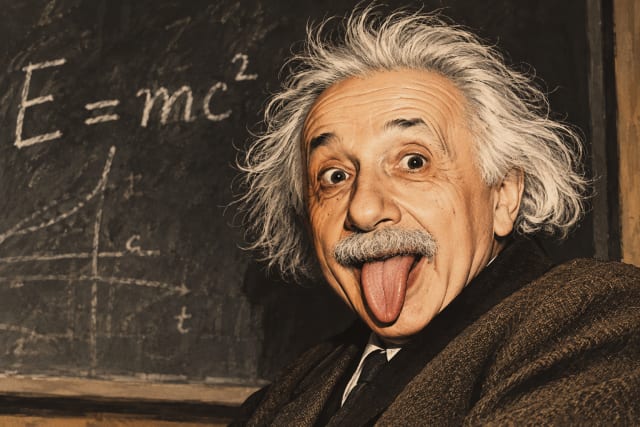
The Entrance Exam Einstein Failed and the Subject He Did Not
The famous story that Einstein failed mathematics is false, yet it survives because it offers students a comfort that the true story somehow does not.
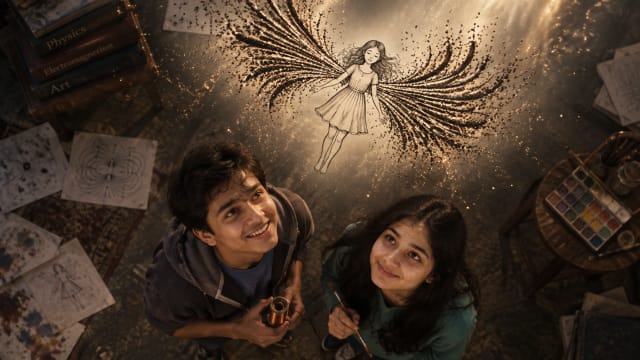
The Things We Teach Each Other
I learnt to teach through a fairy without wings. Years later, I understood that learning and teaching may be among our oldest human impulses.
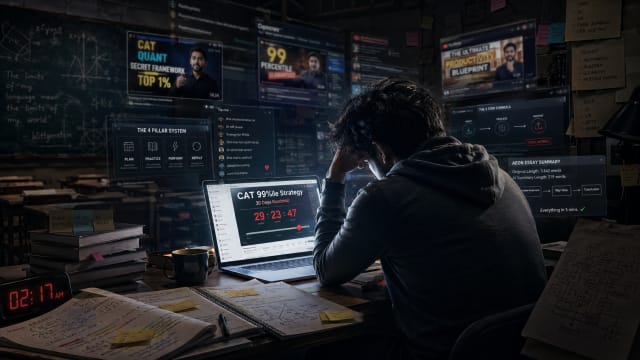
How EdTech Forgot Teaching | The 111th Essay
How online education, CAT coaching, AI summaries, and viral learning frameworks transformed teaching into performance, attention, and endless preparation.

Brahmaganita v1.0: A Philosophy of Patterned Existence
A philosophical exploration of Brahmaganita, where mathematics becomes a lens to uncover patterns, balance, and the hidden structure of reality.