The King Who Repented and Kept the Sword
Ashoka's edicts confess to the horror of Kalinga, and in the same breath warn the forest peoples of his power. The tension between a state's conscience and its coercion has never been resolved, in his empire or in the Republic that adopted his symbols.

Rock Edict XIII of the emperor Ashoka, preserved in several versions across the subcontinent, records that in the eighth year after his coronation he conquered Kalinga, and that the war left one hundred and fifty thousand people deported, one hundred thousand killed and many times that number dead from other causes. Historians treat these figures as rhetoric rather than a census, but the text leaves no doubt about its purpose. It is a public statement, cut into stone for passers by, that a ruler has looked at what he did and found it painful.
The edict goes on to express sorrow and repentance. Ashoka, who styles himself Beloved of the Gods, declares that the true conquest is conquest by dhamma, a word that covers righteous conduct, tolerance and care for the welfare of subjects. For two thousand years the story has been read as the moment a warrior became a saint, and modern India has built the story into its public symbols. The wheel of dhamma stands at the centre of the national flag, and the lion capital found at Sarnath serves as the emblem of the Republic. The state that was born in 1947 chose to see itself as an heir to a king who admitted remorse.
Discussion
Sign in to join the discussion.
More in Ancient History

The Grain Before the Word
The world's first writing wasn't poetry or prayer. It was an invoice for barley, and that changes what writing's origin actually tells us.

Messalina: The Architecture of Spectacle
A deconstruction of Roman narrative architecture, exploring how political survival is recompiled into moral spectacle and legend.
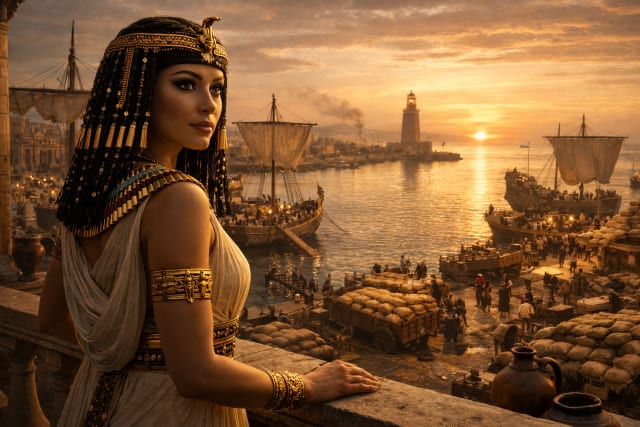
The CEO of the Nile: Cleopatra's Economic Sovereignty
Cleopatra as an economic strategist, by controlling grain flows, taxation, and trade through the Nile, she turned Egypt into the financial backbone of Rome
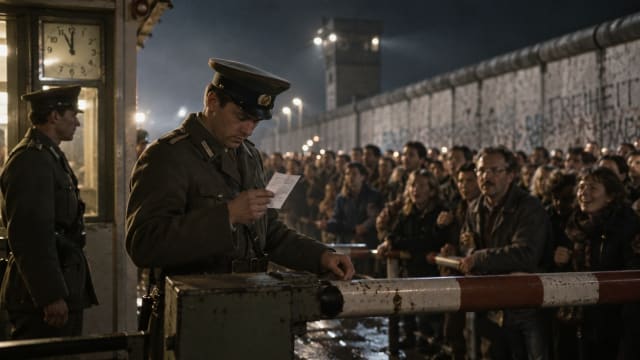
Why the Berlin Wall Fell Because of a Miscommunication: An RC Inspired by IIM Indore
Gunter Schabowski had not been briefed. The decision he announced had not been implemented. The gates he declared open were still closed. Within hours, the Berlin Wall had ceased to exist.