The Optimist in Hiding and the Century That Answered Him
A hunted man wrote the most confident book about human improvement in March 1794. Malthus, two world wars and the Indian Constitution have each answered it since, and none has closed the argument.

In March 1794, in a small room at the Paris house of a woman named Madame Vernet, a man with a warrant out for his arrest wrote a book about the future happiness of humankind. He was the Marquis de Condorcet, a mathematician and a deputy of the Revolution, and the authorities he had served now called him a traitor. He had opposed the execution of Louis XVI and had voted against the Jacobin constitution of 1793. Within weeks he would leave his hiding place, be arrested at an inn and die in prison two days later, before any tribunal could hear him. The book was his Sketch for a Historical Picture of the Progress of the Human Mind, and it remains one of the strangest optimistic documents ever written.
The Sketch divides human history into ten epochs, from the first small societies to the French Revolution and then into a tenth that had not yet happened. Condorcet admitted that he had good evidence for some of the stages and was only speculating about others. His central claim was that the laws of nature are constant, so that the growth of knowledge follows a pattern that needs no divine hand. Reason, spreading through education and printing, would free people from religious and political domination. Inequality between nations and within them would shrink. He expected the equality of women to be recognised, and he had already helped lead the French Society of the Friends of the Blacks, an abolitionist group.
Discussion
Sign in to join the discussion.
More in Progress & Modernity

The Search Before the Search
The Greenbrier Ghost helped reopen a murder case. What followed reveals a deeper truth about evidence, belief, and knowledge.
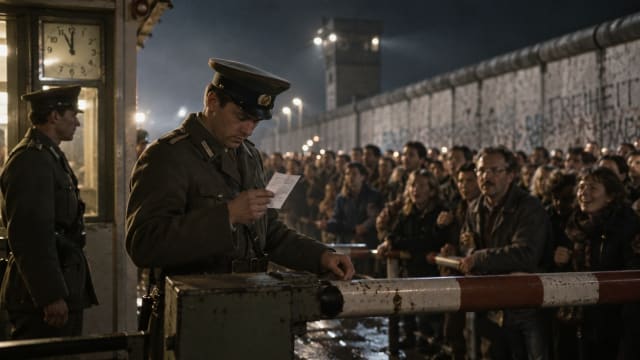
Why the Berlin Wall Fell Because of a Miscommunication: An RC Inspired by IIM Indore
Gunter Schabowski had not been briefed. The decision he announced had not been implemented. The gates he declared open were still closed. Within hours, the Berlin Wall had ceased to exist.

The Soldier Who Didn't Know the War Was Over: An RC Inspired by IIM Indore
Hiroo Onoda fought in the Philippine jungle until 1974, twenty-nine years after Japan surrendered. He was not deluded. He was doing exactly what a loyal soldier should do.

The Grain Before the Word
The world's first writing wasn't poetry or prayer. It was an invoice for barley, and that changes what writing's origin actually tells us.