The Train to Silence: Inside the World of Comfort Women
The tragic history of comfort women in World War II reveals how war, empire, and bureaucracy turned human suffering into a system of organized abuse.
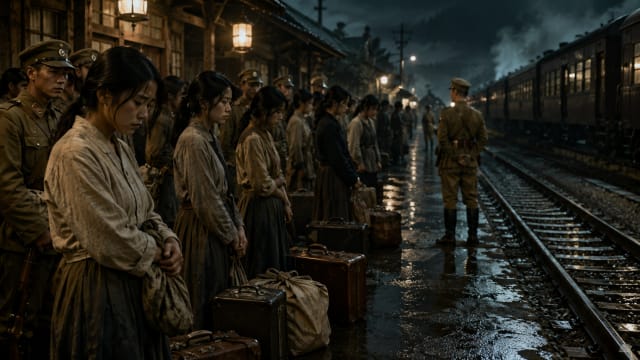
A war does not only march on roads. It enters bedrooms, kitchens, train stations, and the hidden corners of the human body. During World War II, the Japanese Empire built one of the largest systems of organized sexual slavery in modern history. The women trapped inside it became known by a chilling euphemism: “comfort women.” The phrase sounds almost harmless, like something from a hotel brochure or a polite bureaucratic memo. That softness was deliberate. Empires often rename brutality so that ordinary people can live beside it without feeling its weight.
Most of these women came from colonized or occupied territories across Asia. Many were Korean girls living under Japanese colonial rule. Others came from China, the Philippines, Indonesia, Taiwan, and elsewhere. Some were kidnapped outright. Others were deceived with promises of factory jobs, nursing work, or restaurant employment. Poverty did the rest. Families living under occupation often stood little chance against military networks that could move people like cargo.
Inside military brothels called “comfort stations,” the women faced relentless violence. Survivors later described rooms lined with soldiers waiting in queues, medical inspections that treated them like contaminated equipment, and punishments for resistance. Many were teenagers. Some were barely adolescents. Disease spread rapidly. Pregnancies were forcibly terminated. Suicide became common. The military justified the system as a way to maintain troop morale and reduce uncontrolled sexual violence. But this logic reveals something dark about modern states. Bureaucracy does not erase cruelty. It industrializes it.
After the war, silence settled over the survivors like dust after an explosion. In many Asian societies, sexual violence carried enormous stigma. Women who returned home were often treated as damaged or dishonorable. Some never married. Others hid their experiences from their own children. Governments, meanwhile, found strategic reasons to look away. During the Cold War, geopolitical alliances mattered more than historical justice.
Then, decades later, survivors began speaking publicly. Elderly women appeared before cameras and courts carrying memories they had buried since youth. Their testimonies transformed the issue from rumor into undeniable historical reckoning. Bronze statues of young girls now stand in several cities across the world, often seated quietly on empty chairs. The statues feel small compared to the scale of the crime. Yet perhaps that is the point. History often survives not through monuments to power, but through fragile symbols of interrupted lives.
Some nationalists still argue that these women were voluntary prostitutes rather than enslaved victims. Yet this defense collapses under scrutiny. Consent inside military occupation, colonial domination, poverty, and coercion becomes almost meaningless. A starving teenager transported across borders by armed officials does not enter freedom simply because paperwork exists somewhere.
The comfort women system forces an uncomfortable realization. Modern civilization is perfectly capable of organizing horror with efficiency, schedules, and official stamps. Evil rarely arrives screaming. Often it arrives wearing uniforms, carrying documents, and speaking in administrative language calm enough to sound reasonable.
Empires rarely describe their violence honestly. They soften it with language first.
Discussion
Sign in to join the discussion.
More in World Wars

The Soldier Who Didn't Know the War Was Over: An RC Inspired by IIM Indore
Hiroo Onoda fought in the Philippine jungle until 1974, twenty-nine years after Japan surrendered. He was not deluded. He was doing exactly what a loyal soldier should do.

Was Mata Hari Really a Spy?
Executed as a German spy during World War I, Mata Hari became a global legend. The reality was far more complicated than the myth.

The Propaganda Machinery of the Third Reich
How Nazi propaganda transformed mass psychology, weaponized media, and turned the Third Reich into one of history’s deadliest spectacles.
Why the Berlin Wall Fell Because of a Miscommunication: An RC Inspired by IIM Indore
Gunter Schabowski had not been briefed. The decision he announced had not been implemented. The gates he declared open were still closed. Within hours, the Berlin Wall had ceased to exist.