The Promise That Outlived Its Reason
A reflective memoir asks what is left of a promise once the harm, the benefit and the person it was made for have all disappeared.

A promise is usually defended by the good it does, which is why the promises that trouble me most are those whose good has long since gone. My grandmother made one in the winter of 1971, when the man next door died and his widow, a woman she had quarrelled with for nine years over a shared drain, was left alone in the house. She said, more from embarrassment than from tenderness, that she would put a lamp on the widow's step every evening until the widow stopped needing one. Nobody wrote it down. The widow herself, I think, barely registered it.
The widow moved to her daughter's city within two years, and the house was sold twice after that. A dentist now keeps a clinic there, with a steel shutter and a signboard in English. Yet every evening, until she was too unwell to walk, my grandmother carried a small brass lamp across the lane and set it down on the cracked step beside the shutter. When I was seventeen I told her, with the cruelty of someone newly clever, that there was nobody left to see it. She answered that she had not promised to be seen. I took this for stubbornness. It was a long time before I noticed that she had also never said whom the lamp was for.
She died in March, and in April I found that I had picked up the lamp. I have tried the usual defences and each fails in its own way. If a promise binds because of the harm that breaking it would do, then no harm remains, and I am free. If it binds because of what it makes of the one who keeps it, then I am keeping it for myself, which my grandmother would have found vulgar. If it binds because the other person once relied on it, then the widow, who is dead too, can neither release me nor reproach me. What is left is a small flame on a stranger's step and a suspicion that the promise was never really about the widow, though I cannot say what it was about, or whether I should still be keeping it.
XAT verbal practice
This passage is written in the XAT style. Its 3 questions are just below in exam mode.
Discussion
Sign in to join the discussion.
More in Values & Beliefs

The Shipowner Who Felt Sure
A Victorian essay said it is wrong always to believe on thin evidence. A reply asked who decides what counts as thin, and the answer is still not in.
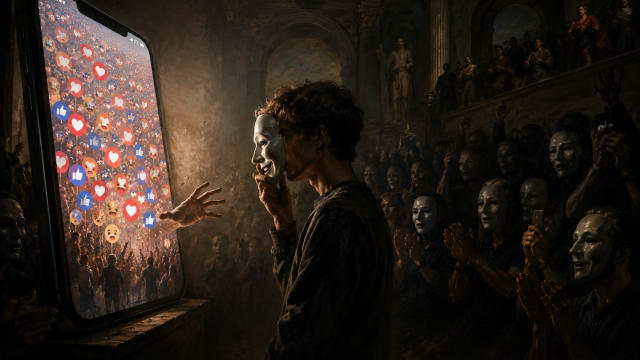
Why Modern Morality Became Performance
Explore how social media turned morality into performance, where virtue, outrage, and ethics increasingly depend on visibility and online approval.

The Phenomenology of Embarrassment
Embarrassment is not shame. It is not guilt. It is the moment the self discovers, with retroactive mortification, that it has been visible all along, and that visibility was never chosen.

The Communist Manifesto: An RC Inspired by IIM Indore
The Manifesto was written in six weeks by two men in their twenties. It inspired revolutions on four continents. The question is not whether its argument is correct. It is why the argument works so well.