Why Modern Morality Became Performance
Explore how social media turned morality into performance, where virtue, outrage, and ethics increasingly depend on visibility and online approval.
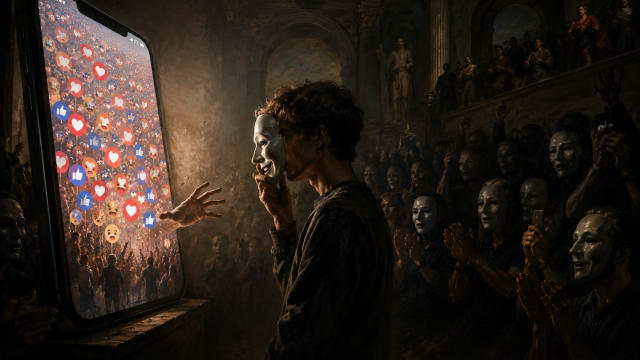
A stranger films himself handing food to a homeless man. The camera lingers longer than the kindness. Within hours the video gathers hearts, applause and algorithmic blessings from people who will never meet either man. Something subtle has shifted here. Morality, once whispered to the conscience, now speaks through a front facing camera.
For most of human history, ethics depended on invisibility. In nearly every civilisation, the highest moral act was the one performed without witnesses. Ancient religious traditions praised anonymous charity because secrecy purified intention. A good deed done for status ceased to be fully good. The ego contaminated it. The left hand was not supposed to know what the right hand gave.
Modern digital culture reverses that logic. Today morality survives through display. Outrage trends. Compassion becomes content. Political conviction arrives packaged as branding. Social media did not invent virtue signalling, but it industrialised it. Platforms reward visible morality because visible morality generates engagement. Anger spreads faster than nuance. Public condemnation travels further than private reflection.
The ethical life increasingly resembles theatre. We perform goodness before invisible crowds and mistake applause for character.
Defenders of this new visibility argue that public moral expression creates awareness. They are not entirely wrong. Online activism has exposed corruption, organised relief efforts and amplified marginalised voices. Silence can protect injustice. A filmed act of compassion may inspire thousands more. Moral performance can produce real outcomes and genuine social pressure against cruelty.
Yet the deeper problem lies elsewhere. Performance gradually reshapes motivation itself. Once morality becomes entangled with visibility, people begin choosing ethical acts not because they are right, but because they are legible. The algorithm rewards gestures that photograph well. Complex virtues like patience, forgiveness, humility or loyalty rarely go viral because they lack spectacle. Digital ethics favours emotions that can be instantly consumed.
Perhaps this explains why modern discourse feels simultaneously moralistic and hollow. Societies now possess unprecedented language for justice while often lacking the inner discipline required to practice it. The performance of care becomes easier than care itself. We curate identities instead of cultivating virtues. A person may speak fluently about empathy online while treating workers, parents or strangers with quiet indifference offline.
The irony is ancient and deeply human. Philosophers from Confucius to Aristotle understood that character forms through repetition, habit and private restraint. Virtue was never designed for audiences. It resembled craftsmanship more than advertising. A carpenter does not become skilled by announcing his dedication to wood. He becomes skilled by working silently with his hands, repeating the same motions until discipline hardens into instinct.
Ethics may face the same truth. A civilisation obsessed with appearing good risks forgetting how goodness actually forms. Cameras can document gestures. Algorithms can amplify slogans. Neither can measure conscience. The deepest moral acts may still remain invisible, unnoticed and profoundly ordinary. Perhaps the future of ethics depends less on broadcasting virtue to strangers and more on recovering the forgotten art of behaving decently when nobody is watching.
Discussion · 2
Earlier people did good things quietly without showing others. Now people often do good things in front of cameras or on social media to get likes and attention. Because of this, real goodness becomes less important, and looking good becomes more important than actually being good.
Social media has changed morality from something private into something publicly performed for attention and approval. While online visibility can spread awareness and inspire good actions, it also encourages people to act morally for recognition rather than genuine conscience. The passage argues that true virtue is built quietly through habits and character, not through public display or algorithm-driven performance. - 01
Sign in to join the discussion.
More in Values & Beliefs
The Phenomenology of Embarrassment
Embarrassment is not shame. It is not guilt. It is the moment the self discovers, with retroactive mortification, that it has been visible all along, and that visibility was never chosen.

Moral Luck
Two men drive home equally drunk. Only one kills a child. Philosophy calls the gap between them moral luck.

Why Krishna Is the Most Philosophically Dangerous Character in Indian Literature
Krishna lies, cheats and engineers deaths. The Mahabharata calls him the fullest embodiment of dharma. This is not a contradiction. It is the most demanding position in Indian moral philosophy.

What Kevin Carter Really Captured
A haunting reflection on Kevin Carter’s photograph, moral distance and the unsettling transformation of human suffering into spectacle.