The Shipowner Who Felt Sure
A Victorian essay said it is wrong always to believe on thin evidence. A reply asked who decides what counts as thin, and the answer is still not in.
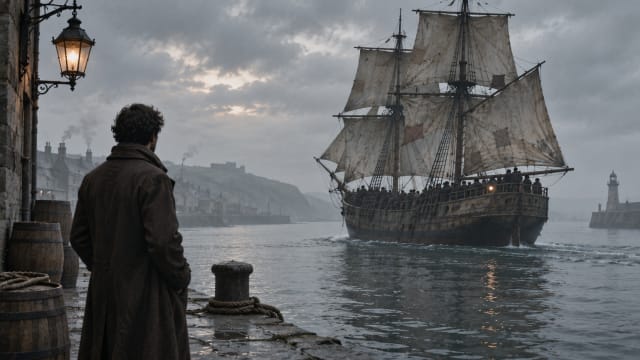
In 1877 the English mathematician and philosopher William Kingdon Clifford published an essay in the Contemporary Review that opened with a shipowner. The man was about to send an emigrant ship to sea. He knew she was old and not well built, and doubts crossed his mind. He chose to put the doubts aside, trusted in providence, watched her leave harbour with a light heart, and collected the insurance money when she went down in mid ocean.
Clifford's verdict was that the man was guilty of the death of those passengers, however sincerely he came to believe the ship was sound. The sincerity was the point. The owner had earned his confidence not by patient inquiry but by stifling his doubts, and Clifford added that if the ship had arrived safely the man would not have been innocent, only not found out. That left a loose end. Belief is usually counted as a private matter, so how can it be a wrong?
Clifford answered that no belief is truly private. Beliefs shape actions, actions touch other people, and the stock of belief a society holds is handed from one generation to the next like a common inheritance. From this he drew a rule that has been quoted ever since. The rule reads that it is wrong always, everywhere, and for anyone, to believe anything upon insufficient evidence. It settled the owner's case and unsettled nearly everything else, because it left open who decides what counts as sufficient.
The rule reads that it is wrong always, everywhere, and for anyone, to believe anything upon insufficient evidence.
That second loose end was taken up in 1896 by William James, who gave a lecture titled The Will to Believe to philosophical clubs at Yale and Brown. James granted that Clifford was right about the shipowner and argued that the rule failed in a narrower set of cases. Where a choice is live, unavoidable and momentous, and the evidence cannot settle it in time, he held that a person may let their wider nature help to decide. Refusing to decide is itself a way of deciding, and the fear of being fooled is as much a passion as the hope of being right.
The reply seems to close the matter and opens another. The shipowner could have inspected the hull, so his case fell inside Clifford's rule. The questions that interested James, such as whether life has meaning or whether another person can be trusted, offer no inspection that finishes before the choice is due. Yet sorting questions into the two groups needs the very kind of judgment that was in dispute. The owner, for his part, felt sure, and from the inside that feeling looks exactly like the sureness of an honest man who has done the work.
Discussion
Sign in to join the discussion.
More in Values & Beliefs
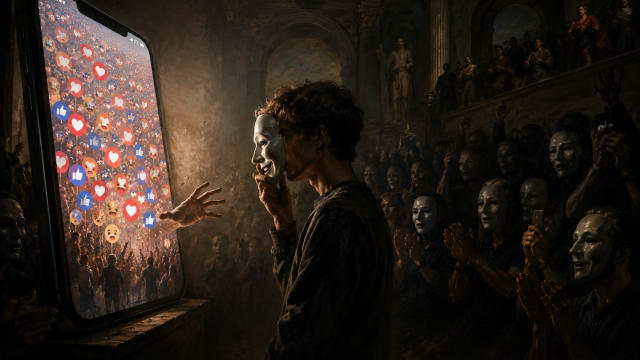
Why Modern Morality Became Performance
Explore how social media turned morality into performance, where virtue, outrage, and ethics increasingly depend on visibility and online approval.

The Phenomenology of Embarrassment
Embarrassment is not shame. It is not guilt. It is the moment the self discovers, with retroactive mortification, that it has been visible all along, and that visibility was never chosen.

Moral Luck
Two men drive home equally drunk. Only one kills a child. Philosophy calls the gap between them moral luck.
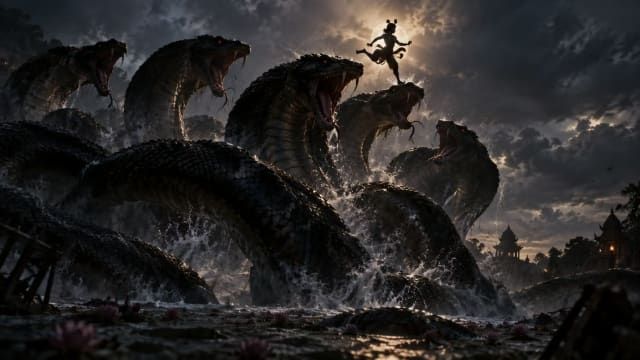
Why Krishna Is the Most Philosophically Dangerous Character in Indian Literature
Krishna lies, cheats and engineers deaths. The Mahabharata calls him the fullest embodiment of dharma. This is not a contradiction. It is the most demanding position in Indian moral philosophy.