The Urinal That Became Art and the Artist Who May Not Have Made It
A porcelain urinal entered the history of art in 1917 as an argument about choosing, and a century later the argument has turned on who did the choosing.

In April 1917 the Society of Independent Artists opened its first exhibition in New York with a promise that any artist who paid the entry fee could show work and that no jury would judge it. Among the entries was a white porcelain urinal, tilted on its back and signed R. Mutt, with the title Fountain. The society's board, which included Marcel Duchamp, argued over it. The urinal was not shown in the main exhibition, and it is generally reported to have been kept out of sight, while Duchamp resigned from the board.
What followed made the object famous in a way the exhibition never could. A small journal published by Duchamp's circle defended the piece, and the photographer Alfred Stieglitz recorded it in a picture. The original then vanished, and photographs and later replicas are what art history has handled ever since. A work that is mostly known through a photograph and a story is an odd foundation for a century of argument, yet it became the standard example of the idea that an artist may select an ordinary object and call it art.
The idea has a weakness that the story itself exposes. If the act of choosing is the art, then who chose matters entirely, and the record on that point is thinner than the legend. A letter that Duchamp is reported to have written to his sister soon after the exhibition says that a female friend, using a masculine pseudonym, had sent in the urinal. Some scholars read this as a pointer towards the Baroness Elsa von Freytag Loringhoven, an artist of the New York avant garde who worked with found objects. Others reply that the letter shows only that Duchamp had a friend's help, or was disguising a joke, and that no document settles the matter.
If the act of choosing is the art, then who chose matters entirely, and the record on that point is thinner than the legend.
The dispute is awkward for both camps. Those who credit Duchamp must explain why a movement built on challenging the authority of the maker rests on an authorship claim that he never pressed loudly. Those who favour the Baroness must admit that the evidence is circumstantial, resting on style, acquaintance and timing. Neither side can examine the object, since the original is gone, and the surviving images show a signature but not a hand.
And yet the deeper puzzle may survive any answer. The urinal was meant to show that meaning lies in the choosing and the context rather than in the craft. If that is so, the question of who made it should not trouble the work at all, and the energy with which critics pursue it suggests that they still hold, against the theory, that a work of art belongs to a person. Whether the theory or the instinct is closer to the truth, the missing original offers no help.
Discussion
Sign in to join the discussion.
More in Visual Arts

The Thief Who Made the Mona Lisa Famous
When a former worker walked out of the Louvre in 1911 with a modest portrait under his smock, he removed a painting and, by most accounts, helped create an icon.
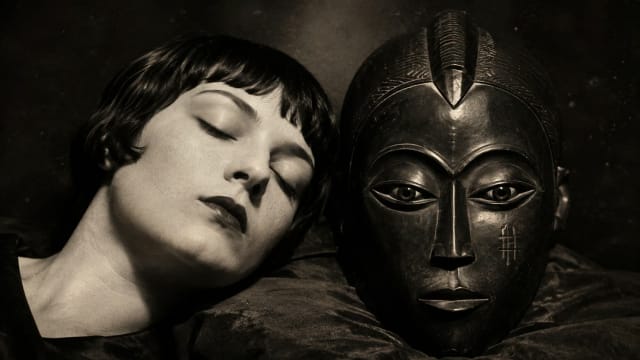
Kiki with African Mask
Why does a carved mask seem alive? Man Ray's iconic photograph reveals why humans instinctively project consciousness onto faces, real or imagined.

Why Madhubani Paintings Refuse Empty Space
Explore the history, symbolism and cultural significance of Madhubani paintings, the vibrant folk art tradition of Mithila rooted in Indian mythology.

The Birth of Venus and the Problem of Beauty
An introspective take on Botticelli’s Birth of Venus, where beauty unsettles, lingers, and reshapes perception rather than offering simple meaning.