Why Humans Kiss
A kiss seems simple, but beneath it lies an interplay of biology, culture, and memory. How a human reflex evolved into one of our deepest emotional language?

It usually starts awkwardly. Two people lean in, miscalculate angles, maybe bump noses, laugh, reset. For something so ancient, kissing has terrible onboarding. And yet, once it lands, it feels strangely inevitable, like the body knew the script long before the mind agreed to it.
So why do humans kiss?
The clean, textbook answer says biology. Lips are sensitive, packed with nerve endings. A kiss is data. Taste, smell, micro-signals your brain processes faster than thought. Some scientists argue it is a compatibility test, a quiet screening for genes, health, even immune system differences. You kiss, your brain runs a background check, and suddenly you either lean in again or pull away without knowing why.
But that answer feels… incomplete. A little too corporate. KPI-driven romance. Because if kissing were just a biological audit, why does it carry so much emotional weight? Why do people remember their first kiss years later, like a bookmark in time? Why does a goodbye kiss feel heavier than words?
Here's where things get messy, and more interesting. Not every culture kisses romantically. Some don't kiss at all. They nuzzle, they smell, they stay close in other ways. Which means kissing is not strictly hardwired. It is learned, absorbed, inherited like language. You grow up watching it in films, stories, stolen moments. You are trained into it.
So now we have two forces running in parallel. Biology builds the hardware. Culture writes the software. And when they sync, something clicks. Inside the brain, a kiss is chaos in a good way. Dopamine spikes. Oxytocin flows. Serotonin balances the storm. It is pleasure, yes, but also bonding. The brain starts attaching meaning to a face, a smell, a presence. This is not just attraction. This is memory under construction, which explains something we all kind of know but rarely say out loud. A kiss is rarely neutral. It either moves things forward or quietly ends them. There is no middle ground. It is a decision disguised as a moment.
Some people push back on all this. They say kissing is just an upgraded feeding instinct, something left over from when mothers passed food mouth to mouth. Strip away the poetry and you are left with a biological relic. Functional, not magical. Fair. But also… a bit reductionist.
Humans have a habit of taking basic functions and turning them into meaning factories. We don't just eat, we dine. We don't just speak, we write novels. We don't just touch, we create rituals. Kissing fits right into that pattern. It may have started as survival, but it did not stay there.
There is also something else going on. Something harder to measure. Kissing collapses distance. Think about it. Two separate consciousnesses, locked inside their own bodies, suddenly meet at the closest possible point. No translation, no words, no buffer. Just contact. For a second, maybe less, the gap between “me” and “you” feels thinner. Not gone. Never gone. But thinner.
Maybe that is the real reason we keep returning to it. Not for biology, not even for culture, but for that illusion of merging. That brief suspension of separation. So yes, you can explain kissing with hormones and evolution and anthropology. All valid. All useful. But if you zoom out a little, it looks like something else.
A small, recurring attempt by humans to escape their own boundaries. And somehow, every time, we fall for it again.
Discussion · 1
Kissing is not only about biology or attraction. It is also shaped by culture, emotions, and human connection. A kiss helps people feel closer and creates strong memories. Humans give deeper meaning to simple actions, and kissing becomes a way to express love, bonding, and the wish to feel less emotionally separate.
Sign in to join the discussion.
More in Anthropology
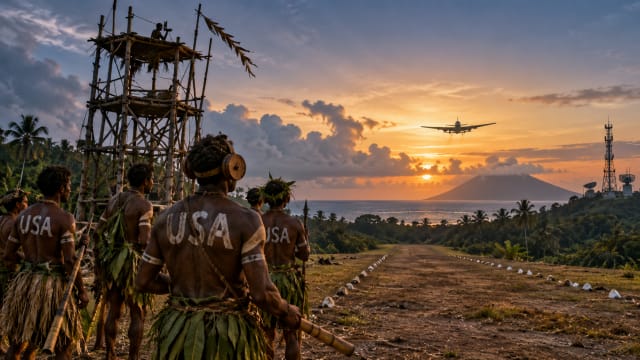
The Runway Without Planes: An RC Inspired by IIM Indore
Islanders in Vanuatu built airstrips and waited for planes that never came, and the world learned to laugh at them. The joke may reveal more about the laughers than about the waiting.

The Ghost Ancestors
Ancient humans can vanish without leaving a single bone. Yet fragments of their DNA continue telling a story that archaeology never could.
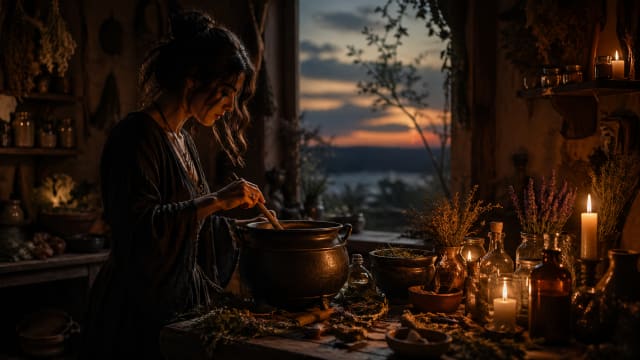
Why Witchcraft Never Left Us
Witchcraft is less about magic and more about the human need to impose meaning on uncertainty, revealing how ritual persists even in modern rational life.
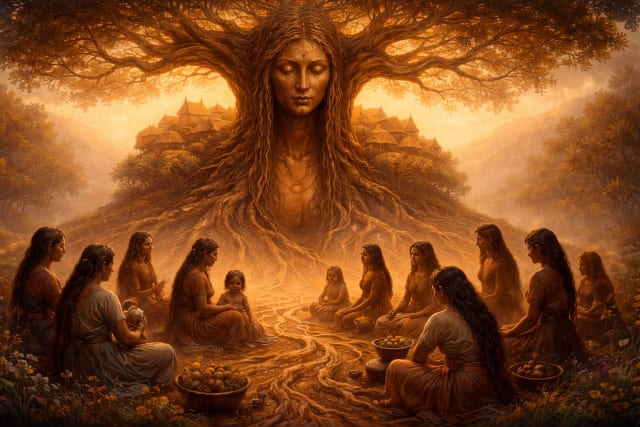
Where Power Begins at the Mother
A reflective exploration of matriarchy that challenges the idea of power as dominance, revealing instead a system rooted in continuity, care, and the quiet endurance of human relationships.