The Mathematics of Gridlock: When Rational Choices Fail - An RC Inspired by IIM Indore
On Earth Day in 1990, New York shut a major street and waited for chaos. The chaos never came, and a 1968 mathematical result may explain why, or may not.
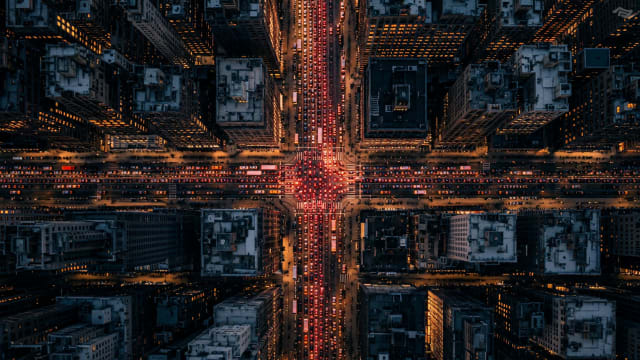
In 1990, on Earth Day, New York City closed 42nd Street to vehicles for a day, and transport officials braced for gridlock across midtown Manhattan. According to newspaper accounts of the time, the gridlock never arrived. Traffic on the neighbouring avenues was reported to move about as well as usual, and by some reports a little better. A similar surprise followed in Seoul, where an elevated highway carrying well over a hundred thousand vehicles a day was demolished between 2003 and 2005 to uncover a buried stream. Critics predicted chaos. Later reports suggested that travel times in the surrounding districts did not worsen as badly as feared, though how well those changes were measured is still debated.
Both episodes recall a result published in 1968 by the German mathematician Dietrich Braess. He showed that adding a new road to a network can lengthen every journey on it. The logic is simple. Each driver picks the quickest route available, without counting the delay imposed on others. When a shortcut opens, drivers who use it rationally abandon their old routes, and the roads feeding the shortcut begin to clog. The network settles into an equilibrium in which no single driver can gain by switching, yet all drivers are slower than before the shortcut existed.
What makes this unsettling is that nobody misbehaves. No driver is reckless and no planner is careless. Each choice is sensible, and the collective result is worse. The paradox belongs to a family of situations in which individual rationality and group welfare part ways, a family that economists have studied for decades under headings such as the prisoner's dilemma.
Each choice is sensible, and the collective result is worse.
Yet the claim is easily overstated. Braess's result describes a particular arrangement of roads, in which delays on some links rise with traffic while delays on others do not. Real cities rarely match it neatly. Researchers who studied road closures in several cities have reported that total traffic often falls when road capacity is removed, a pattern sometimes called traffic evaporation. Some journeys shift to other times or other modes of transport, and some are never made at all. That is a different mechanism from the one Braess described, and confusing the two has produced confident but poorly grounded advice about which roads a city should remove.
A defender of the paradox might reply that the distinction matters less than it seems, since both mechanisms teach that more capacity does not reliably mean less delay. This is partly right. Planners who widen highways in the hope of ending congestion have often watched new traffic fill the space within a few years, a phenomenon known as induced demand. But the reply quietly changes the claim. Braess predicted that a road could harm drivers even when the number of trips stays fixed, whereas induced demand and evaporation concern the number of trips itself.
The wider implication reaches beyond traffic. Networks of every kind, from payment systems to online platforms to supply chains, add connections on the assumption that each new link can only help those who hold it. If a path can leave every traveller worse off while every traveller acts sensibly, it is unclear how any system could tell in advance which of its connections are gifts and which are quiet taxes, or whether the people inside it would ever be able to see the difference.
Discussion
Sign in to join the discussion.
More in Cities & Urban Life

The God of Obstacles: An RC Inspired by IIM Indore
Ganesha removes obstacles. Ganesha places them. The same deity, the same tradition, the same prayer. This is not a contradiction. It may be the most honest theology ever written about the nature of difficulty.

Why Lizzie Borden Was Acquitted: An RC Inspired by IIM Indore
The evidence against Lizzie Borden was strong. The jury acquitted her in ninety minutes. What happened in that room had very little to do with the evidence.

The Ghost Ancestors
Ancient humans can vanish without leaving a single bone. Yet fragments of their DNA continue telling a story that archaeology never could.
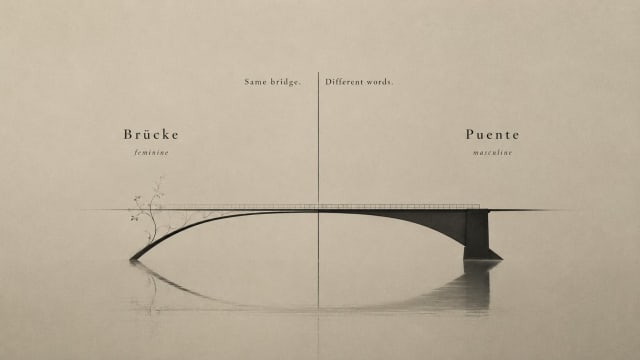
The Bridge That Changed Sex In Translation
German poets call bridges fragile, Spanish poets call them strong. The same object, the same world, only the grammar changes.