Madonna's Greatest Invention Was Madonna
Madonna's greatest creation was not a song or an album but herself. Her career reveals how identity is crafted, revised and performed over time.
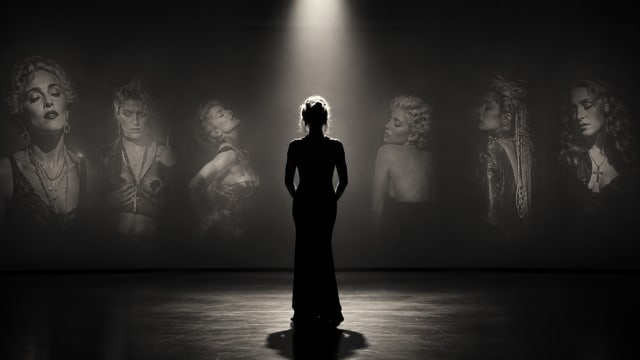
A girl in suburban Michigan watches television late at night. The screen glows with neon crucifixes, lace gloves and a performer who seems to become someone new every time she appears. One year she is the Material Girl. A few years later she is exploring mysticism, electronic music and spiritual longing. Then she returns again in another form. To many viewers, these transformations looked like clever marketing. To others, they seemed like proof that celebrity culture rewards spectacle over sincerity. Yet Madonna's career points toward a deeper idea. Her greatest creation was not an album, a concert or a music video. Her greatest creation was Madonna herself.
We usually imagine art as something distinct from the artist. A painting hangs on a wall. A novel occupies a shelf. A film exists apart from the director who made it. Madonna disrupted that distinction. Over four decades, she transformed her public identity into an ongoing artistic project. Each reinvention functioned like a new chapter in a work that never reached its conclusion. Blonde ambition gave way to spiritual reflection. Provocation gave way to introspection. Dance music merged with religious symbolism, fashion experimentation and social commentary. The result was a body of work in which the artist and the artwork became difficult to separate. The person became the canvas.
Perhaps Madonna's most enduring work was not something she created. It was someone she created.
This approach challenged one of modern culture's most cherished assumptions. We often believe that authenticity requires consistency. A person who changes too much appears unreliable or artificial. Popular wisdom encourages us to discover our true selves and remain faithful to them. The language itself suggests that identity is something hidden beneath the surface, waiting to be uncovered. Yet human experience tells a different story. The child becomes an adult. Convictions evolve. Ambitions shift. Relationships reshape priorities. Most people become strangers to their younger selves. Change is not an interruption of identity. Change is one of its defining features.
Critics of Madonna often argued that her transformations revealed a lack of authenticity. If she could become anyone, perhaps there was no real person underneath. The criticism carries intuitive appeal because people naturally seek stability. Yet it overlooks an important possibility. Authenticity may not require permanence. It may require honesty about growth. A tree remains the same organism even as its branches expand in new directions. A river remains the same river even though different water passes through it every moment. Human beings are no different. The self is not a fixed object. It is a process unfolding through time. Madonna did not conceal this reality. She amplified it.
What makes her career especially interesting today is how accurately it anticipated the digital age. Social media encourages people to curate identities, manage impressions and construct narratives about themselves. Profiles are updated. Images are selected. Personal stories are revised and shared. Millions now engage in practices that once seemed unique to celebrities. In this sense, Madonna was less a product of celebrity culture than a prototype of contemporary life. Long before the internet became a stage for self-presentation, she understood that modern identity operates through continuous revision.
The self may not be a treasure waiting to be discovered. It may be a manuscript that is never finished.
The lasting significance of Madonna therefore extends beyond music. Her career invites us to rethink what a self actually is. Perhaps identity is not something we discover but something we create. Perhaps each decision, relationship and aspiration adds another brushstroke to a portrait that remains unfinished. The songs will eventually belong to history. The controversies that once dominated headlines will fade. Yet the larger artwork endures. By turning her life into an act of creative composition, Madonna revealed a truth that applies to everyone. The most important thing we make may not be a product, a performance or an achievement. It may be the person we become.
More in Gender & Identity
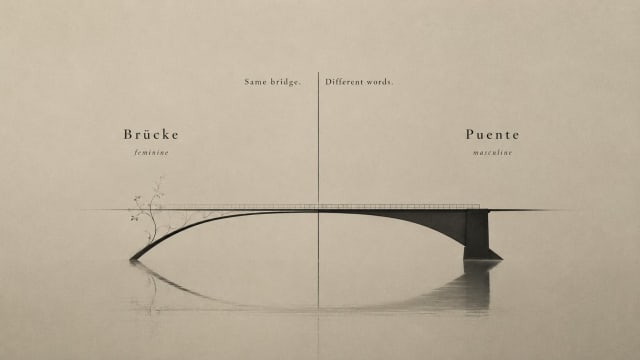
The Bridge That Changed Sex In Translation
German poets call bridges fragile, Spanish poets call them strong. The same object, the same world, only the grammar changes.

The Modern Man Must Perform Strength Without Signalling Danger
An essay on modern masculinity, social expectations, emotional self-monitoring, and the conflict between strength and harmlessness.
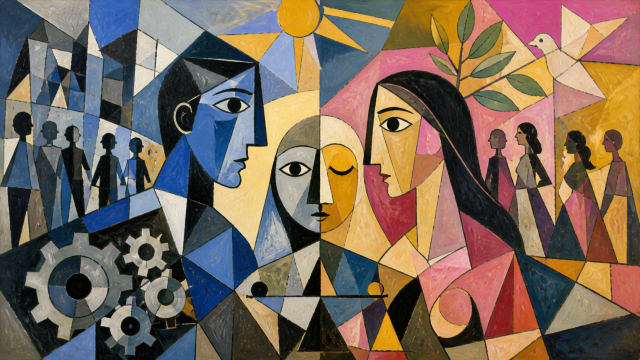
The Compressive Binary: Gender as a Coordinating Structure of Reality
Gender acts as a compressive system that simplifies human interaction, enabling coordination while quietly erasing nuance and individuality.
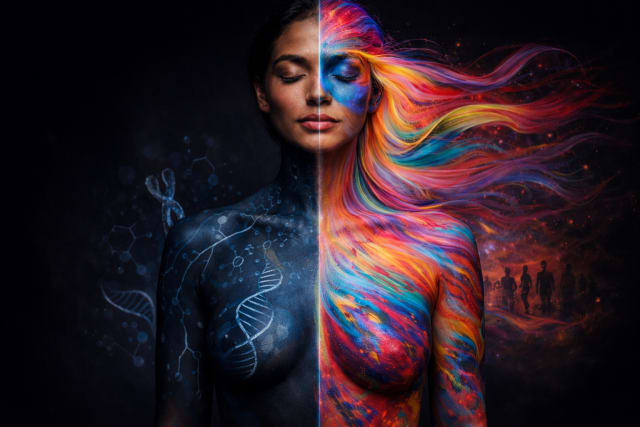
Sex vs Gender
A sharp, philosophical distinction between biological sex and social gender, clarifying how body and identity intersect—and why the difference matters.