The Modern Man Must Perform Strength Without Signalling Danger
An essay on modern masculinity, social expectations, emotional self-monitoring, and the conflict between strength and harmlessness.

A boy once became a man by learning how to suppress fear. He fought wars, built roads, lifted stone, buried his grief, and stood between danger and his family. Civilizations across centuries admired the same masculine virtues. Strength mattered. Competence mattered. Emotional restraint mattered. Even tenderness in men usually appeared through protection rather than confession. The masculine ideal was never simply kindness. It was usefulness under pressure.
Modern society still depends on many of those qualities. The firefighter entering a burning building cannot dissolve into emotional uncertainty. The soldier cannot negotiate endlessly with fear. The entrepreneur cannot survive competition without aggression of some kind. Even ordinary attraction continues to reward confidence, decisiveness, and social dominance despite public discomfort with those traits.
Yet modern masculinity now operates inside a strange contradiction. Men are expected to remain assertive without appearing threatening. They must appear confident while constantly monitoring how that confidence affects others emotionally. They must be sexually experienced but never predatory, ambitious but never domineering, emotionally expressive but still psychologically unshakeable during crisis. The modern man performs strength while simultaneously apologizing for the existence of strength.
“Society still rewards masculine power while morally distrusting the instincts that produce it.”
This tension did not emerge accidentally. Older masculine cultures often produced brutality alongside stability. Violence, repression, alcoholism, emotional illiteracy, and domestic cruelty frequently hid beneath the mythology of the stoic patriarch. Modern liberal society attempted to civilize these excesses by encouraging emotional openness and moral sensitivity. In many ways, this shift was necessary. Fewer people today romanticize the silent father who cannot communicate affection to his own children.
But every civilization creates psychological trade-offs. The suppression of older masculine norms did not eliminate masculine expectations. It merely transformed them into something more psychologically confusing. Men are still expected to protect, provide, compete, and endure pressure. The difference is that these expectations now exist alongside constant self-surveillance. A modern man must evaluate not only his actions, but the atmosphere his actions create.
The result is a form of performative self-consciousness. Masculinity increasingly resembles a carefully managed public relations exercise. Even ordinary male behavior often passes through invisible layers of social calibration. A man speaking confidently in a meeting may wonder whether confidence appears arrogant. A man approaching someone romantically may monitor his body language with bureaucratic caution. A father disciplining his child may fear appearing emotionally distant while also fearing excessive softness.
Some critics argue this anxiety is exaggerated. Many men continue to thrive socially and professionally without paralysis. They adapt naturally to changing norms and become healthier partners and fathers because of it. This is partly true. Modern expectations have produced emotionally articulate men who might have been impossible in earlier generations.
Yet the contradiction remains unresolved. Society still desires many traditional masculine outcomes while expressing discomfort toward the psychological traits historically associated with achieving them. Courage often contains aggression. Leadership often contains dominance. Competitiveness rarely emerges from pure gentleness. Civilization wants disciplined fire. It fears uncontrolled fire. Modern masculinity exists in the unstable space between those demands.
Perhaps this is why so many men today feel less traditionally oppressed than existentially uncertain. They are not being told to stop being masculine altogether. They are being asked to reinvent masculinity while continuing to perform many of its ancient responsibilities. The modern man must project power without menace, authority without control, and strength without hardness. He must become simultaneously formidable and harmless. History rarely prepared men for that combination.
Discussion · 2
In today's society, men face an unresolvable contradiction. The society demands and rewards masculine traits like leadership, resilience, confidence, sexually pleasing, and emotionally expressive; however, it puts moral distrust against the aggression or dominance that comes along with it. Men have to engage in constant self-surveillance to ensure that their actions do not harm the atmosphere around them. The contradictory expectations from society have put men in existential anxiety, and history has never created for both worlds.
Society demands men to be masculine. Strength and competence matter. Men appear through protection. Modern masculinity is contradictory; men are expected to be assertive without being threatening. They should be emotionally expressive but unshakable during crises. This causes brutality, violence, alcoholism, and domestic cruelty. Now men are judged on the atmosphere their actions create. This creates self-consciousness. This causes pressure on men; they are being asked to perform masculinity while performing old responsibilities.
Sign in to join the discussion.
More in Gender & Identity
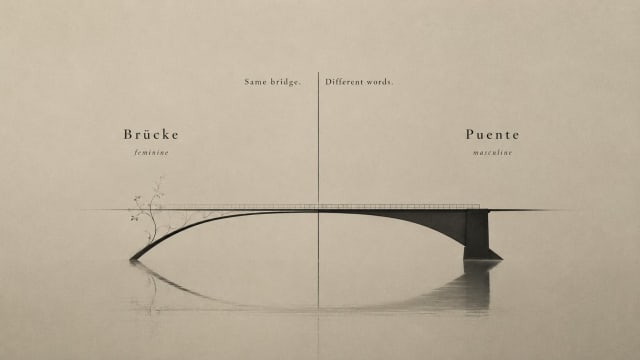
The Bridge That Changed Sex In Translation
German poets call bridges fragile, Spanish poets call them strong. The same object, the same world, only the grammar changes.

Madonna's Greatest Invention Was Madonna
Madonna's greatest creation was not a song or an album but herself. Her career reveals how identity is crafted, revised and performed over time.
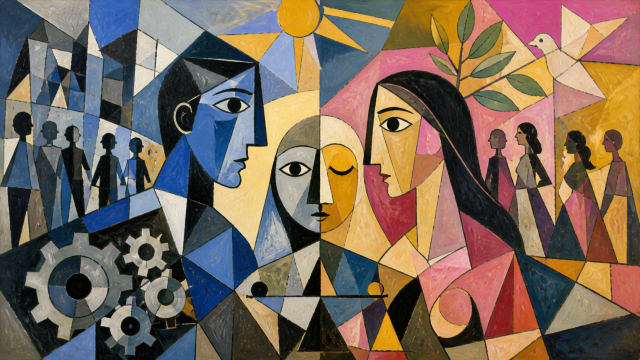
The Compressive Binary: Gender as a Coordinating Structure of Reality
Gender acts as a compressive system that simplifies human interaction, enabling coordination while quietly erasing nuance and individuality.

Sex vs Gender
A sharp, philosophical distinction between biological sex and social gender, clarifying how body and identity intersect—and why the difference matters.