The Women of Iran
The images of unveiled women in 1970s Tehran prove less than either side claims, because the same state that granted women new rights also dictated what they wore.
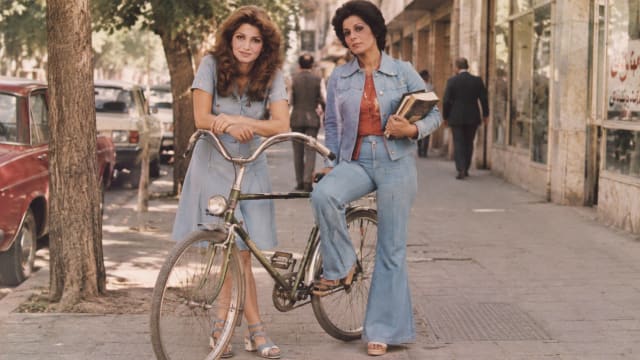
The photographs of 1970s Tehran, in which young women in short skirts walk past cinemas and cafés, are often offered as proof that Iran was once free, and the strongest objection to them is also the simplest. They show a few streets in a few northern districts, taken by people who could afford cameras and cosmopolitan company, and they say nothing of the village woman who could not read or the factory worker who never appeared in the frame. The objection deserves to be conceded in full. A country is not what its best lit boulevard looks like.
Yet the objection can be pushed too far, since the changes behind the photographs were not imaginary. Women were admitted to Tehran University in the 1930s, received the vote and the right to stand for parliament in 1963, and by 1968 one of them, Farrokhroo Parsa, sat in the cabinet as Minister of Education. The Family Protection Laws of the late 1960s and 1970s moved divorce into the courts, let wives seek it, and required judicial permission for a second wife. These gains reached the urban and educated far more than the rural poor. But uneven is not the same as unreal.
What the pictures hide is the manner in which change arrived. On 8 January 1936 Reza Shah banned the veil, and police were ordered to remove it from women in public. Accounts describe scarves torn off and religious women who stopped leaving their homes rather than be exposed. The ban ended in 1941, when the Shah was deposed. After the revolution the logic was reversed. A July 1981 edict made veiling mandatory in public, and a 1983 law set a penalty of seventy four lashes for appearing unveiled. The two regimes held opposite views of what a woman should wear and the same view of who should decide it.
The two regimes held opposite views of what a woman should wear and the same view of who should decide it.
It is tempting to conclude that women were passive beneficiaries first and passive victims later, and the record does not support this. Many educated women opposed the Shah, not because they rejected the schools and professions that had opened to them, but because his rule offered no real elections and his secret police, SAVAK, was notorious for surveillance and torture. Women from traditional backgrounds also joined the demonstrations. They shared a hostility to the monarchy and little else, and a march of women on 8 March 1979 against the first attempt at compulsory veiling suggests how quickly some discovered that the new order did not mean what they had hoped.
The thread running through these episodes is that rights extended from above are only as secure as the disposition of whoever extends them. The vote of 1963 was granted by a monarch who could not be voted out, the family laws were repealed after 1979, and the dress rules moved from one compulsion to another. What remains unsettled is whether the gains of Iranian women before 1979 were fragile because a state gave them, or because that state allowed no political voice through which they could have been defended.
CAT VARC practice
This passage is written in the CAT style. Its 4 questions are just below, and you can take them on the real CAT exam screen.
Also writing other exams? Solved XAT verbal PYQs, IPMAT verbal PYQs, CLAT English PYQs and GMAT reading, all free.
Discussion
Sign in to join the discussion.
More in Gender & Identity
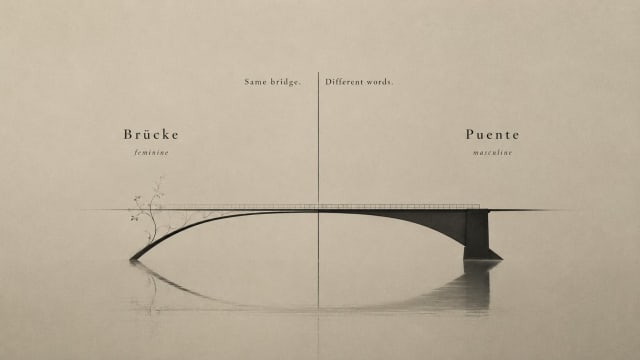
The Bridge That Changed Sex In Translation
German poets call bridges fragile, Spanish poets call them strong. The same object, the same world, only the grammar changes.
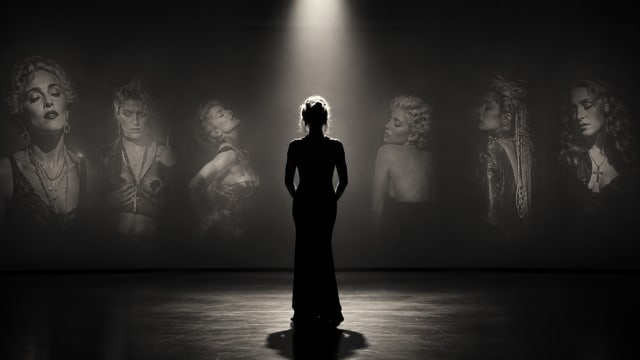
Madonna's Greatest Invention Was Madonna
Madonna's greatest creation was not a song or an album but herself. Her career reveals how identity is crafted, revised and performed over time.

The Modern Man Must Perform Strength Without Signalling Danger
An essay on modern masculinity, social expectations, emotional self-monitoring, and the conflict between strength and harmlessness.
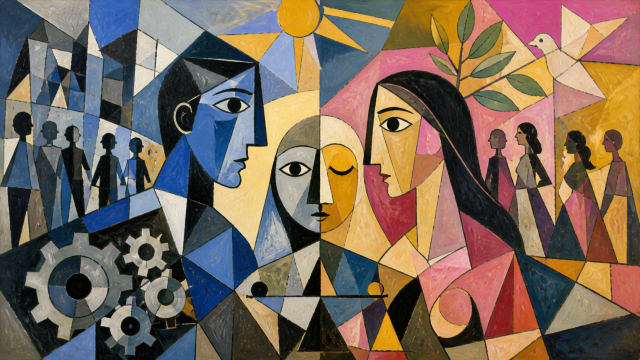
The Compressive Binary: Gender as a Coordinating Structure of Reality
Gender acts as a compressive system that simplifies human interaction, enabling coordination while quietly erasing nuance and individuality.