The Camera Kodak Built and the Business It Could Not Break
Kodak is said to have died because it ignored its own invention. The record suggests a harder problem, that the future can be seen clearly and still be unprofitable to enter.
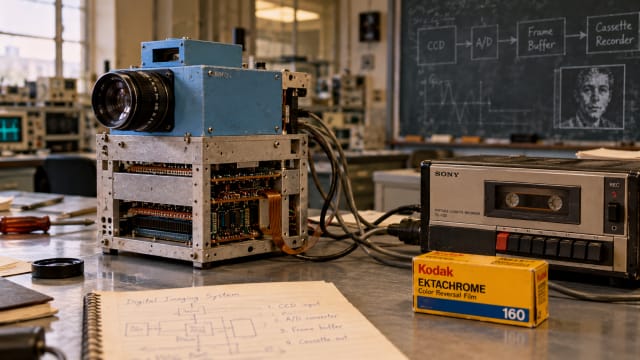
In 1975 a Kodak engineer named Steven Sasson built a camera that recorded black and white images of one hundred by one hundred pixels onto a cassette tape. The device is reported to have weighed about eight pounds and to have taken more than twenty seconds to store each picture. Sasson has recalled that the reaction from management was cool, and that colleagues asked why anyone would wish to look at photographs on a television screen.
The popular lesson drawn from the later collapse of Kodak is simple. The company, which sought bankruptcy protection in January 2012, is said to have buried its own invention because it feared harming its film business. The record is less tidy. Kodak did invest heavily in digital technology, and by 2005 it was reported to rank first in digital camera sales in the United States.
Some analysts, among them Scott Anthony of the consultancy Innosight, have argued that the difficulty lay in economics and not in technology. Film and printing yielded high profit margins, while digital photographs were shared on screens and rarely printed. Each digital sale therefore earned a company built on chemicals and paper less than the film sale it replaced.
Film and printing yielded high profit margins, while digital photographs were shared on screens and rarely printed.
A firm may see the future clearly and still be unable to profit from it, because the new business requires dismantling the old one that pays for everything. Whether Kodak could have survived by earning less sooner is a question its shareholders might never have allowed it to ask.
Discussion
Sign in to join the discussion.
More in Business & Management

The Giant That Declined a Small Partner and Defended Its Late Fees
Blockbuster is said to have turned down a chance to run Netflix, and the reasons were less foolish than the legend suggests.

The Cola That Won the Taste Tests and Lost the Public
A reformulated soft drink beat its rivals in a vast programme of blind tastings and was withdrawn within three months. The data were not wrong. The question was.

The Hawthorne Effect May Not Exist
For decades managers were taught that workers improve simply because they are watched. A reanalysis of the original lighting records in 2011 found little sign of it.

How Great Teams Are Deliberately Built?
Businesses often chase star performers, yet enduring success belongs to teams that cultivate trust, amplify one another's strengths, and never stop learning.