The Giant That Declined a Small Partner and Defended Its Late Fees
Blockbuster is said to have turned down a chance to run Netflix, and the reasons were less foolish than the legend suggests.
GRADFLIX Editors4 Qs · Medium
20 long-form economics & business essays, written at the density of real CAT passages, each with CAT, XAT and GMAT-style questions and explanations. For real exam passages, practise the solved CAT RC PYQs; for a daily routine, see CAT RC practice.
Blockbuster is said to have turned down a chance to run Netflix, and the reasons were less foolish than the legend suggests.
Continuing a failing project looks irrational until the cost of stopping is counted.
India ended its dependence on imported wheat within a decade, and the methods that delivered plenty are now draining the soil that grew it. Can a nation judge a success whose bill arrives half a century late?
A reformulated soft drink beat its rivals in a vast programme of blind tastings and was withdrawn within three months. The data were not wrong. The question was.
The tulip crash is the most repeated warning in finance. Archives suggest the ruin was far smaller than the legend, which makes the warning harder to read.
Kodak is said to have died because it ignored its own invention. The record suggests a harder problem, that the future can be seen clearly and still be unprofitable to enter.
For decades managers were taught that workers improve simply because they are watched. A reanalysis of the original lighting records in 2011 found little sign of it.
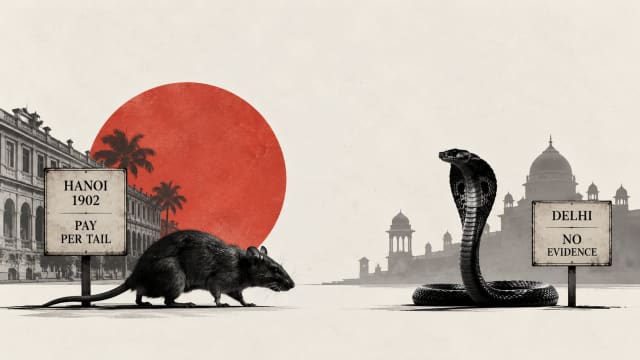
The most quoted warning about bad incentives concerns snakes in Delhi that nobody has been able to find. The rats of Hanoi, which did exist, made the same point and were forgotten.
Losses hurt twice as much as gains feel good. Kahneman and Tversky called this loss aversion. Economics has not been the same since.
Businesses often chase star performers, yet enduring success belongs to teams that cultivate trust, amplify one another's strengths, and never stop learning.
A central bank governor says a few sentences about the future, and prices shift before any policy actually changes. Why does mere belief move an economy?
Discover how the Kumar Method transformed social media by making identity and storytelling as important as expertise in the digital attention economy.
How capitalism turned identity into a performance where people market themselves like startups and measure life through productivity, visibility and scale.
Efficiency can increase total consumption as lower costs drive higher demand, revealing why saving resources is harder than it seems.
Rare, unpredictable events shape history more than trends, exposing the limits of prediction and the need for resilience over certainty.
As AI reshapes the global workforce, a new inequality is emerging. The real divide is not who uses artificial intelligence but who designs it, and without women in the architect's seat, tomorrow's algorithms may quietly inherit yesterday's biases.
The “broken rung” at the first promotion quietly disrupts the leadership pipeline, preventing many talented women from ever reaching the top.
Why great companies outlive great CEOs. Explore corporate governance, institutional resilience, succession planning, and the myth of indispensable leaders.
An exclusive extract from Abhishek Leela Pandey's The Art of Corporate Power, exploring how capitalism transformed warfare into strategic competition.
An argument that corporate heritage, like a building's “dead load,” can quietly exhaust an organisation's capacity to adapt.