The Hawthorne Effect May Not Exist
For decades managers were taught that workers improve simply because they are watched. A reanalysis of the original lighting records in 2011 found little sign of it.

From 1924 to 1932 researchers at the Hawthorne Works, a Western Electric factory in Cicero, Illinois, studied whether better lighting made workers more productive. According to the standard account, output rose when the lights were brightened. To the surprise of the researchers, it rose again when the lights were dimmed.
The standard account concluded that workers improved simply because they knew they were being watched. Textbooks and consultants repeated the lesson that attention itself improves performance, so a manager who wanted better output was advised to show interest in the people on the floor. In 1958 the sociologist Henry Landsberger gave the idea the name Hawthorne effect, and it became a fixture of management courses and of the design of experiments.
In 2011 the economists Steven Levitt and John List analysed the surviving illumination records, which had long been thought lost. A conclusion that managers had repeated for decades rested on data almost nobody had looked at.
A conclusion that managers had repeated for decades rested on data almost nobody had looked at.
Their reanalysis found only weak evidence that changes in lighting moved output at all. Productivity rose and fell in patterns that followed the rhythm of the working week more closely than they followed the lights, and the clear response described in many retellings was largely absent.
Yet the idea survives, in lecture halls as much as in boardrooms. Why a claim about being observed should itself have escaped observation for so long is a question that no one has answered.
Discussion
Sign in to join the discussion.
More in Business & Management

The Giant That Declined a Small Partner and Defended Its Late Fees
Blockbuster is said to have turned down a chance to run Netflix, and the reasons were less foolish than the legend suggests.

The Cola That Won the Taste Tests and Lost the Public
A reformulated soft drink beat its rivals in a vast programme of blind tastings and was withdrawn within three months. The data were not wrong. The question was.
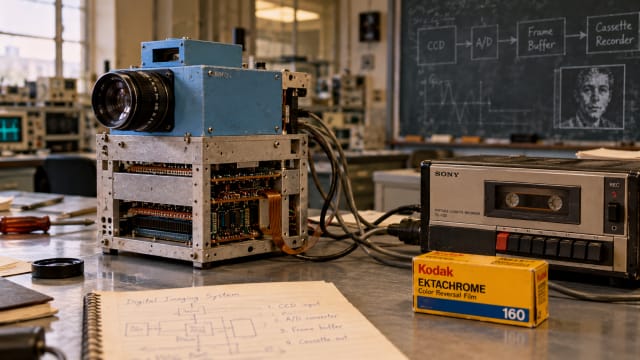
The Camera Kodak Built and the Business It Could Not Break
Kodak is said to have died because it ignored its own invention. The record suggests a harder problem, that the future can be seen clearly and still be unprofitable to enter.

How Great Teams Are Deliberately Built?
Businesses often chase star performers, yet enduring success belongs to teams that cultivate trust, amplify one another's strengths, and never stop learning.