The Statues of Rapa Nui and a Collapse That May Have Come from Outside
Easter Island became a warning about people who destroy their own world. New research asks whether the warning was aimed at the wrong culprit.
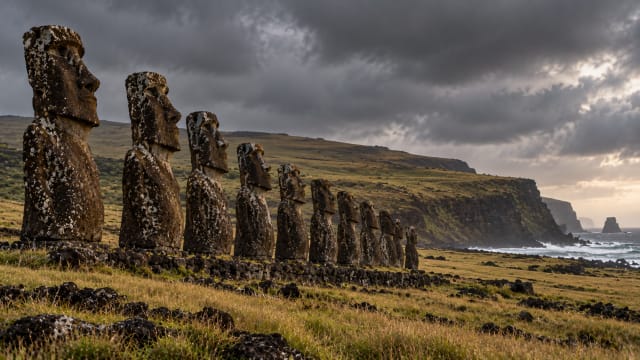
For decades the island of Rapa Nui, known in English as Easter Island, served as a parable of ecological suicide. Its builders, the story ran, felled the palm forests to move giant stone statues, and famine and warfare followed.
Archaeologists such as Terry Hunt and Carl Lipo have argued that the evidence fits this story poorly. Rats that arrived with the first settlers may have eaten the palm seeds, which would explain the lost forest without any mass felling. They also point to slave raids and introduced diseases in the nineteenth century as the likelier cause of the steepest population decline. Other researchers dispute parts of this reading, and the debate remains open.
Discussion
Sign in to join the discussion.
More in Archaeology

Why Temples Outlive Kingdoms
Why do religions outlive empires? From Göbekli Tepe to Rome, myths endured while kingdoms collapsed into ruins and memory.

Anatomy vs. Choreography: The Frozen Cry of Deir el-Bahari
The mysterious “Screaming Woman” mummy of ancient Egypt reveals how archaeology transforms death, history, and human vulnerability into timeless fascination.

Why the Berlin Wall Fell Because of a Miscommunication: An RC Inspired by IIM Indore
Gunter Schabowski had not been briefed. The decision he announced had not been implemented. The gates he declared open were still closed. Within hours, the Berlin Wall had ceased to exist.

The Soldier Who Didn't Know the War Was Over: An RC Inspired by IIM Indore
Hiroo Onoda fought in the Philippine jungle until 1974, twenty-nine years after Japan surrendered. He was not deluded. He was doing exactly what a loyal soldier should do.