The Queen Who Never Offered Cake
Her most famous sentence was probably never hers. The story of how it stuck says more about the people who believed it.
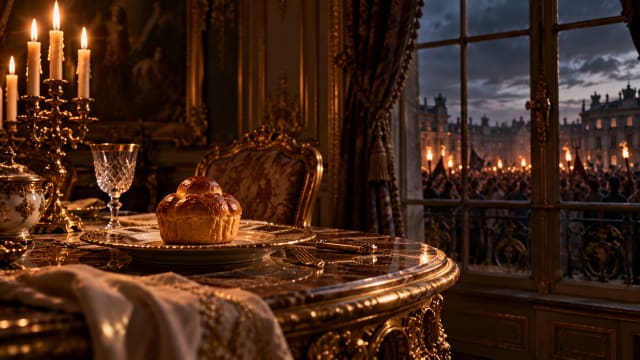
Few sentences in history are as famous as the one never proved to have been spoken by the woman who is said to have said it. When told that the poor of France had no bread, Marie Antoinette is supposed to have replied that they should eat cake. The remark is quoted to show how far a ruling class can drift from the people it governs, and it has been used against rich and careless rulers for more than two centuries.
The difficulty is chronology. Jean Jacques Rousseau recounts a similar remark in his Confessions, which he wrote in the 1760s and which was published in 1782. He says only that a great princess, hearing that peasants had no bread, answered that they should eat brioche. He does not name her. Marie Antoinette was born in 1755 and was still a child in Austria at the time, because she did not arrive in France until 1770. Whoever the princess was, she cannot easily have been the future queen.
Nor was the story new to France. Versions of it have been traced to other women of other courts, and later writers have credited it to an earlier queen, the wife of Louis XIV. A saying of this kind seems to wait for a villain. It lies about until a hated person is found to carry it.
A saying of this kind seems to wait for a villain.
The revolutionary press found that villain in Marie Antoinette, whom it already accused of extravagance and foreign loyalties. Historians generally treat the remark as a later attribution, a piece of propaganda that fitted the public's anger. That the queen did spend lavishly and was widely unpopular is not in dispute. What is disputed is whether a false sentence can still tell a true story about her.
Here the defenders of the legend make a fair point. A quotation can be false and yet capture a real distance between palace and village. The harder question is whether it is fair to judge a person by words she did not say. If a lie is believed because it seems typical, the lie reveals the believers as much as the accused, and it is not easy to say which of them history is really judging.
Discussion
Sign in to join the discussion.
More in Modern History

The Emperor Who Was Not Short
For two centuries the autopsy figure has been cited as proof that Napoleon was small. A look at the units, the cartoons and the nicknames tells a different story.
Why the Berlin Wall Fell Because of a Miscommunication: An RC Inspired by IIM Indore
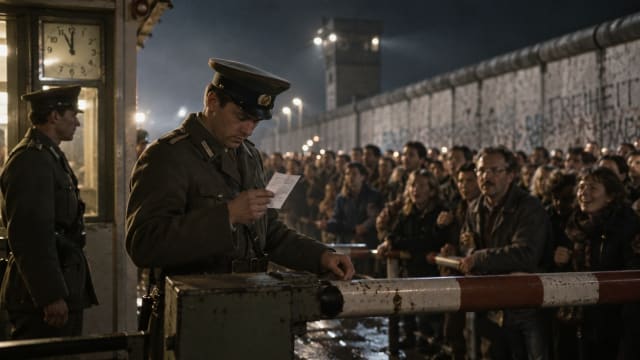
Gunter Schabowski had not been briefed. The decision he announced had not been implemented. The gates he declared open were still closed. Within hours, the Berlin Wall had ceased to exist.
The Press Did Not Start the Reformation: An RC Inspired by IIM Indore
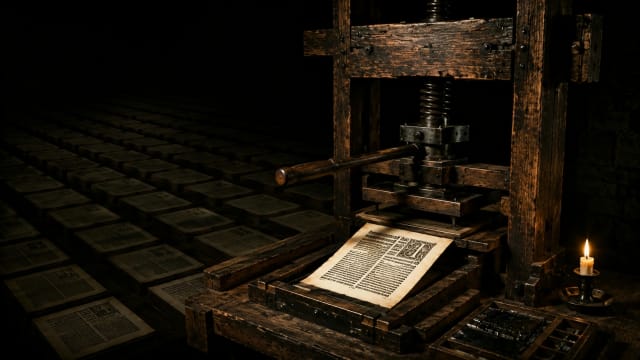
The printing press spread the Reformation. It did not cause it. The soil was prepared long before Gutenberg printed a single page.

The Search Before the Search
The Greenbrier Ghost helped reopen a murder case. What followed reveals a deeper truth about evidence, belief, and knowledge.