The Day Mountains Stopped Being Angry
How science transformed a living world of angry mountains and speaking rivers into a universe of objects, and what humanity lost in the process.

A storm gathers above a valley. Clouds pile upon one another and the wind begins to twist through the trees. To a modern observer, this scene is a physical event. Air pressure shifts. Moisture condenses. Energy moves through the atmosphere according to impersonal laws. Yet for much of human history, such a storm would have been understood very differently. The sky was not merely behaving. It was feeling. The storm was anger. The mountain beneath it was a witness, perhaps even a participant.
For ancient and tribal societies, the world was alive with intention. Rivers remembered. Forests listened. Animals negotiated with humans. Mountains possessed moods. This worldview, often called animism, is frequently dismissed as a primitive misunderstanding of nature. We are taught that science replaced fantasy with fact and liberated humanity from superstition. Yet this familiar story overlooks a deeper transformation. The greatest change was not what we learned about the world. It was how we related to it.
The greatest change was not what we learned about the world. It was how we related to it.
The modern mind draws a sharp boundary between people and things. Consciousness belongs to humans and perhaps a few animals. Everything else exists as matter. Rocks are geological formations. Oceans are bodies of water. Stars are spheres of burning gas. They can influence us, but they cannot speak to us. Emotion has been relocated from the landscape into the human mind.
This shift brought extraordinary benefits. Scientific thinking allowed humanity to predict eclipses, cure diseases, and build technologies that would have appeared miraculous to earlier generations. Few would prefer a world governed by myths when modern medicine and engineering are available. Knowledge matters. Accuracy matters. The success of science cannot be denied.
Yet explanation and relationship are not the same thing. Knowing what something is does not tell us what it means. A mountain can be understood as a product of tectonic forces while still inspiring awe. A river can be explained by hydrology while still feeling sacred. The old animistic imagination may have been factually mistaken, but it captured something about human experience that scientific language often struggles to express.
Consider the environmental crisis. Modern societies routinely exploit forests, rivers, and oceans as resources. We calculate their economic value and measure their utility. Such reasoning has undeniable practical advantages. However, it also encourages a subtle form of detachment. It is easier to destroy what appears lifeless. A forest inhabited by spirits invites reverence. A forest reduced to timber invites extraction.
It is easier to destroy what appears lifeless. A forest inhabited by spirits invites reverence. A forest reduced to timber invites extraction.
Some critics argue that romanticizing animism risks glorifying ignorance. Mountains are not angry. Rivers do not mourn. The universe does not possess human emotions. This objection is correct. Nature does not literally think or feel. But perhaps the value of animism never lay in its factual claims. Perhaps its function was ethical rather than scientific. It reminded people that they were participants in a larger community of existence rather than masters standing above it.
The day mountains stopped being angry was the day the world became quieter. Humanity gained a universe governed by elegant laws and remarkable predictability. At the same time, nature lost much of its personality. The landscape became scenery rather than company.
Yet traces of the older vision remain. People still climb mountains seeking wisdom. They still stand before oceans and feel humbled. They still speak of the mood of the weather and the character of a place. Beneath the language of science survives an ancient intuition. We do not merely want to understand the world. We want to belong to it.
Perhaps that is why mountains continue to draw us upward. Not because they are angry, but because some part of us still hopes they might have something to say.
Discussion
Sign in to join the discussion.
More in Ecology
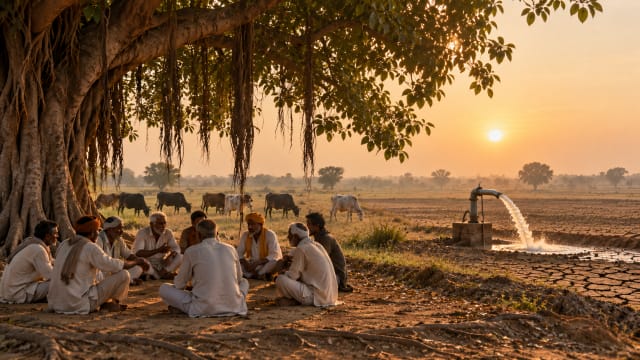
The Pasture Hardin Imagined and the Commons Ostrom Found
A famous parable says shared resources are doomed, yet villages in India and elsewhere have long proved otherwise, and the hardest cases are the ones nobody can see.

The Cane Toad Programme and the Beetles It Missed
A species flourished in a new land, and some called that a success. The beetles it was brought to fight tell another story.
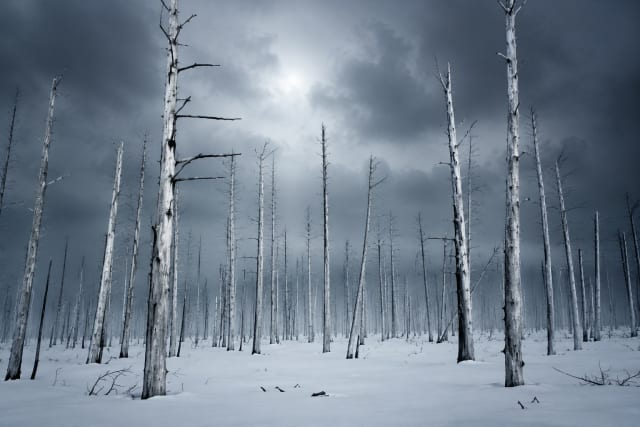
The Last Ash Tree: An RC Inspired by IIM Indore
A fungal disease is erasing Europe's most familiar tree. What ash dieback reveals about the limits of knowing and caring about the natural world.

The Building That Behaves Like an Ecosystem
Discover how ecological prototypes, living walls, and regenerative architecture could transform sustainable cities by turning buildings into ecosystems.