The Mariana Trench and the Limits of Knowing
The Mariana Trench reveals the limits of human knowledge, where depth challenges perception, life defies extremity, and reality, exceeds conceptual frameworks.
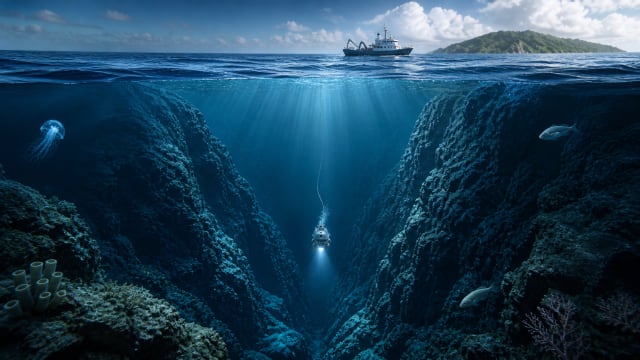
Cartography flatters the ocean into coherence, a blue field that suggests continuity where there is fracture. Beneath that surface lies the Mariana Trench, not simply a depression but a structural asymmetry where the Earth folds inward. At the Challenger Deep, depth approaches eleven kilometres, a figure that resists intuition. It does not merely exceed experience. It unsettles the relation between measure and meaning, turning number into an index of conceptual insufficiency.
The trench emerges from subduction, where the Pacific Plate descends beneath the Mariana Plate in a process that unfolds across geological time. This is not motion as ordinarily conceived but an accumulation of imperceptible shifts, a convergence that produces depth as a residual effect. Pressure here ceases to be an environmental variable and becomes an ontological limit. It defines the conditions under which matter persists without collapse. The ocean at such depths is no longer water in any familiar sense but a medium governed by forces that evade ordinary analogy.
Yet the trench resists the expectation of emptiness. Life persists, not as anomaly but as recalibration. Organisms metabolise chemical gradients rather than sunlight, replacing illumination with geochemical flux. In doing so, they invert a foundational assumption about the conditions of life. What appears extreme from the surface is merely a projection of surface norms. Evolution does not register extremity. It registers viability within constraint.
A conventional view casts the trench as a frontier, the final horizon awaiting discovery. The descents of Jacques Piccard and Don Walsh, followed decades later by James Cameron, seem to affirm a narrative of progressive conquest. Each journey appears to extend the domain of the known, reinforcing the belief that ignorance is temporary.
This interpretation falters on closer inspection. It assumes that knowledge entails assimilation, that to know is to integrate the unfamiliar into existing frameworks. The trench resists such integration. Its conditions are not simply unknown but structurally misaligned with the categories through which knowledge is organised. Technology permits access, but only by isolating the observer from the environment itself. The result is a paradox of proximity without participation, of observation without inhabitation.
Several assumptions collapse under this pressure. Depth does not entail absence but can sustain complexity. Extremity does not prohibit life but redefines its parameters. Exploration does not culminate in closure but generates further uncertainty. Each advance reveals not completion but expansion of the unknown.
A critic might object that such claims romanticise ignorance. With sufficient instruments, the trench can be mapped, measured, and catalogued. Its apparent mystery, on this view, reflects only current technical limits. Scientific progress has repeatedly transformed opacity into clarity.
Yet description is not comprehension. To enumerate variables is not to exhaust significance. Even total data would not bridge the gap between human intuition and abyssal conditions. The trench operates at scales where familiar categories begin to dissolve. What persists is not ignorance alone but a structural mismatch between the world and the frameworks used to interpret it.
The Mariana Trench thus functions as a limit case for thought. It exposes the contingency of our conceptual tools by situating them against conditions they were not designed to grasp. Depth becomes not merely spatial but cognitive. To think the trench is to encounter the limits of thinking itself.
The ocean surface, then, is a kind of illusion, a plane that conceals vertical complexity. To attend to the trench is to abandon horizontality and adopt a logic of descent. Depth is not only a property of the Earth. It is a demand placed upon cognition, requiring it to extend beyond the conditions under which it first learned to understand.
Discussion
Sign in to join the discussion.
More in Oceans
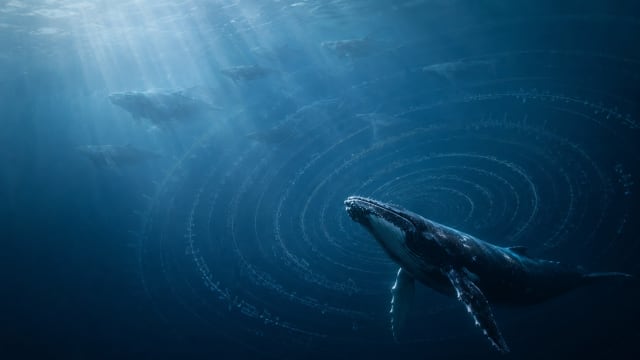
When Whales Learn to Sing: An RC Inspired by IIM Indore
Whale songs reveal how isolation, imitation and migration can create, preserve and erase cultural differences within animal populations.
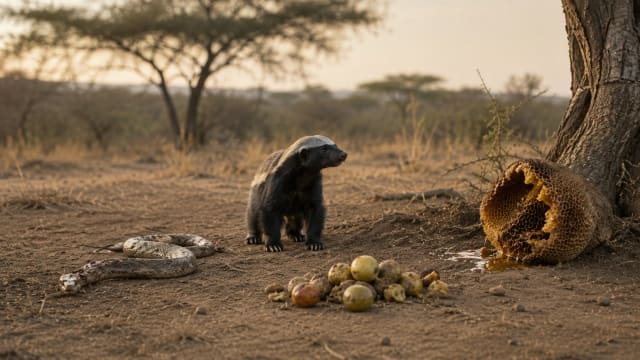
The Animal With a Thousand Plans
The honey badger is often portrayed as the animal kingdom's fearless rebel. Yet its greatest strength is neither aggression nor toughness.

Nature Does Not Speak. We Do.
How does language shape our understanding of nature? Discover why animal behaviour, evolutionary biology and human perception are deeply intertwined.
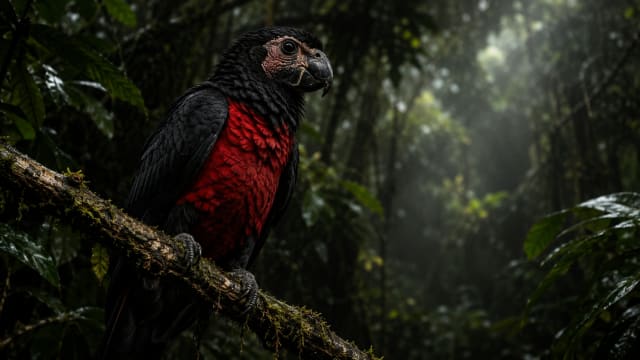
The Parrot That Bets Everything on One Fig: An RC Inspired by IIM Indore
The Dracula Parrot eats almost nothing but figs from a single genus of tree. Its beauty is the product of extreme specialisation. So is its vulnerability.